
US and Iran agree to pause attacks before Doha negotiations
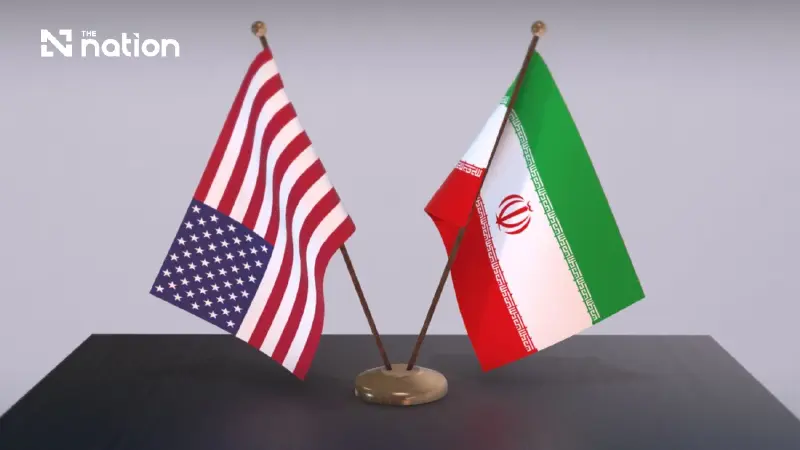


The United States and Iran have reportedly agreed to stop attacking each other ahead of renewed talks in Doha on the Strait of Hormuz and broader efforts to end the war.
- The United States and Iran have agreed to suspend attacks on each other to de-escalate recent tensions.
- This pause is intended to allow for the resumption of peace negotiations scheduled to take place this week in Doha.
- The upcoming talks will shift focus from Iran's nuclear program to the reopening of the Strait of Hormuz, a vital shipping route for oil and gas.
- The agreement follows several days of retaliatory strikes by both nations on ships and military bases, which jeopardized a fragile ceasefire.
Axios has reported that the United States and Iran have agreed to halt attacks on each other before peace talks resume this week to discuss the Strait of Hormuz and other issues linked to ending the war.
The move is seen as a sign of easing tensions after several days of retaliatory attacks that affected a fragile ceasefire agreement.
The exchange of attacks on a vital shipping route for oil and natural gas trade began last Thursday, June 25, 2026, when the Islamic Republic of Iran attacked a container ship. Washington responded by striking Iran the following day. The US then launched another attack on Saturday night after Tehran targeted a ship carrying Qatari oil. Both sides accused the other of violating the ceasefire agreement.
Talks expected in Doha
The violence has escalated tensions after the United States and Iran reached a temporary peace agreement earlier this month. It also risks delaying progress in restoring shipping through the key strait to pre-war levels.
Detailed talks on the temporary agreement are expected to resume this week in Doha.
US officials told Axios that Washington and Tehran had agreed to suspend attacks so that vessels could move freely during the negotiations.
Axios also reported that the talks, which had previously focused on technical discussions about the future of Iran’s nuclear programme, would shift towards reopening the Strait of Hormuz, a passageway for around one-fifth of the world’s oil and natural gas.
The White House did not immediately comment on the issue.
Retaliatory attacks launched
In the latest round of attacks on Sunday, Iran’s Islamic Revolutionary Guard Corps (IRGC) said it had fired missiles and launched drones at Ali Al Salem Air Base in Kuwait and the naval base of the US Fifth Fleet at Salman Port in Bahrain.
Kuwait said it had intercepted two missiles, with no damage to property and no injuries reported. Bahrain said a residential building had been hit, but there were no fatalities.
Meanwhile, the United States said on Saturday that it had struck Iranian military sites.
“It may come to a point where we can no longer reason, and will be forced to use military measures to finish the mission we successfully began,” President Donald Trump posted on Truth Social on Saturday after the latest US attack on Iran.
On Sunday morning, amid rising tensions, Trump travelled by motorcade around Washington, DC, to inspect several landscaping projects he had personally initiated, including the algae-filled Reflecting Pool.
The Joint Maritime Information Centre raised the security threat level in the Strait of Hormuz to “severe” on Saturday after a tanker was attacked. It also announced a warning area where mines may be present, covering a broad section of regular shipping lanes.
The centre added that the Omani shipping route recommended by Western navies had been widened to allow vessels to pass each other in both directions at the same time.
By Sunday morning, several ships had begun crossing the strait using both the designated Omani and Iranian routes.
Since the United States and Israel launched the war on February 28, Tehran has repeatedly targeted Gulf states that host military bases and thousands of American troops.
Separately, Israel said it had destroyed underground infrastructure belonging to Hezbollah in southern Lebanon, despite having agreed to a ceasefire with Lebanon.
Hezbollah, which is designated by the United States as a terrorist organisation and is Israel’s target in Lebanon, said the ceasefire agreement was “void”.
Iran has tried to include Israel’s war with Iran-backed Hezbollah as part of the temporary agreement, even though Israel is not a party to the deal.
Press TV reported in a post on X that the IRGC said on Sunday that under an agreement known as the “Islamabad Memorandum of Understanding”, “the management and control of maritime traffic in the Strait of Hormuz is Iran’s right, and from now on, vessels that violate it will be dealt with decisively and more severely than before.”
The two sides are still debating key terms, including whether Iran will collect tolls or other charges from ships seeking to pass through the Strait of Hormuz, as well as the issue of a ceasefire between Israel and Lebanon.
Bloomberg previously reported that Oman had informed European officials that vessels may eventually have to pay some form of fee.
Iranian Foreign Minister Abbas Araghchi visited neighbouring Iraq on Sunday and said he had discussed the agreement with the United States with officials in Baghdad.
Speaking at a joint press conference with Iraq’s foreign minister, broadcast live on television, he said Iran alone was responsible for restoring maritime traffic in the Strait of Hormuz, and that any intervention would risk escalating the situation.
Trump’s decision to launch attacks showed that he was prepared to use military force to preserve freedom of navigation through the strait.
However, Iran’s attacks also showed that Tehran was trying to preserve its authority over the waterway, which has been largely closed since the start of the war.
The Strait of Hormuz, which previously handled around one-fifth of the world’s crude oil and liquefied natural gas shipments, has become Tehran’s biggest bargaining chip, after its near-closure severely disrupted and unsettled the global economy.
