
Thailand seeks to conclude ART talks before final US tariff decision
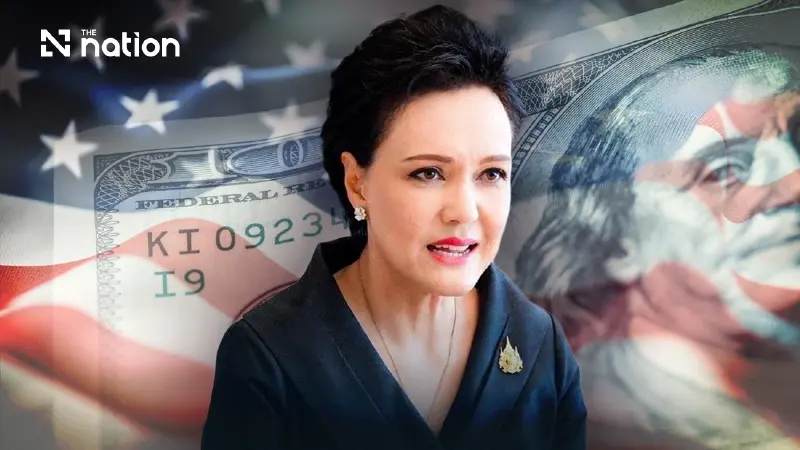


Thailand is seeking to finalise ART negotiations while preparing legislation to ban forced-labour imports and awaiting a US decision on excess capacity.
Deputy Prime Minister and Minister of Commerce Suphajee Suthumpun said on Monday (July 27, 2026) that the government was prepared to respond to US tariff measures on all fronts.
Its most important immediate goal was to accelerate negotiations to conclude the Agreement on Reciprocal Trade (ART) on terms providing the greatest mutual benefit to both sides.
The agreement will be a key condition in determining whether Thailand receives the previously agreed tariff rate of 19% or faces a rate close to the 36% initially announced by the United States.
Background to US tariffs before the 12.5% rate
Suphajee said that in April 2025, the United States ranked countries with which it had trade deficits, placing Thailand 11th.
Based on its calculations, the United States invoked the International Emergency Economic Powers Act (IEEPA) to announce a 36% tariff on Thailand.
The Cabinet at the time then went to negotiate, leading to an agreed tariff rate of 19% on Thursday (August 7, 2025), on condition that the ART negotiations were completed and talks were concluded on the list of products covered by Annex III.
However, a change of government, followed by a caretaker Cabinet whose term was limited to about four months, meant that detailed ART negotiations with the various ministries had not been conducted systematically.
In February, the US Supreme Court ruled that the tariff measures imposed by the president under IEEPA were unlawful and ordered their use to end.
The United States then temporarily imposed a uniform 10% import tariff on all countries under Section 122, which could remain in force for only 150 days, until Thursday (July 23, 2026).
After Section 122 expired, the United States turned to the mechanism under Section 301.
Unlike IEEPA, it requires consultations with stakeholders, including businesses, the US private sector and countries under investigation, before the Office of the United States Trade Representative (USTR) compiles the views and submits them to the president and Congress.
Thailand was investigated over two main issues: forced labour and excess production capacity.
The intellectual-property issue concerning Thailand was not pursued further.
Thailand accelerates forced-labour import legislation
Suphajee said Thailand was among 60 countries investigated over forced labour, with the findings finalised on Friday (July 24, 2026).
Thailand was announced as subject to a tariff rate of 12.5%, placing it among 46 countries receiving that rate.
The other 14 countries, most of which had already signed ART agreements, received the lower rate of 10%. Thailand already has domestic laws addressing forced labour.
What Thailand still lacks is legislation prohibiting imports of goods produced using forced labour, which is now being drafted as a matter of urgency.
The proposed law is under the supervision of the Justice Ministry and concerns human rights due diligence (HRDD), with the Labour Ministry acting as the secretariat.
The legislation must be accelerated so businesses can verify that imported goods come from practices that comply with requirements and do not involve forced labour in Thailand or overseas.
The draft will be pushed forward for consideration by the House of Representatives.
“The 12.5% tariff linked to the prohibition on imports of goods produced using forced labour will not be imposed immediately because views must first be sought from other stakeholders, whether businesses or anyone else. This therefore does not mean that USTR can handle the matter 100% by itself. It has a duty to gather views from countries under investigation, such as Thailand, and from other stakeholders, and present them to the president and Congress. A decision will then be made on what percentage each country receives,” Suphajee said.
Thailand awaits US excess-capacity tariff decision
The United States has not yet officially announced the outcome concerning excess production capacity.
The Thai side travelled to present factual information to USTR on Wednesday (April 15, 2026), and again from Wednesday (May 13, 2026) to Friday (May 15, 2026).
Statistical data showed that Thailand’s automotive and automotive-parts industries, rubber and rubber-products industries, and machinery and equipment sector were operating at 75–95% of production capacity, above the 60% level that had prompted scrutiny.
During discussions, USTR acknowledged that the information presented by Thailand reflected the facts.
However, the Thai side remains uncertain about the direction of the final decision and will therefore need to travel for further talks with USTR before the outcome is officially announced.
Thailand seeks lower trade deficit under previous agreement
During trade negotiations in the United States last week, the Thai negotiating team met senior policy officials to reaffirm Thailand’s intention to reduce the trade deficit in line with the previous agreement.
The team also presented information showing that Thai private-sector investment in the United States was worth about US$19.3 billion, together with nearly 20 additional investment plans, to demonstrate that Thailand was also helping to create jobs and income in the United States.
“We are not in the same position as Malaysia and Indonesia because Thailand and the United States have more areas in which they could become strategic partners. We have tried to explain that our circumstances and domestic laws are different. There are some areas in which we will not yield, while there are others where we can be flexible. All negotiations are based on conditions that are acceptable to both sides, with security and agricultural products among the issues,” she said.
Regarding imports from the United States under the previous agreement, Suphajee said Thailand was seeking to reduce some targets to make them more consistent with actual circumstances.
For example, the previously stated target of 80 aircraft could be reduced as appropriate.
Annual purchases of US agricultural products had previously been set at US$2.6 billion under the agreement.
As the year had already reached its midpoint, Thailand might request that the target be divided into phases.
Negotiations concerning fishery products and seafood were continuing.
Government sets four priorities for its response
The government has identified four priorities for its next steps: accelerating legislation to prohibit imports of goods linked to forced labour; concluding the ART negotiations on terms providing the greatest mutual benefit without placing Thailand at a disadvantage; continuing to support Thai private-sector investment in the United States; and increasing imports from the United States under the original framework agreed in August 2025 under the Joint Statement.
The government said it would fully protect the interests of farmers and the country throughout every stage of the negotiations.
“All of this has been reported to the prime minister, who has acknowledged it, agreed with everything and authorised us to negotiate, provided that we do not cross our red lines. Some countries may agree to everything simply to get it done and then let it fail in parliament later. However, public pressure is very strong in our country, so we cannot do that,” Suphajee concluded.
