
Japan launches Michibiki No. 7 satellite to support GPS services
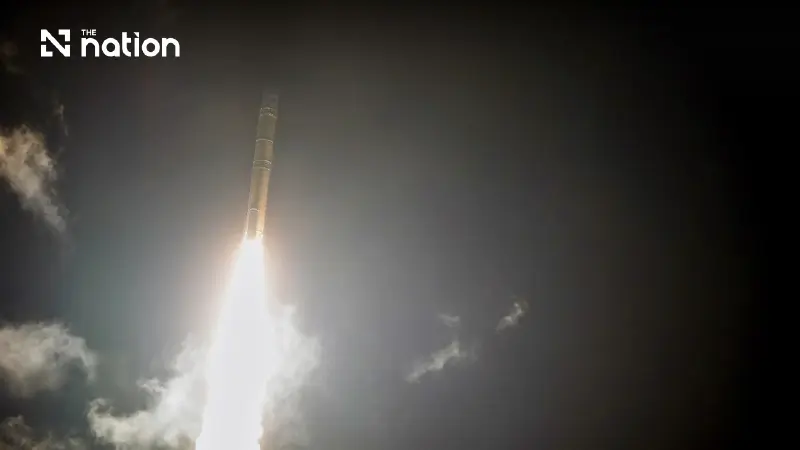


The positioning satellite entered its planned orbit about 30 minutes after lift-off, taking the H3 rocket’s record to seven successes in nine flights.
- Japan's aerospace agency, JAXA, successfully launched the Michibiki No. 7 satellite aboard an H3 rocket.
- The satellite is part of Japan's own positioning system, which complements the US GPS network to provide enhanced accuracy of up to several centimeters.
- This launch is a key step towards Japan's goal of establishing a seven-satellite constellation for continuous positioning, independent of foreign systems.
- The mission marked a successful return for the H3 rocket, being its first operational satellite launch since a failure last December.
The Japan Aerospace Exploration Agency (JAXA) successfully launched Michibiki No. 7 aboard H3 Flight No. 9 on Tuesday (August 11), marking the first H3 mission to carry an operational satellite since a launch failure last December.
The rocket lifted off from Tanegashima Space Centre in Kagoshima Prefecture, south-western Japan, at 4.23am.
Michibiki No. 7 entered its planned orbit around 30 minutes later.
The result lifted the H3’s launch record to seven successes from nine flights.
“We made improvements with a determination not to fail again and were able to conduct a launch with enhanced reliability,” H3 project manager Makoto Arita told a post-launch press conference.
He described the mission as a good outcome.
December’s failure of H3 Flight No. 8 led to the loss of Michibiki No. 5.
JAXA traced the failure to a problem in the process used to join components in the satellite-mounting section.
After addressing the issue, the agency successfully launched H3 Flight No. 6 in June.
Flight No. 9 was given greater reliability through the use of a component-joining method with an established record.
The H3 is a two-stage, liquid-propellant rocket developed by JAXA and Mitsubishi Heavy Industries Ltd.
Michibiki is Japan’s satellite positioning system, complementing the US GPS network and providing accuracy of up to several centimetres.
The first satellite in the series, Michibiki No. 1, was launched in 2010.
The government aims to establish a seven-satellite constellation capable of providing continuous positioning without relying on foreign positioning satellites, before eventually expanding the system to 11.
Following the loss of Michibiki No. 5, six satellites will be operational for now, including the newly launched No. 7.
Michibiki No. 7 measures about 19 metres across when its solar panels are deployed.
Alongside its positioning services, the satellite can distribute emergency information to compatible devices during disasters.

