
Bomb hoaxes target around 6,300 schools across Italy
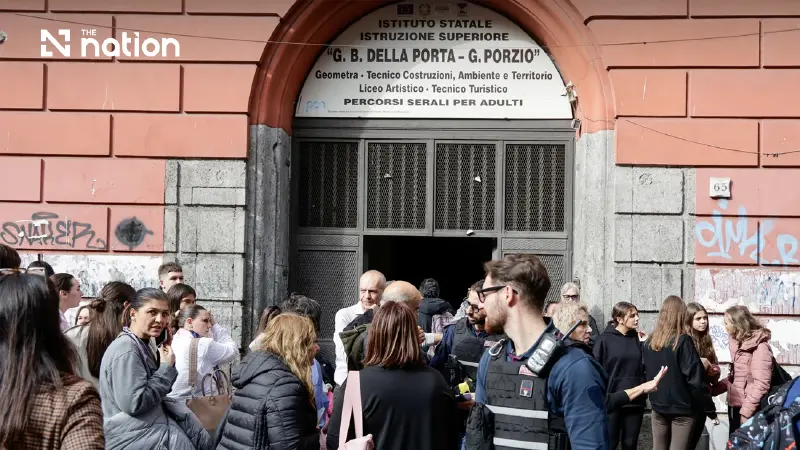


Hoax bomb emails prompted school evacuations in Italy and threatened Giorgia Meloni, while authorities in Scotland and Ireland assessed alerts as false.
- Around 6,300 schools across Italy received hoax bomb threats via email, leading to widespread evacuations, school closures, and distress among parents and students.
- The threatening emails also contained a threat against Prime Minister Giorgia Meloni and were attributed to a sender who had claimed responsibility for similar hoaxes in Ireland and Bulgaria.
- Italian officials, including the Prime Minister, confirmed that no concrete danger was found, with the Defence Minister describing the hoaxes as a strategy to "spread fear and create anxiety".
- The incident was part of a wider pattern, as schools in Scotland, Northern Ireland, and the Republic of Ireland also received similar threatening emails that were assessed as hoaxes.
Around 6,300 schools in Italy received hoax bomb threats on Wednesday (November 11, 2026), prompting closures and evacuations in Rome and other cities as parents rushed to collect their children, Reuters reported.
Italian Prime Minister Giorgia Meloni said checks had found no evidence of a concrete danger, while police and security agencies continued to monitor the alerts.
Parents describe distress after Italian school evacuations
Parents in the affected Italian cities left work or abandoned their plans to collect children after schools suspended lessons as a safety precaution.

Nensi Bego, whose daughter Dafne attends Rome’s Mazzini middle school, told Reuters that the child had cried because pupils did not understand what was happening. Bego added that “she was still shaken when I picked her up”.
One school in Rome informed parents through a messaging app that pupils had been moved to a safe area and remained under teachers’ supervision, according to Reuters.
Antonello Giannelli, head of the Italian School Principals Association, stressed that even hoaxes could cause serious distress for pupils, families and staff and disrupt teaching, consequences that should not be underestimated.
Italian school email also threatened Meloni
An email sent to Italian schools also contained a threat against Meloni’s life, according to a copy examined by Reuters. The message was signed “Mikhail Andropov, leader of the Vilayat of Misoginistan”.

The same purported sender of the Italian school email had claimed responsibility for bomb-threat messages sent to newsrooms in Ireland and Bulgaria on Friday (November 6), Reuters reported.
A national security source told Reuters that school email addresses were publicly available, making it easy to distribute the threatening messages.
Scotland and Ireland assess similar emails as hoaxes
Schools in Scotland, Northern Ireland and the Republic of Ireland also received similar threatening emails from abroad, which authorities assessed as hoaxes, Reuters reported.

Police in Scotland and the Republic of Ireland advised that evacuation was unnecessary based solely on the messages. Some Scottish schools did evacuate as a precaution, however, according to Dumfries and Galloway Council.
Crosetto cautions against blaming foreign governments
Italian Defence Minister Guido Crosetto described the school threats as part of a strategy “to spread fear and create anxiety”, while cautioning that foreign governments were not necessarily responsible.
Crosetto suggested that attention-seekers and people he described as “lunatics” could exploit international tensions to cause panic, according to remarks reported by Adnkronos news agency and cited by Reuters.

The alerts at Italian schools came amid a series of threats and cyberattacks targeting supermarkets, blood banks, air traffic control systems and television broadcasters across Europe.
Some European officials suspect Russia may be behind a wider campaign to disrupt daily life in countries supporting Ukraine following Moscow’s invasion, Reuters reported. Russia denied involvement and accused the West of conducting a smear campaign.
France separately summoned Iran’s ambassador on Tuesday (November 10) after accusing Tehran of a cyberattack that disabled refrigeration systems at hundreds of supermarkets in October. Iran rejected the accusations as unfounded and hostile.
