
US considers further sanctions on Iran-linked trade and finance
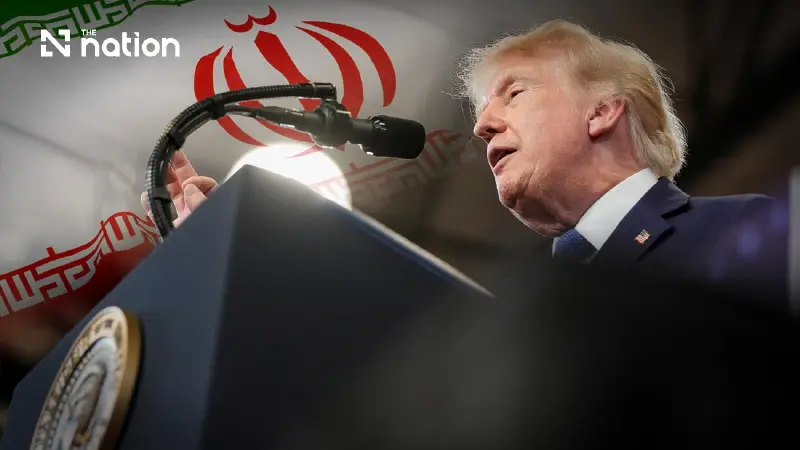


Trump and Bessent have signalled tougher action as experts identify oil traders, currency exchangers, aviation and Chinese banks as possible targets.
- The US is considering intensifying economic pressure on Iran by targeting oil traders, currency exchangers, and financial institutions, particularly in China, that facilitate Iranian trade.
- Potential measures include secondary sanctions against smaller Chinese independent oil refineries and warnings to larger Chinese banks, though this carries the risk of economic retaliation from Beijing.
- Washington is also exploring other options, such as seeking new tariff powers from Congress to use against countries trading with Iran and a potential land blockade, which is considered difficult to enforce.
Oil traders, currency exchangers and Chinese financial institutions are among the possible targets as Washington prepares to intensify economic pressure on Iran.
US President Donald Trump pledged on Friday to apply far greater economic pressure, after US Treasury Secretary Scott Bessent stated a day earlier that Washington could impose measures that had “never been seen” as early as this week.
Oil and payment channels could be targeted first
Miad Maleki, a sanctions specialist with the Foundation for Defence of Democracies, interpreted Bessent’s remarks as a likely signal of stricter enforcement against oil shippers, purchasers and currency exchangers that help Tehran pay for imports.
He also identified aviation as a possible target, saying further penalties could weaken Iran’s ability to move trade now that the US has blockaded shipping through the Strait of Hormuz.
Washington could pursue those channels alongside Iranian people and entities, as well as intermediaries in China and the Gulf that enable Tehran to evade restrictions and collect revenue for its war effort.
Treasury has recently acted against newly created companies that facilitate the exchange of Iranian oil income for imported goods.
Brett Erickson, managing principal of Obsidian Risk Advisors, compared that strategy to “whack-a-mole”.
Each sanctioned entity can be replaced by another, he argued, leaving Iran’s behaviour unchanged.
A large sanctions structure is already in place
Any new action would be layered over restrictions stretching back to the late 1970s.
The United States, United Nations and European Union have used sanctions, trade embargoes and asset freezes in response to Iran’s nuclear programme, human rights violations and support for militant groups.
Washington expanded that pressure after the Iran war began in February by adding maritime, energy and financial sanctions and establishing a naval blockade.
Figures from the US Treasury Department’s Office of Foreign Assets Control (OFAC) show that more than 1,000 people, vessels and aircraft have been sanctioned since Trump returned for his second term.
The most recent measures have targeted Iran’s shadow oil fleet, shipping insurers, people and entities enabling Iran to acquire weapons, and digital exchanges.
They have also frozen an estimated US$500 billion in cryptocurrency linked to Iran.
China combines economic leverage with retaliation risk
China purchased more than 80% of Iran’s shipped oil in 2025, according to analytics firm Kpler, with independent refineries absorbing much of the trade.
These operators, commonly known as “teapots”, account for a quarter of China’s refining capacity and work with narrow or occasionally negative profit margins.
Their Iranian purchases could expose them to secondary sanctions, which penalise third parties assisting a primary sanctions target.
Previous US action deterred larger independent refineries from taking Iranian oil, but operators with little involvement in the US financial system remain partly shielded from such measures.
OFAC has already imposed secondary sanctions on smaller China- and Hong Kong-based entities accused of processing billions of dollars connected to Iranian oil and helping to finance weapons procurement.
Treasury has separately warned 2 larger Chinese banks about possible penalties if Iranian money is found moving through their systems, although neither institution has been designated or publicly identified.
Sanctioning either bank, or applying other sanctions, could push larger financial institutions away from Iranian-linked transactions, according to experts, but might also provoke retaliation from Beijing.
The Trump administration has been seeking to limit friction before an expected meeting between Trump and President Xi Jinping later this year.
Officials are concerned that China could restrict critical-mineral exports essential to advanced technology while the US and its Western allies continue developing their own supplies.
Tariff powers depend on Congress
Trump has repeatedly threatened to tax goods from countries trading with Iran, but the US Supreme Court struck down the legal foundation for those tariffs.
A wide-ranging Russia sanctions bill approved by the US Senate last week contains additional measures against Iran and would provide Trump with new tariff powers.
Those powers could potentially be used against countries supporting Iranian commerce or weapons procurement.
The legislation has yet to pass the US House of Representatives.
Its tariff provisions have caused widespread concern among Democrats and some Republicans, potentially making approval difficult.
A land blockade would be hardest to enforce
Some US and Israeli officials have raised the possibility of blocking Iran’s overland trade, an undertaking that would depend on assistance from Iraq, Turkey, Pakistan, Afghanistan, Turkmenistan, Azerbaijan and Armenia.
The Trump administration has varying levels of closeness with those countries, apart from Afghanistan.
However, the mountainous Iran-Afghanistan frontier would be exceptionally difficult to patrol.
Trump could hold leverage over 2 other neighbours.
Pakistan recently sought a US$10 billion currency swap line from the Treasury, while Turkey wants to rejoin the US F-35 fighter aircraft programme.
A land blockade could stop Iran from importing food, energy and textiles, increasing pressure on its population.
Experts nevertheless consider the proposal difficult to implement and warn that greater hardship would not necessarily produce protests or broader internal pressure.
Source: Reuters
