
US vows more pressure on Iran and says blockade can continue indefinitely
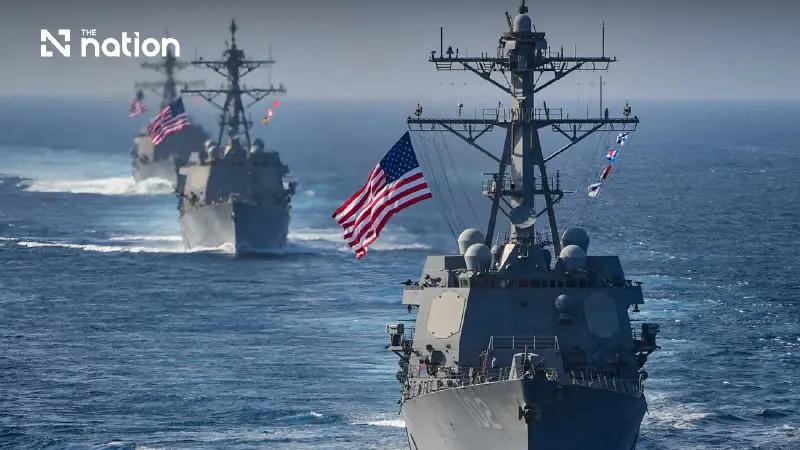


Washington plans further economic pressure on Tehran as ceasefire talks stall, oil supplies shrink and tensions rise around the Strait of Hormuz.
The United States says it can maintain its naval blockade of Iran indefinitely and plans to intensify financial pressure on Tehran as ceasefire negotiations remain stalled, global oil supplies decline and tensions rise across the Middle East.
US Defence Secretary Pete Hegseth said the military had sufficient capacity to maintain its naval presence in the region by rotating vessels in and out as required. The blockade has severely damaged Iran’s economy by restricting maritime trade and oil exports, one of the country’s main sources of foreign currency.
Speaking during a visit to Panama on Thursday (August 13), Hegseth indicated that the US Navy could sustain the operation for as long as the administration considered necessary.
US Treasury Secretary Scott Bessent separately signalled that Washington would announce further measures against Iran during the following week. He told Newsmax that the administration was preparing financial restrictions unprecedented in the history of efforts to isolate a country economically.

June agreement collapses
The pressure campaign follows the collapse of a tentative agreement reached in June that had been intended to end the war and restore commercial shipping through the Strait of Hormuz.
Iran has sought to increase its leverage over Washington by asserting control over the strait, through which about one-fifth of the world’s oil and liquefied natural gas passed before the conflict began in February.
Tehran has attacked some vessels attempting to use the strategic waterway. Two vessels belonging to the state-owned Abu Dhabi National Oil Company were attacked while passing through the strait on Thursday evening, according to the United Arab Emirates’ state news agency WAM.
The UAE government condemned the incident as an Iranian attack.
US President Donald Trump has repeatedly claimed that Washington has total control of the Strait of Hormuz, a position rejected by Iran.
Tehran has maintained that the waterway will not fully reopen until its conditions are met. These include the removal of economic sanctions and the release of frozen Iranian assets.
Shipping traffic through the strait remains far below normal levels. Only eight vessels crossed on Tuesday, compared with a 10-day average of about 12 and between 130 and 140 ships a day before the war.
Blockade cuts Iran’s access to foreign currency
The United States lifted its blockade of Iranian ports and shipping for about a month in mid-June, but later reinstated it after negotiations broke down.
The renewed blockade has cut off Iran’s principal source of hard currency and compounded losses caused by wartime attacks on the country’s energy infrastructure.
Washington had previously indicated that it would lift the blockade once Iran and Oman, which sit on opposite sides of the Strait of Hormuz, reached an agreement allowing commercial shipping to resume.
No such agreement has been finalised, leaving both the US blockade and Iran’s restrictions on the waterway in place.
Trump faces domestic pressure over fuel prices
Trump is also facing growing pressure at home to end the conflict, which remains deeply unpopular among US voters.
High fuel prices have weighed on his approval ratings and could damage the Republican Party’s prospects of retaining control of Congress in November’s midterm elections.
The president has repeatedly threatened to escalate military action and strike Iran more heavily. However, he has so far stopped short of deploying ground troops, seizing strategic islands or ordering attacks on desalination facilities.
Earlier in the week, Trump suggested that the administration would rely more heavily on economic measures than further military action.
Washington has already tightened sanctions on Iran and on individuals and organisations accused of helping the country obtain weapons.
However, the pressure has not persuaded Tehran to return to negotiations.
Oil supply forecast cut again
The continuing disruption is placing greater strain on the global economy.
The International Energy Agency forecast on Wednesday that global oil supply would fall by 4.3 million barrels per day in 2026, equivalent to about 4%.
Only a month earlier, the agency had projected a smaller decline of 3.7 million barrels per day, indicating that the expected supply shortfall had deepened as efforts to restore shipping through Hormuz failed to make progress.
Oil prices nevertheless settled more than 2% lower on Thursday after rising during the previous week. Investors focused on signs of weaker global demand and a sharp increase in US crude inventories.
Reports that Yemen’s Iran-backed Houthi movement had targeted a Saudi Aramco refinery with drones unsettled markets, however, renewing concerns that the conflict could spread further across the region.
Economists have forecast a sharp slowdown in global growth because of the war, with some areas potentially falling into recession. They have warned that the economic impact will become increasingly severe should the conflict continue.
Hegseth declined to say whether the United States had made a mistake by declaring a ceasefire in April, which halted an intensive bombing campaign in exchange for negotiations that ultimately failed to resolve the conflict.
He maintained that Washington was taking the measures it considered necessary to ensure that Iran could not develop a nuclear weapon.
Source: Reuters
