
US signals indefinite Iran blockade, Hormuz tensions rise
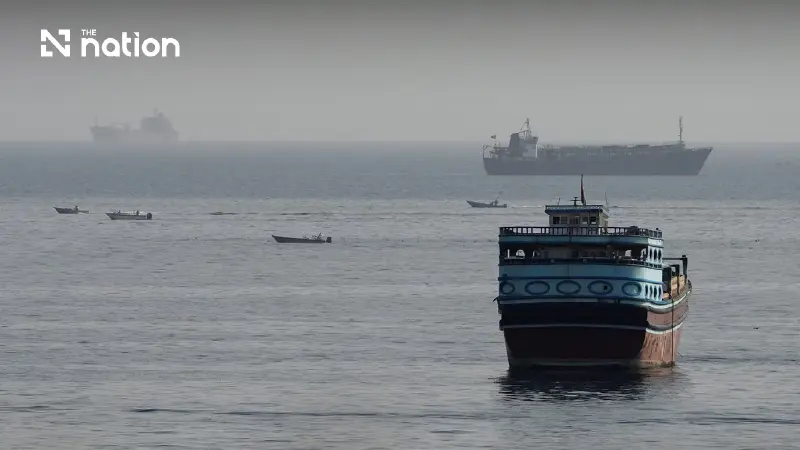


US Defence Secretary Pete Hegseth says the Navy can sustain its blockade of Iran indefinitely as shipping and oil supplies remain disrupted
- The US Defence Secretary announced that the naval blockade targeting Iranian ports and shipping can be maintained indefinitely by rotating warships.
- Tensions have escalated in the Strait of Hormuz as both the US and Iran assert control, leading to attacks on vessels and a dramatic reduction in commercial traffic.
- Iran has threatened an "offensive war" if its demands for sanctions relief are not met and has been blamed for recent attacks on ships in the waterway.
- The conflict has severely disrupted a critical energy route, causing the International Energy Agency to forecast a significant drop in future global oil supply.
The United States could maintain its naval blockade of Iran indefinitely by rotating warships through the region, Defence Secretary Pete Hegseth said, signalling that Washington is prepared to keep economic pressure on Tehran while efforts to restore a peace agreement remain stalled.
“Our Navy can keep that kind of blockade indefinitely because we rotate ships in and out, as we do and will continue to do,” Hegseth told reporters on Thursday (August 13) while travelling to Panama.
The blockade targets Iranian ports and shipping rather than all traffic through the Strait of Hormuz. Washington has previously said neutral vessels travelling to or from non-Iranian destinations would not be impeded.
A preliminary agreement reached in June to end the war later unravelled, and Iran has since sought to control traffic through the Strait of Hormuz while attacking some vessels attempting to transit the waterway.
The United States had temporarily eased its blockade in June before reinstating it in July after renewed tensions over Hormuz.

Shipping falls sharply through Hormuz
Traffic through the Strait of Hormuz fell to eight vessels on Tuesday (August 11), compared with an average of about 12 over the previous 10 days and 130–140 vessels a day before the war.
The United Arab Emirates said two vessels operated by Abu Dhabi National Oil Company were attacked while passing through the strait on Thursday and blamed Iran.
The incident added to a series of attacks and restrictions that have severely curtailed commercial shipping through one of the world’s most important energy routes.
US President Donald Trump has claimed that Washington has “total control” of the Strait of Hormuz, but Iranian officials reject that position.
Hossein Taeb, the recently appointed head of Iran’s Basij paramilitary force, said on Thursday that the strait was “under Iran’s control and management”.
Iran’s Khatam al-Anbiya Central Headquarters has also maintained that vessels cannot use the waterway without Tehran’s authorisation, rejecting US assertions that normal shipping has been restored.
Iran has linked the reopening of the strait to conditions including sanctions relief and the release of frozen Iranian assets.
Tehran signals tougher stance
Mohammad Mokhber, an adviser to Supreme Leader Mojtaba Khamenei, wrote on X that Khamenei’s strategy would be one of “offensive war” if Tehran’s conditions were not met.
Mokhber also advocated an economic and security mechanism for the Strait of Hormuz that would reduce reliance on US military guarantees, an apparent reference to discussions involving Iran and Oman over management of shipping through the waterway.
Washington has previously indicated that its blockade could be lifted if arrangements were reached to restore commercial shipping.
The continuing stand-off has deprived Tehran of access to a major source of foreign-currency earnings and compounded damage to Iran’s energy infrastructure during the war.
Oil supply outlook deteriorates
The International Energy Agency on Wednesday (August 12) forecast that global oil supply would fall by 4.3 million barrels per day, or around 4%, in 2026, compared with its previous forecast for a decline of 3.7 million barrels per day.
Middle East oil loadings had recovered to about 20 million barrels per day at the start of July before falling back to around 12 million later in the month, according to the IEA.
Oil prices nevertheless fell by more than 2% on Thursday as investors focused on weakening global demand and a sharp rise in US crude inventories.
US commercial crude stocks increased by 17.4 million barrels in the week ending August 7, their largest weekly gain since January 2023.
Reports of another Houthi drone attack on a Saudi Aramco refinery have added to concern that the conflict could widen further across the region.
With negotiations unable to restore the June agreement and both Tehran and Washington continuing to assert control around Hormuz, commercial shipping and global energy supplies remain exposed to further disruption.
