
Iran threatens to shut more energy routes as US renews blockade
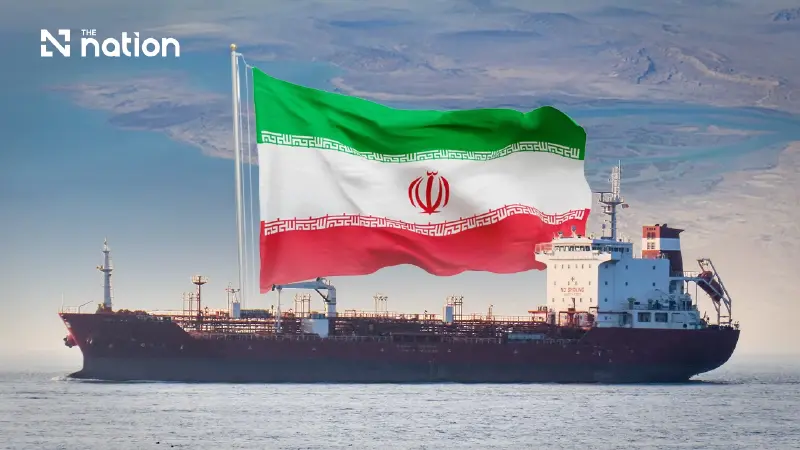


Iran has threatened to shut additional regional energy routes as the US renews its naval blockade, putting Hormuz and Bab el-Mandeb in focus.
Iran’s Islamic Revolutionary Guard Corps threatened on Wednesday to shut other export corridors serving the United States and its allies, escalating the confrontation over the Strait of Hormuz and raising fears that disruption could spread to the Red Sea.
The warning followed Iran’s closure of the Strait of Hormuz and the US military’s resumption of a naval blockade on traffic entering or leaving Iranian ports.
“Regional energy exports are either shared by all, or denied to all,” the IRGC said in a statement carried by Iran’s official IRNA news agency on Wednesday (July 15). The force said the Strait of Hormuz would remain closed until what it described as an end to hostile US actions.
About a fifth of global oil and natural gas trade normally passes through Hormuz, making the waterway one of the world’s most important energy-shipping routes.
Bab el-Mandeb emerges as second pressure point
The IRGC statement did not identify which additional routes could be targeted. However, analysts have increasingly focused on the Bab el-Mandeb Strait, which connects the Red Sea with the Gulf of Aden.
The narrow passage is used for Saudi oil exports and carries a substantial share of international shipping between Asia, Europe and the Middle East. Disruption there would place two major energy and trade chokepoints at risk simultaneously.
A senior official from Yemen’s Iran-aligned Houthi movement said on Monday that its forces were prepared to close Bab el-Mandeb if Saudi Arabia continued attacks on Yemen.
The official claimed that the simultaneous closure of Bab el-Mandeb and Hormuz could send oil prices to US$200 per barrel. The figure was a warning by the Houthi official rather than an independent market forecast.
The threat followed Houthi missile launches towards Saudi Arabia after the group accused the kingdom of bombing an airport under its control. The exchange broke a four-year truce between Saudi Arabia and the Houthi movement, according to Reuters.
US resumes blockade and strikes Iranian targets
US Central Command said it resumed its blockade on July 14, targeting maritime traffic travelling to or from Iranian ports and coastal areas.
CENTCOM said other vessels not violating the blockade would continue to be allowed through regional waters. The original blockade was enforced from April 13 to June 18 before being suspended during an interim diplomatic arrangement.
The US military said its latest wave of attacks struck dozens of military targets near the Strait of Hormuz and along Iran’s coast over seven hours.
Washington said the operation was intended to reduce Iran’s ability to attack commercial shipping. The US has accused Iran of attacking seven commercial vessels during the previous week, leaving nearly a dozen crew members dead, missing or injured.
Iranian officials, meanwhile, said more than 30 civilians had been killed in recent US strikes. Iranian state television also reported that at least seven soldiers were killed in an attack on a military base in the country’s south-east.
Iran claims attacks on US facilities across region
The IRGC said it had retaliated by targeting command, logistics, fuel and military facilities associated with the US Fifth Fleet in Bahrain.
It also claimed to have set fire to and destroyed a US logistics facility in Mina Abdullah, Kuwait, and to have attacked aircraft hangars at what it described as a US base in Azraq, Jordan.
Kuwait’s state news agency reported that emergency services had brought a fire under control at a location targeted by Iran. However, it was unclear whether the incident occurred at the same facility named in the IRGC statement.
Jordan said its air-defence systems intercepted and destroyed three ballistic missiles that entered its airspace from Iranian territory early on Wednesday.
Trump threatens power plants and bridges
US President Donald Trump warned that American attacks could be expanded to Iranian power plants and bridges unless Tehran returned to negotiations.
Speaking to Fox News, Trump said US strikes would intensify over the coming days and that energy and transport infrastructure could become targets the following week. He said US representatives had contacted Iranian officials and urged them to reach an agreement.
The renewed threats, blockade and exchanges of missile fire have placed further strain on the fragile interim arrangement reached in June and increased concern that the confrontation could spread from the Gulf to the Red Sea.
Sources: Reuters, AP News, Centcom.mil
