
US-Iran standoff chokes Hormuz shipping and pushes oil higher
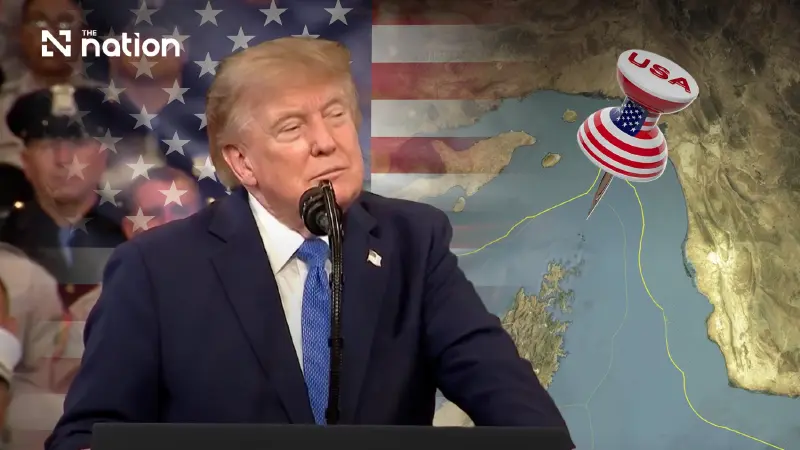


Iran insists it controls the Strait of Hormuz as shipping nearly grinds to a halt, while Trump tells Americans to accept higher fuel prices
Shipping through the Strait of Hormuz has slowed to a fraction of pre-war levels as Iran and the United States deepen their confrontation over control of the strategic waterway, pushing up oil prices and adding to fuel costs for American consumers.
Iranian Deputy Foreign Minister Kazem Gharibabadi said Tehran alone would decide when the strait was opened or closed and rejected US assertions that Washington controlled the passage.
His comments came as diplomatic efforts to revive a peace agreement remained stalled.

US President Donald Trump, meanwhile, urged Americans to accept higher petrol prices while the conflict continues, arguing at a political rally in Garden City, New York, that the cost was justified by Washington’s objective of preventing Iran from acquiring a nuclear weapon.
The average US price of a gallon of petrol stood at about US$4.08 on Friday, up 29% from US$3.16 a year earlier, according to American Automobile Association figures cited by Reuters.
Competing claims over Hormuz
Trump has repeatedly asserted that the United States has “total control” of the Strait of Hormuz through its naval blockade and that vessels cannot pass without US approval.
Reuters reported on August 12 that he described Washington as having total control of the waterway.
The White House has similarly quoted Trump as saying the US blockade controls which vessels are permitted through, while previous presidential remarks described Hormuz as an international waterway that Washington wants kept open and free of tolls.
Iran rejects Washington’s position.
Gharibabadi said the strait could not be seized through public declarations or military deployments and insisted that Iran would continue enforcing its restrictions until the US accepted what Tehran described as its strategic defeat.
The conflicting positions have left the waterway at the centre of the US-Iran conflict.
Iran had previously restricted the waterway, while the United States imposed its own blockade on vessels entering or leaving Iranian ports.
Trump also proposed in July that the United States act as the waterway’s security guarantor and receive a 20% reimbursement on cargo passing through Hormuz, after Washington reinstated its blockade of Iran.
Only two vessels recorded crossing on Friday
Ship-tracking firm Kpler recorded only two vessels passing through the Strait of Hormuz on Friday: a grain vessel entering Iranian waters and an empty dry-bulk ship travelling in the opposite direction.
An empty liquefied-petroleum-products tanker was separately sailing towards the Gulf.
No crude-oil shipments were visible in the tracking data.
Reuters noted that some vessels could be travelling with their transponders switched off, but traffic remained far below the more than 130 vessels a day recorded before the war.
The disruption intensified after vessels operated by Abu Dhabi National Oil Company were attacked while crossing the strait.
The United Arab Emirates blamed Iran for earlier attacks, while another ADNOC vessel came under attack on Friday without reported injuries.
The United States has said it can maintain its naval blockade of Iranian ports indefinitely by rotating naval forces through the region and has threatened further economic pressure on Tehran.
Oil climbs as supply risks increase
Energy markets reacted to the renewed maritime attacks and lack of progress towards peace talks.
Brent crude rose US$1.45 on Friday to US$88.52 a barrel, while West Texas Intermediate gained US$1.15 to US$82.40.
Brent was heading for a weekly rise of 6%, with WTI up 5.4%.
The disruption comes after an interim US-Iran agreement reached in June subsequently unravelled, leaving no clear timetable for negotiations to resume.
Iranian Foreign Minister Abbas Araghchi said no decision had been made on restarting talks with Washington.
Trump said on Friday that Americans should tolerate “a tiny little bit more” in petrol costs while Washington pursued its objective of preventing Iran from obtaining a nuclear weapon.
With Hormuz traffic severely restricted and the two sides continuing to dispute control of the waterway, shipping movements, attacks on commercial vessels and the prospects for renewed negotiations remain central risks for global energy markets.
