
Iran closes Hormuz again as Gulf attacks widen, Thai embassy warns citizens in Kuwait
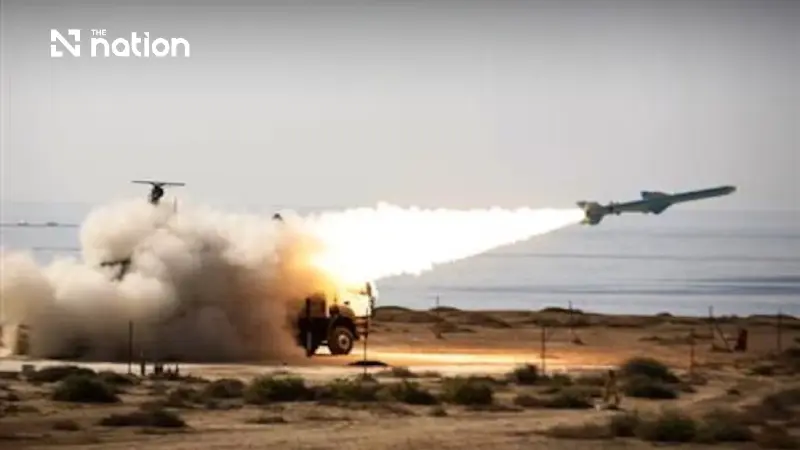


Iran says it has closed the Strait of Hormuz after fresh ship incidents, while missile and drone attacks across Gulf states deepen concern over energy flows and Thai citizens in Kuwait are urged to avoid risk areas.
- Iran has again closed the Strait of Hormuz, a critical global energy route, following a new round of missile and drone attacks with the United States.
- The conflict has widened significantly, with Iranian strikes targeting US-linked facilities in multiple Gulf nations, including Kuwait, Qatar, Bahrain, and Oman, prompting retaliatory US strikes.
- Following attacks that reached Kuwait, the Royal Thai Embassy has issued a safety warning to its citizens, advising them to avoid risk areas and follow local authorities' instructions.
Iran said it had again closed the Strait of Hormuz after a new round of attacks and counter-attacks with the United States, raising fears of another escalation in the Gulf and renewed disruption to one of the world’s most important energy routes.
Reuters reported that US and Iranian forces exchanged heavy missile and drone assaults over the weekend, with Tehran targeting US-linked facilities across Gulf states and declaring the vital waterway closed. The renewed violence has cast further doubt on an interim US-Iran agreement signed last month, which had aimed to reopen the strait and move the conflict towards further negotiations.
The Strait of Hormuz carried about one-fifth of the world’s oil and liquefied natural gas shipments before the war, making any disruption a direct risk to global energy prices, inflation and supply chains. Iran has sought to establish tighter control over vessels passing through the strait and has warned ships not to sail without its authorisation.
According to Reuters, Iran said late on Saturday that it had closed the waterway after firing a warning shot that struck a vessel travelling on an unauthorised route. On Sunday, Tehran said it had disabled a second vessel. India said one of its nationals was missing after an attack on the container ship GFS Galaxy off Oman, while Oman said 23 crew members had been rescued.
Iran’s recently created Persian Gulf Strait Authority said passage through the strait was not currently possible because of what it called recent illegal movements by US forces in the region. It said permits would be issued once stability and calm were restored. The US, meanwhile, said its forces remained positioned to safeguard freedom of navigation and that traffic was continuing through an expanded southern route near Oman.
The latest fighting marks a sharp widening of the conflict. Reuters reported that Iranian strikes reached Qatar, a key mediator in ceasefire talks, and that the United Arab Emirates said its air defences had engaged Iranian missiles and drones. Bahrain said it intercepted several Iranian aerial attacks, Jordan reported missile strikes, Oman reported drone attacks, and Kuwait’s army later reported damage from strikes, including an attack on an oil drilling platform that injured a worker.
Thansettakij also reported that Iran launched a major missile and drone operation targeting locations in Bahrain, Kuwait, Qatar and Jordan, including US military facilities and infrastructure in the region. The Thai outlet said the reported targets included Al Udeid Air Base in Qatar and other US-linked facilities, while Iran also declared the Strait of Hormuz fully closed.
US Central Command said US forces had struck 140 Iranian military targets on Saturday and more than 300 targets over three nights, saying the operations were intended to reduce Iran’s ability to attack civilian mariners and commercial vessels transiting the strait. Iran’s Revolutionary Guards, in response, claimed attacks on US-linked military facilities in Jordan, Kuwait, Oman and Qatar.
The diplomatic track also appeared to be weakening. Iran’s Foreign Ministry condemned US attacks over the weekend and said talks between Iran and Oman in Muscat on managing the strait and transit routes had failed to reach a result because of what Tehran described as US pressure on Oman. Reuters also reported that US President Donald Trump had said in the past week that he considered the ceasefire over, while still leaving open the possibility of further talks.
The attacks have added pressure on Gulf states that host US bases or have played roles in mediation. Qatar said three people, including a child, were injured by falling shrapnel and held Iran legally responsible. Oman summoned Iran’s ambassador to protest drone attacks in two regions, while the US embassy in Oman told American nationals in Duqm and Musandam to shelter in place.
The crisis has also prompted safety warnings for Thai citizens in the region. The Royal Thai Embassy in Kuwait advised Thais to avoid travelling to risk areas, including military bases, after Kuwait’s army said its air-defence system had intercepted a threatening object that entered Kuwaiti airspace. The embassy said explosion sounds heard in some areas were caused by the object being destroyed mid-air.

The embassy urged Thais in Kuwait to closely follow official announcements from both the embassy and Kuwaiti authorities, and to strictly follow local safety instructions if attacks occur. It also asked people not to record or publish photos or videos of attacks on public platforms without permission, warning that doing so would violate Kuwaiti law. In emergencies, Thai citizens can contact the embassy’s emergency number at 60719888.
Despite the warning, the embassy said Kuwait remained able to maintain domestic order and that residents could continue daily life as normal, while urging caution and close monitoring of official information.
The wider economic concern remains the Strait of Hormuz. Reuters said Iran’s effective blockade of the strait since the war began has already pushed energy prices higher and contributed to global inflation. Higher fuel prices are politically sensitive in the United States ahead of congressional elections, while energy-importing economies in Asia are also vulnerable to any prolonged disruption.
For Thailand, the immediate concern is the safety of Thai nationals in Gulf countries and the potential impact on energy costs if maritime disruption continues. Any prolonged closure or restriction on vessels passing through the Strait of Hormuz could affect oil and LNG prices, shipping costs and regional inflation pressure.
The situation now hinges on whether the latest exchange leads to a renewed diplomatic push or a broader military escalation. Iran says it will restart shipping permits when calm returns, while the US insists freedom of navigation must be maintained. Until then, the Gulf remains on edge, with global energy markets watching every movement through the strait.
Source: Reuters
