Chang’e-7’s launch has been delayed by about one month after Storm Narra disrupted plans, while Thailand’s CE-7 MATCH remains ready aboard the spacecraft
The launch of China's Chang’e-7 lunar mission has been postponed by approximately one month due to disruptions caused by Tropical Storm Narra.
The mission carries Thailand's first lunar scientific instrument, CE-7 MATCH, which remains safely installed on the spacecraft and is unaffected by the delay.
A new launch date has not been confirmed, as planners must calculate a new launch window that allows for the proper alignment of the Sun, Earth, and Moon for the flight to the lunar south pole.
The launch of China’s Chang’e-7 lunar mission has been postponed by about one month after Tropical Storm Narra disrupted preparations at the Wenchang Spacecraft Launch Site in Hainan, according to Thailand’s National Astronomical Research Institute (Public Organization), or NARIT.
NARIT announced on Sunday that it had received official confirmation of the revised schedule from the China National Space Administration. The launch aboard the Long March-5 Y14 rocket had most recently been scheduled for August 25.
A new launch date has not been confirmed.
Thai payload remains ready aboard lunar orbiter
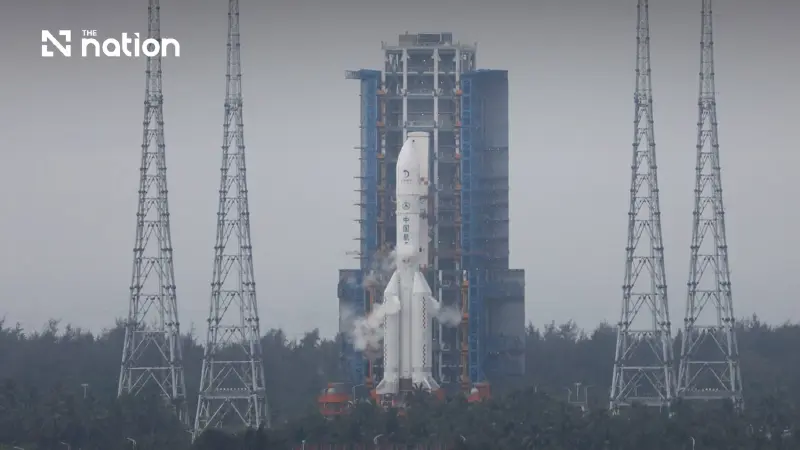
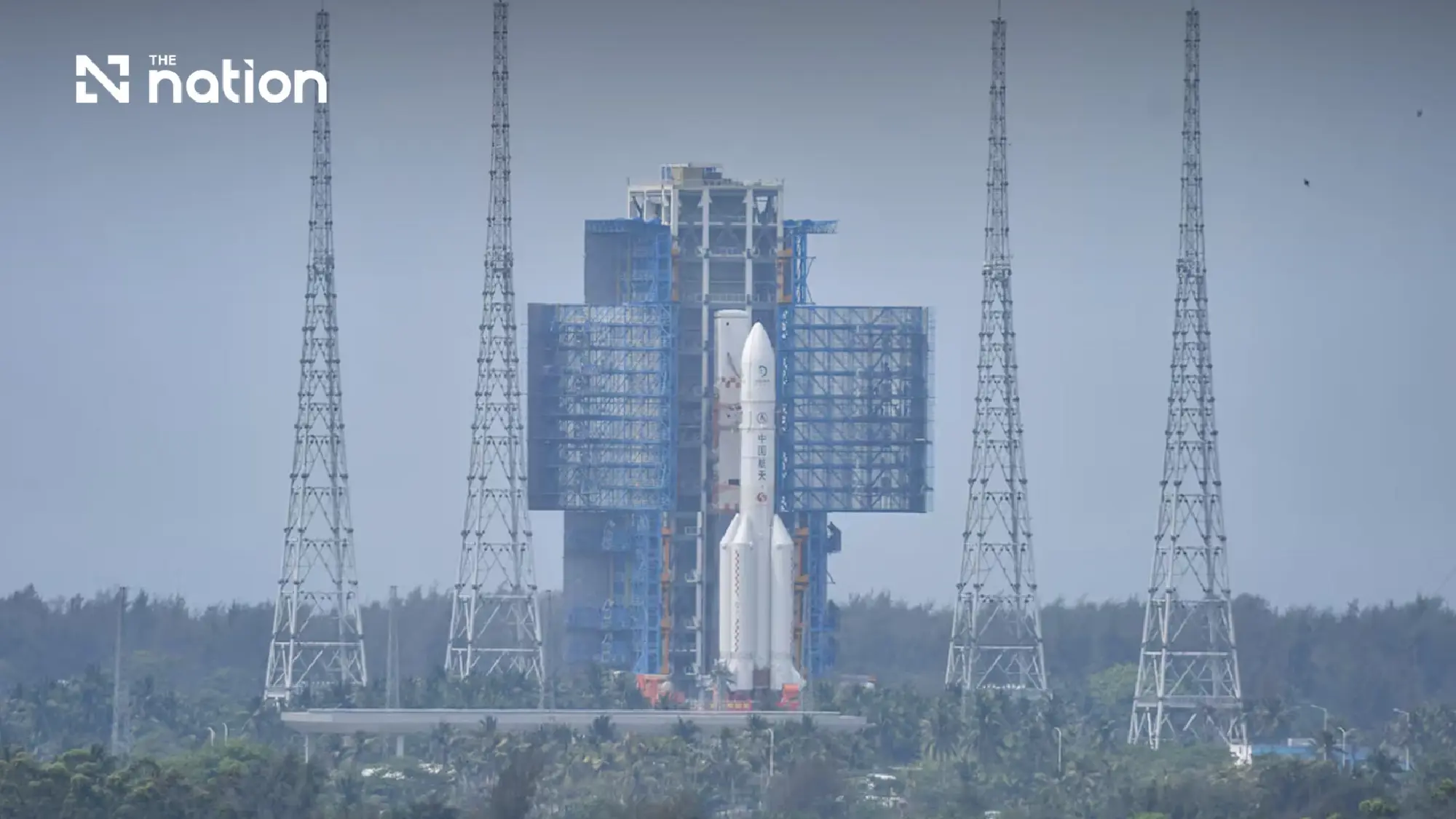
The Long March-5 Y14 rocket is stationed at the Wenchang launch site with the Chang’e-7 spacecraft and Thailand’s CE-7 MATCH scientific instrument still installed and ready for the mission.
NARIT said the postponement would not affect CE-7 MATCH’s scientific objectives.
Dr Wiphu Rujopakarn, director of NARIT, said space missions carry high expectations and significant technical challenges, making it essential for conditions and systems to be fully ready before launch.
“Sometimes a delay is necessary to maximise the mission’s chances of success,” he said.
The Thai payload was selected as one of seven international scientific instruments aboard Chang’e-7.
New launch window must be calculated
NARIT attributed the postponement to Tropical Storm Narra, which developed over the South China Sea and created unfavourable conditions for the rocket launch.
Mission planners must also calculate a new launch window because Chang’e-7 aims to land near the Moon’s south pole.
The flight requires a suitable alignment between the Sun, Earth and Moon, limiting the periods in which the spacecraft can begin its journey.
These requirements mean the next suitable launch window may be about one month later than originally planned.
NARIT said it would announce the confirmed date, time and livestream details once the new schedule is finalised.
CE-7 MATCH, or Moon-Aiming Thai-Chinese Hodoscope, was developed by NARIT and Mahidol University through Thai-Chinese cooperation under the International Lunar Research Station programme.
The instrument will operate aboard the Chang’e-7 lunar orbiter rather than the mission’s lander.
It is designed to detect cosmic rays and other high-energy particles while studying the relationship between the Sun, Earth and Moon.
The observations are intended to improve understanding of radiation sources, how space radiation is generated and its possible effects on future human activity in space.
The findings could support long-term space exploration and research related to a future human presence on the Moon.
CE-7 MATCH is the first scientific instrument designed and developed by Thai researchers to leave Earth for an international lunar exploration mission.
Its scientific concept, design, construction, assembly and testing involved Thai scientists and engineers working with partners in Thailand and abroad.
NARIT’s mission briefing confirms that the instrument was developed in Thailand and selected as one of Chang’e-7’s seven international scientific payloads.