
US threatens Iran’s business partners in ‘Economic D-Day’ campaign
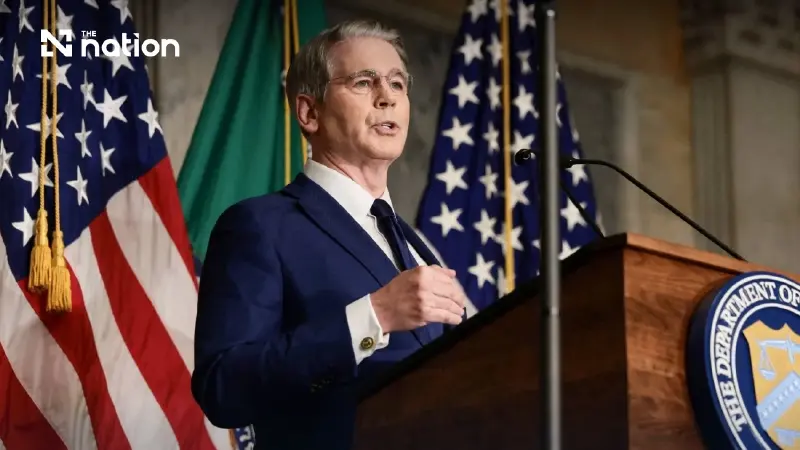


Washington is expanding sanctions to cut Tehran’s global revenue channels and pressure Iran to halt attacks and reopen the Strait of Hormuz.
The United States has announced an expansion of sanctions against Iran in an effort to sever what it described as every economic lifeline sustaining the government in Tehran.
President Donald Trump’s administration hopes the intensified pressure will force Iran to end a conflict that has continued for almost six months, disrupted oil shipments and pushed up energy costs for the US and global economies.
US Treasury Secretary Scott Bessent described the campaign as “Economic D-Day”, saying it represented a final warning to countries to end their commercial relationships with Iran.
Companies and major institutions in countries that continue doing business with Tehran could be cut off from the US dollar-based financial system, he warned.
Bessent said Washington was launching an economic offensive against Iran’s financial networks worldwide, targeting revenue channels that support the government until Tehran is isolated economically.
However, he did not identify which countries would initially be targeted or when the new penalties would take effect.

US seeks halt to attacks on shipping routes
The latest measures form part of Washington’s effort to pressure Iran into ending attacks on vessels in the Gulf, as well as strikes by Iranian-aligned groups in the Red Sea.
The attacks followed the start of US and Israeli air strikes against Iran in February.
Tehran said the pressure campaign would have the opposite effect. It argued that the United States had imposed sanctions on Iran for decades and, although they had caused severe economic damage, had failed to persuade the country’s leaders to change their policies.
The conflict has disrupted regional shipping, affected oil transportation and increased pressure on both the US and global economies.
Oil prices fell on Monday after rising for two consecutive weeks as investors took profits and awaited greater clarity over the new US sanctions.

China under scrutiny as leading buyer of Iranian oil
China’s role is expected to be a central issue because it has been the largest buyer of Iranian oil in recent years.
Bessent has previously called on Beijing to cooperate with Washington. However, the reinstatement of the US blockade of Iranian ports in mid-July has already reduced the volume of Iranian crude reaching China.
Analysts said Washington was proceeding cautiously over any sanctions against Chinese banks because such action could provoke retaliation from Beijing before expected talks between Trump and Chinese President Xi Jinping next month.
Critical minerals are expected to be among the most sensitive issues in those discussions.
Asked whether Chinese banks could be targeted, Bessent said: “No one is beyond the reach of US sanctions.”
China’s Foreign Ministry responded that sanctions and pressure would not resolve the conflict, adding that Beijing would take necessary measures to protect the country’s interests.
The US Treasury said it had been tracking networks, intermediaries and financial channels allegedly used by Iran to smuggle oil and evade existing sanctions.
Washington plans to work with its partners to target revenue that it regards as illegally obtained by Tehran.
The US identified five sectors considered important to Iran’s economy: digital assets, technology, gold, aviation and maritime shipping. It warned that each could face additional sanctions.
The Treasury had previously imposed restrictions on nearly 60 individuals, entities and vessels linked to Iran.

Iran warns ships against unauthorised Hormuz passage
Trump has also threatened tariffs on imports from countries doing business with Iran, including Turkey, Iraq and India, although the US Supreme Court has overturned the legal basis previously used for such tariffs.
Iran responded by warning commercial vessels not to pass through the Strait of Hormuz without permission.
Tehran named 45 ships that it alleged had violated its rules and threatened retaliation if cargo were transferred between vessels connected with those ships.
Pakistan’s army chief, Asim Munir, who has close relations with Trump, visited Iran on Monday for talks on the regional situation.
A Pakistani source said one of the visit’s principal objectives was to encourage Iran to return to negotiations.
Tanker attacked in Red Sea
The United States and Iran have not launched air strikes against each other’s forces for several weeks, but attacks on vessels in and around the Strait of Hormuz have continued.
The last formal direct negotiations between Washington and Tehran were held in June.
In the latest maritime incident, a projectile reportedly struck an oil tanker west of the Saudi Arabian city of Yanbu in the Red Sea, causing a fire on its main deck.
A spokesman for Yemen’s Iran-aligned Houthi movement claimed that the group had attacked a vessel in the area.
Saudi Arabia’s national shipping company also confirmed that one of its ships had been attacked.
The incident underlined the continuing risks to Middle Eastern energy routes even as Washington intensifies its economic pressure on Iran.
