
Iran’s trade partners face threat of tougher US sanctions
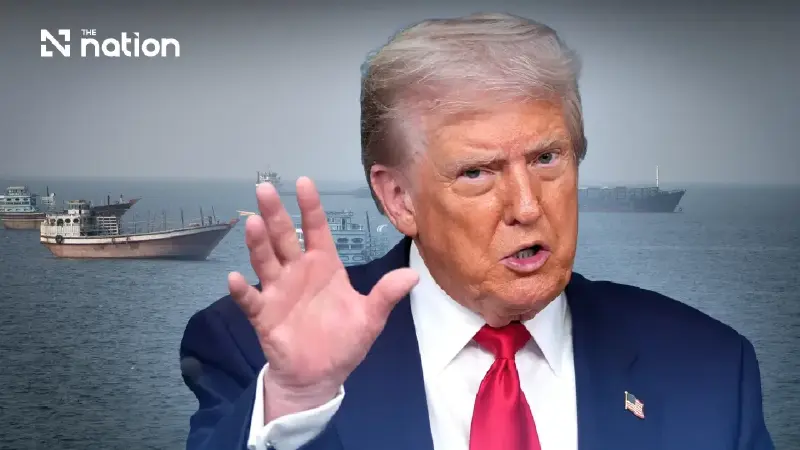


China, the UAE, Turkey and Iraq are among Iran’s major trade partners exposed to possible US economic penalties over links with Tehran
- The US has threatened "economic consequences" for countries that continue trading with Iran, a campaign described as "Economic Warfare."
- China, Iran's largest oil buyer, is a primary target, with the US having already sanctioned a Chinese refinery and warned its banks.
- Key regional partners like the UAE, Turkey, and Iraq have substantial trade ties at risk; Iraq is particularly vulnerable due to its dependence on Iranian gas for electricity.
- Nations are responding differently to the pressure, with the UAE suspending financial transactions while Turkey has indicated it will continue its trade with Iran.
Iran’s principal trading partners could face greater pressure from Washington after US President Donald Trump threatened economic consequences for countries that continue supporting Tehran.
Trump described his campaign to isolate Iran as “Economic Warfare” and issued the warning on Wednesday (August 19, 2026).
It remains unclear which countries, companies or financial institutions could be targeted if Washington extends its measures beyond Iran.
The renewed warning follows an earlier Trump threat to impose a 25% tariff on countries trading with Iran.

Trade figures point to differing levels of exposure across nine significant partners: China, the United Arab Emirates, Turkey, Iraq, Oman, Pakistan, India, Armenia and Azerbaijan.
Energy purchases dominate several of these relationships, while others depend on re-exports, consumer goods, informal border trade or exchange arrangements.
China’s oil purchases lead the exposure
China is Iran’s largest oil buyer and receives more than 80% of its shipped crude. Commodity data company Kpler estimated that Chinese purchases averaged 1.38 million barrels per day in 2025.
Over the past decade, China has developed a ring-fenced network of refiners that primarily processes Iranian oil and has limited exposure to the United States.
Refinery and trading sources involved in the business said Iranian crude delivered to China had long been labelled as Malaysian and, more recently, Indonesian.
Transactions are settled in Chinese currency through a closed system involving multiple intermediaries that are difficult to trace.
The US Treasury sanctioned an independent Chinese refinery in April for purchasing Iranian oil worth billions of dollars. It also warned Chinese banks that they could face secondary sanctions if they facilitated the trade.
Chinese Foreign Ministry spokesman Lin Jian rejected the use of economic coercion, saying: “Sanctions and pressure will not solve the problem.” He urged the parties to pursue a political and diplomatic solution.
Discounted prices created by existing US sanctions have made Iranian crude attractive to China’s independent refiners. Trump’s latest warning could subject these buyers and their financial networks to additional scrutiny.
UAE, Turkey and Iraq retain substantial ties
The United Arab Emirates has historically provided Iran with an important route into regional financial and trading networks. Dubai banks have long held deposits linked to Iran, although much of that money is now immobilised under US sanctions.
World Trade Organization figures show that the UAE supplied about 30% of Iran’s imports in 2024, worth US$21 billion. It also received 13% of Iranian exports that year.
Non-oil trade between the two countries was valued at US$6.6 billion in 2024, according to the UAE Economy Ministry, with re-exports accounting for most of the transactions.
The UAE this week suspended all financial and economic transactions with Iran indefinitely, citing Tehran’s military escalation and missile threat. The suspension could further restrict Iran’s access to financial and commercial channels beyond those already affected by US sanctions.
Turkey has given no indication that it intends to curtail its trade with Iran. Bilateral commerce is worth about US$5-6 billion annually, including approximately US$3 billion in Turkish exports.
Iran supplies natural gas to Turkey, which imports nearly all the gas it consumes. Iranian shipments account for 13% of Turkey’s total gas imports, while Turkey sells manufactured goods to the Iranian market.
Iraq’s trade with Iran exceeded US$10 billion in 2025, driven largely by Iranian exports of food, consumer goods and other products.
Mohammed Karim, an Iraqi Trade Ministry official familiar with commerce between the two countries, said trade declined in 2026 after the Iran war began. Higher regional security risks, periodic disruption at major border crossings and rising transport costs reduced the volume and reliability of cross-border shipments.
Energy creates a separate vulnerability. Iraq pays Iran about US$4-5 billion a year for natural gas used to generate electricity, according to Iraqi energy officials.
Two officials said new US sanctions on Iraq could make it significantly harder for Baghdad to maintain payments for Iranian energy without exposing itself to American penalties. Existing restrictions already require Iraq to settle the payments through restricted accounts.
Oman, Pakistan and India face different risks
Oman has maintained cordial relations with Iran since before the 1979 Islamic Revolution. Muscat has frequently served as an intermediary between Tehran and other governments, including Washington.
Trade in goods between Oman and Iran reached US$1.5 billion in 2025, according to Oman’s National Centre for Statistics and Information. The figure stood at US$345 million during the first four months of 2026.
Pakistan could suffer a significant setback if Washington penalises countries trading with or assisting Iran, analysts said. Islamabad and Tehran have set a target of expanding bilateral trade to US$10 billion.
Formal trade largely stopped after earlier sanctions were imposed on Iran but has recently begun to recover. Unofficial estimates place informal trade at about US$4 billion.
The two countries signed an interim agreement in Islamabad in June and moved to expand their commercial cooperation. Oil, wheat, rice, livestock and medicines have long crossed the border through informal channels.
India’s trade with Iran contracted sharply after Washington continued its sanctions campaign against Tehran in 2020.
Two-way commerce fell by more than two-thirds, from US$17 billion to about US$4.8 billion in the 2019/20 financial year. It declined further to US$1.63 billion in 2025/26, according to India’s Commerce Ministry.
Indian exports accounted for US$1.3 billion of the latest total, led by cereals, tea, coffee and spices. New Delhi officials have previously argued that these shipments serve humanitarian purposes and should remain outside the scope of sanctions.
Armenia and Azerbaijan record trade growth
Iran accounted for US$768 million, or 3.6%, of Armenia’s total trade turnover in 2025, according to official Armenian statistics.
Bilateral trade reached a reported US$371.4 million in the first half of 2026, up 8.4%. Armenian exports to Iran were valued at US$42.8 million, down 6%, while imports were reported at US$336.9 million, up 12%.
About 20% of Armenia’s foreign trade passes through Iran. The two countries also operate a gas-for-electricity exchange under which Armenia uses Iranian gas to generate power, sending part of the electricity back to Iran and retaining the remainder for domestic consumption.
Trade between Azerbaijan and Iran rose 4.5% year on year to US$312.6 million between January and June 2026, from US$299.1 million in the same period of 2025, according to Azerbaijan’s State Customs Committee.
Azerbaijan’s imports from Iran increased 1.5% to US$297 million, from US$292.7 million. Its exports to Iran rose 2.4-fold from US$6.4 million to US$15.6 million, while Iran’s share of total Azerbaijani imports increased from 2.54% to 3.56%.
