
Japan spends record 15.4tn yen on FX intervention amid US warning
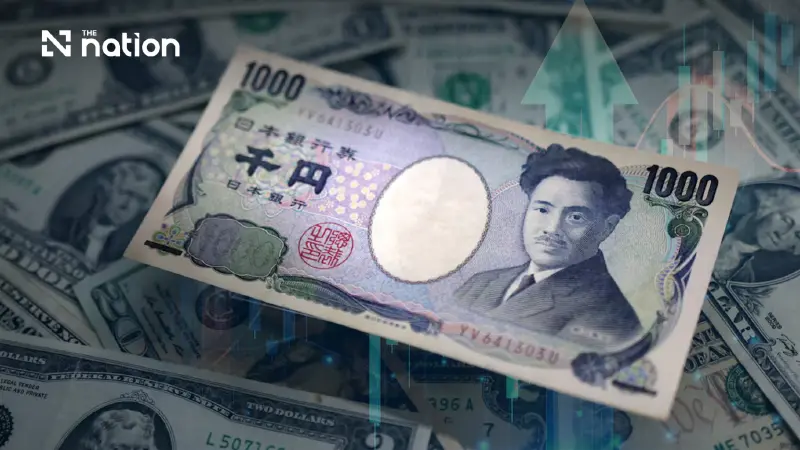


Tokyo deployed a record 15.4 trillion yen to support its currency, while Washington warned that disorderly moves could unsettle global markets and raise US borrowing costs.
- Japanese authorities spent a record 15.4 trillion yen ($96.5 billion) between July 30 and August 26 to support the yen after it fell to a 40-year low against the dollar.
- The intervention included a rare joint operation with the United States on July 31, aimed at preventing the yen's sell-off from destabilizing global markets.
- U.S. Treasury Secretary Scott Bessent warned that disorderly currency movements could trigger a global financial crisis, justifying Washington's involvement as a necessary preventative measure.
Japanese authorities spent a record 15.4 trillion yen (US$96.5 billion) intervening in the foreign-exchange market between July 30 and August 26, the Ministry of Finance reported on Friday (August 28).
The intervention followed a slide that took the yen close to 164 per dollar, its weakest level in 40 years.
The currency’s weakness has pushed up import costs, particularly for energy, while threatening profits at major Japanese exporters.
Japan imports almost all its energy, with 95% coming from the Middle East, leaving the country exposed to supply disruption caused by the Iran war.
The Bank of Japan (BOJ) entered the market to buy yen on July 30 and 31, with the United States joining the July 31 operation in a rare joint intervention.
The move signalled their determination to prevent a sell-off in the yen and Japanese government bonds from spreading through global markets.
US Treasury Secretary Scott Bessent later warned that disorderly currency movements could trigger “forced unwinds” of positions, destabilising markets worldwide and ultimately raising borrowing costs for US households and businesses.
South Korean officials reported at the time that the Bank of Korea had timed its own won-buying intervention to coincide with Japan’s operation and amplify its effectiveness.

The ministry’s published total does not show how much was spent on individual days.
A detailed daily breakdown will not be available until the quarterly figures are released, probably in early November.
BOJ data issued earlier this month suggest that the July 30 intervention may have reached 9.6 trillion yen, far exceeding the confirmed single-day record of 6.3 trillion yen set on April 30 this year.
The yen initially strengthened from around 163 per dollar to 155.20 by August 3 before stabilising at about 159.50, where it had remained since August 10.
It later weakened back towards 160 and briefly slipped below the 160-per-dollar level on Friday after comments by Federal Reserve chair Kevin Warsh revived expectations of a near-term US interest-rate rise.
The threshold is widely viewed as increasing the likelihood of further intervention.
The renewed decline came despite expectations that the BOJ could raise interest rates soon.
The central bank left rates unchanged at its July meeting, although policymakers signalled a willingness to accelerate the pace of tightening.
Markets put the likelihood of an increase at its next meeting in September at 65%.
Japan’s comparatively slow tightening has kept its interest rates low relative to those in markets such as the United States, encouraging investors to finance global trades with inexpensive yen.
Bessent made his comments in a letter dated August 27 and posted on his X account the following day.
He was responding to Democratic Senator Elizabeth Warren’s demand for an explanation of Washington’s involvement in the joint intervention.
Bessent explained that the US Treasury had conducted its part of the operation by exchanging foreign-currency assets held in the Exchange Stabilization Fund (ESF) for yen.
The ESF is an emergency reserve managed by the Treasury to stabilise foreign-exchange and domestic financial markets.
The Treasury used the ESF last year to support Argentina’s peso market and provide a US$20 billion currency swap line intended to stabilise the currency.
“The same principle was at work in Argentina, where Treasury used the Exchange Stabilization Fund to stabilize Argentina in a moment of acute, short-term illiquidity and to prevent the problem from becoming a broader regional crisis,” Bessent wrote.
“The best-managed crisis is the one that never happens,” Bessent added, defending Washington’s decision to join Tokyo.
Earlier this month, he pledged that the United States would do “whatever it takes” to support Japan’s effort to stabilise the yen, adding that the currency’s substantial undervaluation could cause other economic problems or encourage competitive devaluations elsewhere.
Washington has also pointed to a Federal Reserve backstop for major central banks to demonstrate Japan’s continued capacity for large-scale intervention.
Introduced in 2020 to steady markets during the pandemic, the facility allows Japan to obtain dollar liquidity without selling US Treasuries outright.
Source: Reuters
