
Iran war divides global economy into winners and losers
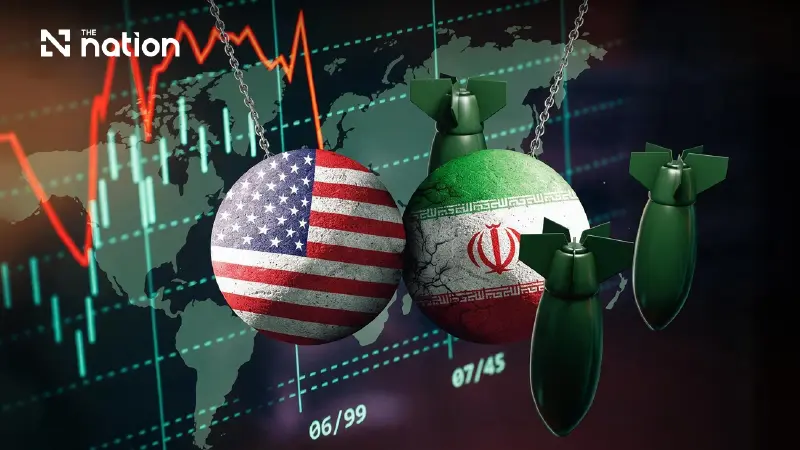


Six months of war have lifted profits for oil, defence and banking groups while raising costs for taxpayers, airlines, carmakers and vulnerable households
- Energy companies and defense contractors are major beneficiaries, with oil firms like ExxonMobil and Shell reporting record profits and weapons manufacturers securing multi-billion dollar contracts.
- Financial institutions are profiting from market volatility, while industries like aviation and car manufacturing are suffering from high fuel costs, supply chain disruptions, and weaker consumer demand.
- The economic burden falls heavily on taxpayers, who are funding the war's escalating costs, and on vulnerable households facing rising food and fuel prices, which increases the risk of hunger.
- The conflict has also boosted both renewable energy and coal, as high fossil fuel prices have strengthened the economic case for alternatives to oil and gas.
Six months after the United States and Israel launched their war against Iran, disruption to energy markets is continuing to spread through the global economy.
Oil companies, defence contractors and banks have emerged among the industries benefiting from higher prices, increased military spending and greater financial-market activity.
Taxpayers, airlines, carmakers and vulnerable households, meanwhile, are absorbing higher public spending, fuel costs, food prices and supply-chain disruption, according to an analysis by Al Jazeera.
Oil companies gain while taxpayers face rising costs
The closure of the Strait of Hormuz and Iranian attacks on energy infrastructure in Gulf countries have pushed oil prices higher and lifted earnings at several major energy companies.

Second-quarter and recent quarterly results included:
- ExxonMobil reported a profit of US$14.5 billion, its strongest quarterly result in four years.
- Chevron recorded a profit of US$12 billion, its highest in six years.
- TotalEnergies reported US$6 billion, up from US$3.6 billion a year earlier.
- Shell and BP more than doubled their year-on-year earnings to US$9.8 billion and US$5.73 billion respectively.
- Saudi Aramco recorded a profit of US$33.4 billion, about one-third higher than a year earlier.
- Abu Dhabi National Oil Company reported a contrasting result, with second-quarter profit falling 52% to US$665 million from US$1.39 billion.
Ipek Ozkardeskaya, senior analyst at Swissquote Bank, said supply shortages remained a business risk but energy companies could raise prices to offset lost revenue and protect profits.
The disruption has increased fuel costs and exposed economies that depend on energy transported through the Strait of Hormuz.
US taxpayers face a different burden. US Defence Secretary Pete Hegseth told Congress in late July that the war had cost as much as US$37.5 billion by that point, although he did not provide a detailed breakdown.
Linda Bilmes, senior lecturer in public policy at Harvard Kennedy School, said that estimate appeared to cover mainly the immediate cost of munitions. It did not fully account for longer-term expenses such as repairing military facilities or supporting injured service personnel.
“My analysis shows that total budgetary costs are likely to reach US$1 trillion,” Bilmes said.
Defence contracts rise while hunger risks deepen
Reports have suggested that the United States may be running short of Patriot and Terminal High Altitude Area Defense interceptors in the Middle East, although the Trump administration has denied that its weapons stocks are running low.
The Pentagon has nevertheless announced major agreements to expand production:
RTX Corporation received a US$22.9 billion contract to increase production of Tomahawk cruise missiles.
Lockheed Martin secured a contract worth up to US$58.6 billion to triple production of Patriot interceptor missiles.
US and Gulf forces have used large numbers of interceptors against Iranian missiles and drones, increasing demand for missile defence, counter-drone technology and replacement munitions.
Higher fuel and fertiliser costs are creating a sharply different outcome for poorer households. Gerben Hieminga, an energy-market specialist at ING Research, noted that the Gulf is an important source of both energy and fertiliser feedstocks.
He said farmers could respond to higher fertiliser prices by using less, reducing agricultural yields and pushing food prices higher several months later. Vulnerable food-importing countries in Africa and Asia would face the greatest risks.
The World Food Programme estimated that an additional 7.1 million people in Somalia, Afghanistan and Sri Lanka were already struggling to obtain sufficient food because of the war’s economic effects.
Banks profit while airlines struggle
Market volatility has encouraged increased trading as investors seek opportunities or move money from equities into assets perceived as carrying lower risk, including bonds.
The four largest US banks, JPMorgan, Bank of America, Citigroup and Wells Fargo, reported double-digit profit growth in the second quarter. Their combined net profit reached US$42.5 billion.
HSBC’s quarterly net profit increased 60% to US$10.1 billion, while earnings at France’s Société Générale rose 23% to US$2.04 billion.

The aviation sector has moved in the opposite direction. Iranian missile and drone attacks forced tens of thousands of flights to be cancelled or diverted during the early months of the conflict.
The International Air Transport Association estimated that Middle Eastern airlines were heading towards a combined loss of US$4.3 billion after recording a profit of US$7.2 billion in 2025.
Air New Zealand also cited higher fuel costs when reporting a loss of about US$200 million for the 12 months ending June 30.
Airlines have faced a combination of expensive jet fuel, restricted airspace, longer routes and cancelled services. Gulf carriers and European and Asian airlines operating heavily along east-west routes have been particularly exposed.
Renewables and coal both benefit
Higher fossil-fuel prices have strengthened the economic case for renewable energy, including solar, wind and hydropower.
At least 26 countries and regions, including China, Australia, Canada and France, have announced clean-energy initiatives in response to the conflict, according to the Global Energy Crisis Policy Monitor.
The International Energy Agency expects electric vehicles to account for 29% of total vehicle sales in 2026, which would be the highest share recorded.
Jan Rosenow, professor of energy and climate policy at the University of Oxford, said the conflict had strengthened the structural case for renewable energy at a time when energy demand was reaching record levels in several countries.
Coal has also benefited. South African thermal-coal producer Thungela Resources reported that its half-year profit had doubled as more countries sought alternatives to oil and gas.
Indonesia reversed plans to restrict coal production and reduce excess supply in March. Coal prices reached US$131.85 per tonne in July, compared with US$102.20 a year earlier.
Energy data company Ember estimated that global coal production could increase by 1.8% by the end of 2026 from a year earlier under its worst-case scenario.
Carmakers face higher costs and weaker demand
Vehicle manufacturers have been affected by rising prices for aluminium, plastics, paint and specialised materials used in semiconductor production.
Toyota reported that global sales fell almost 5% in July, marking a sixth consecutive monthly decline. The Japanese manufacturer had previously warned that the conflict could cost it as much as US$4.3 billion.
Volkswagen’s second-quarter earnings fell by nearly one-third as war-related costs compounded growing competition from Chinese carmakers.
Erin Keating, executive analyst at Cox Automotive, said the conflict’s less visible effects included production and export disruption affecting Toyota, Mazda and Hyundai in the Middle East, the rerouting of vehicles to the United States and higher material costs.
Although expensive fuel could provide limited support for sales of electric and hybrid vehicles, Keating said the overall effect on the automotive market was likely to remain negative if consumers continued postponing purchases.
Source: Bangkokbiznews
