
Anak Krakatau ash reaches 15km, Japan rules out tsunami impact
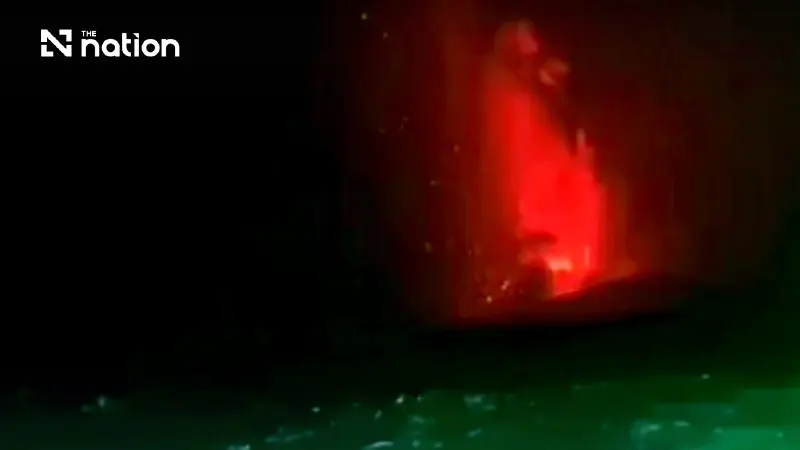


Japan says the Anak Krakatau eruption poses no tsunami impact to the country, while Indonesia maintains a 3km exclusion zone around the volcano
Indonesia’s Anak Krakatau volcano sent ash approximately 15 kilometres high during an eruption that continued into Saturday, September 5, while Japan subsequently confirmed that the event would have no tsunami impact on the country.
The Japan Meteorological Agency (JMA) issued the assessment at 12.30pm Japanese time, or 10.30am in Thailand and western Indonesia, according to an updated Weathernews report. No significant sea-level changes had been observed at monitoring stations in Japan or overseas.
Japan had earlier begun checking for possible tsunami effects following the eruption. Indonesian authorities meanwhile maintained a three-kilometre exclusion zone around the active crater and urged coastal communities to remain calm.

Ash reaches approximately 15 kilometres
The Darwin Volcanic Ash Advisory Centre’s bulletin issued at 9.30am Western Indonesian Time identified ash reaching flight level 500, equivalent to approximately 15.2 kilometres. Satellite observations showed the upper ash cloud moving west, while a lower layer drifted south to southeast.
The eruption began at 11.07pm on Friday, September 4, and continued overnight, according to Indonesian reports citing the Geological Agency. Observers described sustained lava fountains accompanied by rumbling and explosive sounds.
Indonesia’s National Disaster Management Agency (BNPB) said volcanic material had damaged a monitoring camera, stopping it from operating. Anak Krakatau remained at Level III, or Siaga, with residents, fishermen and visitors instructed to stay outside the three-kilometre danger zone.

Japan completes tsunami assessment
Weathernews reported that JMA initially announced monitoring at 4am Japanese time, taking account of the unusual sea-level disturbances associated with the January 2022 Tonga eruption. Its subsequent assessment ruled out tsunami effects on Japan from the latest Anak Krakatau eruption.
The Tonga eruption prompted warnings and advisories across several Pacific countries, including Japan, as covered in The Nation’s report on the 2022 eruption.
In Indonesia, Geological Agency head Lana Saria said the part of Anak Krakatau that had rebuilt since the December 2018 disaster remained relatively small.
Based on the agency’s assessment at the time, it was not considered capable of a collapse large enough to trigger a tsunami. Officials would nevertheless continue monitoring volcanic activity and changes to the volcano’s shape.
The 2018 tsunami followed the collapse of part of the volcano into the sea, striking coastal areas around the Sunda Strait.
Coastal residents urged to remain calm
Lana said loud booms and strong vibrations reported in West Java, Banten and Lampung were suspected to be linked to the eruption. She advised coastal residents in Banten and Lampung to remain calm and continue normal activities while following local disaster officials’ instructions.
ANTARA quoted BNPB official Berton SP Panjaitan as saying that authorities understood residents’ concerns following the 2018 disaster. The measures outlined in its report did not include an immediate evacuation order for surrounding communities.
BNPB identified three priorities:
- Enforcing the three-kilometre exclusion zone through local government and disaster agency patrols.
- Preparing evacuation routes and coastal assembly points.
- Preventing people from approaching the volcano to photograph or film the eruption.
