
Fed’s first rate rise since 2023 tests Warsh’s ties with Trump
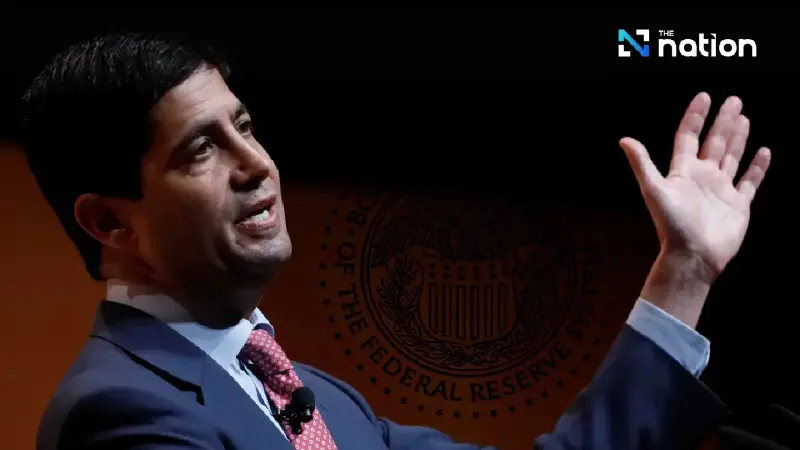


The Federal Reserve’s first rate rise since 2023 could raise US borrowing costs, while Donald Trump calls for interest rates of 1% or less
- The Federal Reserve, led by Chair Kevin Warsh, raised its benchmark interest rate on September 16, 2026, marking the first increase since 2023.
- Warsh justified the rate hike as a necessary measure to combat persistent inflation, which he stated has remained "too high for too long."
- The decision puts Warsh at odds with President Trump, who appointed him and publicly demanded that interest rates be lowered to 1% or less.
The US Federal Reserve raised its benchmark interest rate by 0.25 percentage points to 3.75–4.00% on September 16, 2026, in its first increase since 2023 as it stepped up efforts to contain persistent inflation. The new target range was confirmed in the Fed’s policy statement.
The Fed’s September 16 increase, which markets had anticipated, reverses one of the three rate cuts made in 2025 and marks a major early policy decision under Fed chair Kevin Warsh.
Energy disruption and AI spending raise inflation concerns
The prolonged Middle East war, particularly the conflict with Iran, has disrupted energy markets and renewed inflationary pressure since early 2026, raising concerns that price increases could spread more widely.
Senior Fed officials are also concerned that the surge in investment in artificial intelligence (AI) infrastructure could add to inflationary pressure.
The Fed’s tighter policy is intended to restrain spending and prevent inflation from becoming entrenched. Higher borrowing costs could add to the burden on Americans financing homes, cars and other needs while already struggling with daily living expenses.
For the US economy, renewed tightening also risks worsening underlying vulnerabilities and bringing growth to a standstill, even as the Fed works to restore price stability.
Warsh sees stronger growth but inflation remains too high
Warsh told his September 16 press conference that the rate decision came as the US economy appeared to be strengthening. New hiring, private-sector earnings and business investment had all improved in recent months and were pointing in a positive direction, he said. His remarks were reported by Barron’s.
Warsh said on September 16 that the US labour market was healthy but inflation had remained above the Fed’s target for more than five years, making price stability its overriding priority. “The plain fact is that inflation is too high, and has been for too long,” he said.
In his September 16 assessment, Warsh also highlighted price increases above 3% a year across many goods and services, citing measures covering six and 12 months.
“This summer’s inflation readings do not tell me that underlying trends have meaningfully improved,” Warsh said at the September 16 press conference.
Trump calls for US interest rates of 1% or less
US President Donald Trump, who selected Warsh to lead the Fed and has repeatedly pressed for lower rates, renewed his demand after the September 16 decision. Trump wrote on social media that US interest rates should be 1% or less, while avoiding a direct attack on Warsh.
“We are ‘carrying’ almost every country in the world on our shoulders, and this cannot continue,” Trump wrote. “Lower interest rates for the United States of America, and fast!”
Bloomberg reported that Fed policymakers had pencilled in another rate increase later in 2026, setting up a further test of the relationship between Warsh and Trump.
