
Trump Nominates Kevin Warsh for Fed Chair Amid Global Scrutiny
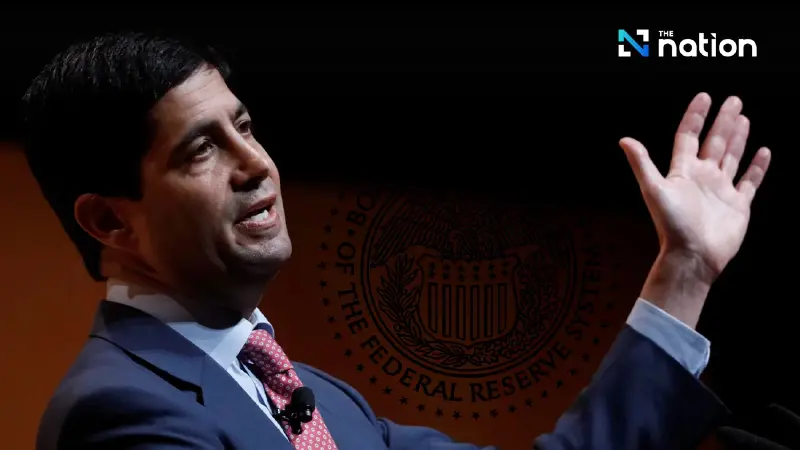


Kevin Warsh, former youngest Fed governor, is nominated by Trump as Fed Chair, challenging the system amidst global concerns about central bank independence
US President Donald Trump has officially nominated Kevin Warsh, a former Federal Reserve governor, as the next Chairman of the Federal Reserve.
This announcement comes as current Chairman Jerome Powell’s term is set to end in mid-2026.
Warsh’s nomination has raised concerns about political interference in the Federal Reserve's independence and the future direction of US interest rate policy under Trump's administration.
Warsh, who was appointed to the Fed in 2006 by President George W. Bush, became one of the youngest governors in the history of the Fed at just 35 years old. He played a crucial role during the 2008-2009 financial crisis, coordinating between the Fed, the US Treasury, and the financial sector to stabilize the economy.
However, he missed out on becoming Fed Chairman in 2017, with Trump opting for Jerome Powell instead.
Warsh’s failure to secure the position in 2017 later became a point of contention, with Trump expressing regret over his decision and developing a strained relationship with Powell.
Over the years, Warsh has frequently criticised the Fed's monetary policy, particularly its expansion of the balance sheet, quantitative easing, and what he viewed as market-distorting policies. His stance on these issues has made him a strong advocate for changing the structure and strategy of the Fed.
He has called for a “regime change” within the central bank, suggesting that the Fed should reduce the size of its balance sheet, exercise caution with long-term liquidity injections, and return to a more disciplined and predictable policy framework.
As an economist and policy critic, Warsh has aligned more closely with Trump’s economic vision, particularly in terms of supporting tariffs and advocating for quicker interest rate cuts.
This has led to speculations that his nomination signals a shift in the Fed’s policy direction towards a more politically aligned approach.
While Warsh’s appointment could potentially lead to a change in monetary policy, the actual implementation will depend on the Federal Open Market Committee (FOMC), which consists of seven Fed governors and five regional Fed presidents.
On a personal note, Warsh is married to Jane Lauder, the daughter of Ronald Lauder, a major donor to the Republican Party and heir to the Estée Lauder fortune.
Warsh's ties to both the political and financial elites are well-established, with his wife’s family also having close ties to Trump, further cementing his influence in the broader economic landscape.
