
Many major Japan firms fully accept pay hike demands
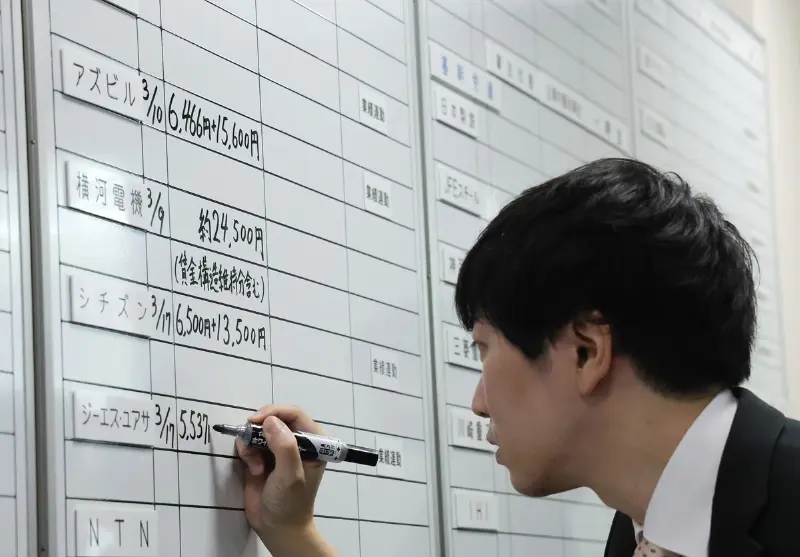


Many major Japanese companies fully accepted their unions' pay hike demands on Wednesday (March 18), when this year's "shunto" spring labour-management negotiations reached a climax.
Despite an uncertain business environment due partly to US President Donald Trump's high tariff policy and escalating tensions in the Middle East, moves to raise wages to secure skilled workers are spreading among large firms.
In the automobile industry, Toyota Motor Corp. fully met its union's request for monthly wage and bonus hikes for the sixth straight year. The leading Japanese automaker aims to reward employees who are working hard to improve productivity in defiance of a tough business climate, reflecting the US tariff policy.
Honda Motor Co. also fully accepted its union's pay scale hike demand of 12,000 yen per month, although the company is set to post a massive loss for the fiscal year ending this month due to sluggish electric vehicle sales.
Suzuki Motor Corp. said it will conduct a pay hike that exceeds its union's demand.
Earlier this month, Nissan Motor Co. and Mazda Motor Corp. announced decisions to fully accept hikes requested by their respective unions.
In the electronics sector, Hitachi Ltd., Mitsubishi Electric Corp., NEC Corp., Fujitsu Ltd. and Panasonic Holdings Corp. fully accepted a unified pay scale hike request of 18,000 yen per month, marking the highest agreed level under the current negotiating format.
The record pay hike reflects solid earnings amid growing demand related to artificial intelligence and data centres.
"We will make new investments amid uncertainty to improve our performance even further and overcome a difficult situation," Hitachi Vice President Susumu Takimoto said at a press conference.
Meanwhile, Toshiba Corp.'s response fell shy of its union's demand, offering a pay scale hike of 16,000 yen per month.
Elsewhere, Mitsubishi Heavy Industries Ltd., Kawasaki Heavy Industries Ltd. and IHI Corp. offered a pay scale hike of 16,000 yen, fully accepting the amount requested for the fourth consecutive year on the back of strong orders for defence-related equipment.
At all three major steelmakers, however, management responses fell short of the levels requested by labour, reflecting drops in steel prices. Against a uniform pay scale hike demand of 15,000 yen, Nippon Steel Corp. proposed 10,000 yen, JFE Steel Corp. 7,000 yen and Kobe Steel Ltd. 13,000 yen.
The focus of this year's shunto is whether wage hikes of 5 per cent or more will be realised for the third straight year. Close attention is being paid to whether the wage-hike momentum will spread to small companies, which employ about 70 per cent of all workers in Japan. Many small firms are due to give their responses to union demands after large companies make theirs.
Still, concerns are rising that soaring energy prices blamed on the prolonged conflict between US-Israeli forces and Iran will pressure corporate earnings in Japan.
Companies are also increasingly adopting measures to improve their treatment of middle-aged and older workers to retain talent.
In the fiscal year starting next month, Hitachi plans to review its system for rehiring employees who have reached retirement age, with a view to maintaining their salaries if they continue performing the same duties.

[Copyright The Jiji Press, Ltd.]
