
Vietnam takes bigger step into global vehicle export markets
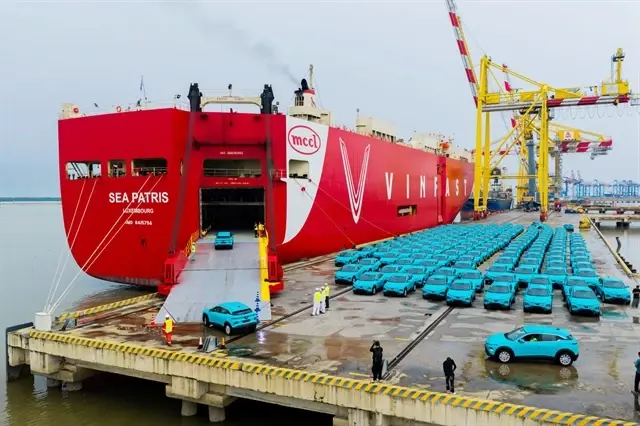


Local automakers are pushing beyond ASEAN as VinFast and Hyundai Thanh Cong expand shipments of Vietnamese-built vehicles worldwide.
- Vietnam's automotive industry is shifting from domestic assembly to exporting completely built-up vehicles to more demanding global markets, including Europe, Australia, and the United States.
- Local manufacturers like VinFast and Hyundai Thanh Cong are leading this expansion, with VinFast shipping thousands of EVs to over 10 markets and Hyundai exporting to the Americas and Oceania.
- The current export initiative represents a much larger ambition and scale than previous efforts, reflecting years of preparation to meet international quality and technology standards.
- Significant challenges remain, including a large trade imbalance where vehicle imports far exceed exports, a heavy reliance on imported components, and the difficulty of building brand recognition in competitive markets.
Vietnam’s automotive industry is attempting to move beyond its traditional role as an assembly base, with local manufacturers increasing exports of completely built-up (CBU) vehicles to overseas markets.
The latest expansion reflects a shift in strategy among domestic automakers, which previously focused mainly on regional ASEAN markets but are now targeting more demanding destinations including Europe, Australia and the United States.
VinFast has emerged as a key driver of the export push.
In late July, two specialised vehicle carriers arrived at Hai Phong Port to transport more than 5,000 electric vehicles to Europe and Southeast Asia, marking the company’s 37th and 38th dedicated overseas shipments.
The milestone came less than four years after VinFast exported its first batch of 999 vehicles internationally.
The company now has a presence in more than 10 major markets, including the US, Canada, Europe, India, Indonesia, the Philippines and the Middle East.
Alongside vehicle exports, Green SM has expanded its operations into Laos, the Philippines, Indonesia, India and Kazakhstan, while also looking towards Europe.
Hyundai Thanh Cong has also strengthened Vietnam’s presence in global automotive markets through exports of Hyundai vehicles to Mexico, Australia, Taiwan and China.
Vehicles produced at the company’s Ninh Binh plant have expanded beyond Asian destinations to markets across Asia, the Americas and Oceania.
The company plans to export 5,120 components and 10,160 finished vehicles this year.
Nguyen Minh Son, director of the Hyundai Thanh Cong plant, said the export programme was the result of years of preparation, including the development of manufacturing capacity, technology expertise and quality standards needed for international markets.
He said shipments to Mexico and Australia represented a significant milestone and would support the company’s more ambitious export goals.
However, the expansion comes as Vietnam’s automotive sector continues to face a major imbalance between imports and exports.
In the first seven months of this year, the country imported 178,223 CBU vehicles worth US$3.5 billion, rising 46.7 per cent in volume and 30.3 per cent in value year on year.
Meanwhile, Vietnam’s automotive exports remain largely concentrated on components rather than finished vehicles.
Localisation remains the biggest challenge
Ninh Huu Chan, former secretary general of the Vietnam Automobile Manufacturers’ Association, said Vietnamese companies had exported vehicles before, with Thaco shipping trucks to Africa, Laos and Cambodia and Daewoo Bus exporting long buses.
However, he said the current export drive represented a much larger ambition and scale among domestic manufacturers.
VinFast’s overseas expansion has shown the strongest progress in markets such as India and Indonesia, he said.
But entering highly demanding markets such as the US and Europe remains difficult because establishing a recognised brand requires significant time and investment.
Economist Nguyen Tri Hieu said Vietnam still faced a fundamental challenge because many major vehicle components continue to be imported despite cars carrying the “Made in Vietnam” label.
He said manufacturers needed to increase investment in research and development (R&D) and develop key technologies themselves, including engines and vehicle operating systems, to compete in global markets.
Hieu added that choosing the right market strategy was equally important.
Instead of competing directly in the world’s largest and most competitive consumer markets, Vietnamese automakers should focus on niche opportunities or build stronger positions in Asia before expanding into Europe.
He also stressed that selling vehicles was only the first step in global competition.
Long-term success depends on after-sales services, customer support, spare-part availability, trained technicians and reliable service networks that can build consumer confidence.
To attract higher-quality foreign direct investment into supporting industries, Vietnam needs sufficient domestic demand and export volumes to help reduce production costs, he said.
Hieu warned that weaknesses in logistics infrastructure, limited access to credit and exchange-rate instability could affect costs and profit margins as exports grow.
He said sustainable success for “Made in Vietnam” vehicles would require improvements across the entire automotive chain, from R&D and supply networks to industrial infrastructure.
Source: Vietnam News
