
Trust, Tech, and Resilience Take Centre Stage at 17th FutureChina Global Forum
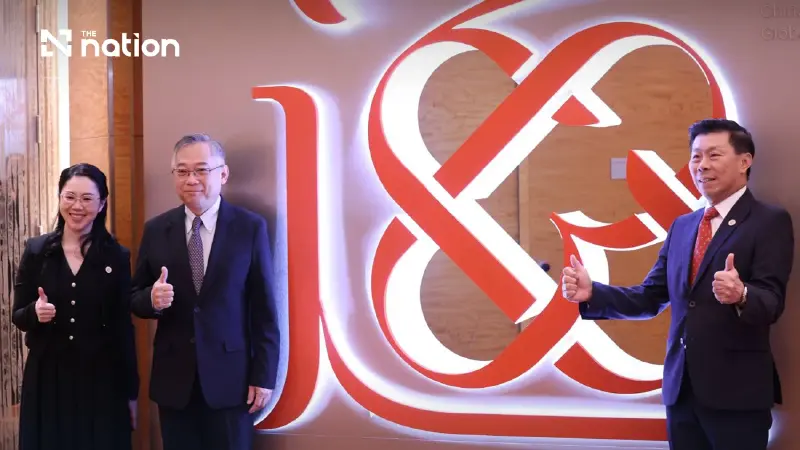


Over 1,400 global leaders converged at the Sands Expo to address AI adoption, ASEAN’s openness, and China’s economic transition in a multipolar world
- The forum focused on technology, particularly the safe, responsible, and ethical adoption of Artificial Intelligence (AI), emphasizing human oversight and international standards.
- Rebuilding trust was a central theme, discussed in the context of protecting the rules-based international order and ensuring predictable regulations to sustain long-term investment in China.
- Strengthening resilience was a key topic, with discussions on fortifying supply chains against geopolitical shocks and navigating China’s economic transition to new growth sectors like EVs and AI.
- Over 1,400 global leaders gathered to address these themes, along with ASEAN's openness and China's evolving economic landscape in a multipolar world.
Over 1,400 global leaders converged at the Sands Expo to address AI adoption, ASEAN’s openness, and China’s economic transition in a multipolar world.
The 17th FutureChina Global Forum (FCGF) concluded on Friday (September 25) following two days of high-level dialogue on how governments and businesses can navigate accelerating artificial intelligence (AI) adoption, China’s economic transition, and intensifying competition across an increasingly multipolar global landscape.
Organised by Business China under the theme “Strengthening Resilience, Rebuilding Trust”, the flagship bilingual forum convened more than 1,400 delegates and representatives from over 1,000 public, business, and technology organisations at the Sands Expo and Convention Centre in Singapore.
Spanning the AI Track on 24 September and the Main Forum on 25 September, speakers moved beyond broad assessments of technological disruption and geopolitical friction to outline practical strategies for leadership.
Five dominant themes emerged across the event:
• Protecting the rules-based international order amidst growing global fragmentation.
• Building organisational capability to deploy AI safely and responsibly.
• Identifying value within China’s evolving industrial and consumer landscapes.
• Safeguarding ASEAN’s openness as regional competition intensifies.
• Fortifying supply chain resilience against external economic and geopolitical shocks.

ASEAN Openness and Regional Cooperation
Opening the Main Forum on Friday as Guest of Honour, Singapore’s Deputy Prime Minister and Minister for Trade and Industry, Gan Kim Yong, highlighted the region's collective imperative to maintain stability and adaptability
"As Singapore assumes the ASEAN chairmanship in 2027, we will work together with our fellow member states to deepen integration and strengthen ASEAN's capacity to respond to change," said Gan. "We want an ASEAN that remains open to the world, equipped with the capabilities, connections, and agency to shape our own future."
Addressing the broader geopolitical backdrop, Lee Yi Shyan, chairman of Business China, noted that major-power rivalry and technological competition are fundamentally reshaping international relations.
"Singapore, China, and the rest of Asia should proactively create new opportunities for cooperation and growth," Lee said. "By focusing on international affairs, economic developments, and emerging industry trends, the Forum serves as a vital annual gathering in Singapore for global experts from diverse backgrounds."

AI Strategy: Execution, Safety, and Trust
The forum commenced on Thursday with a dedicated AI Track opened by Tan Kiat How, Senior Minister of State for Digital Development and Information & Health.
Tan emphasised that Singapore’s AI advantage lies in its ability to translate technology into tangible outcomes, rather than attempting to match larger economies in capital expenditure on compute power or frontier models.
He urged organisations to rethink workflows and upskill workforces rather than simply layering AI onto legacy operational models.
Panellists examined China’s rapid AI adoption, powered by policy support, robust capital, and extensive infrastructure.
Discussions highlighted China’s manufacturing base as a natural testing ground for embodied AI, whilst noting that scaling safely requires high-quality, real-world data.

Delegates also explored opportunities for Singapore-China collaboration, combining China’s deep engineering talent with Singapore’s well-governed, trusted regulatory framework.
Closing the AI Track, experts called for stringent accountability as autonomous systems mature, stressing the need for continuous testing, clear human oversight, and international alignment on ethical standards.

Economic Realignment and China’s Next Growth Phase
With China entering its 15th Five-Year Plan period, economists and investors turned their attention to emerging growth drivers, including electric vehicles (EVs), advanced battery technology, AI, and high-value manufacturing.
Speakers noted that while these sectors carry strong momentum, predictable regulation, fair market access, and reliable infrastructure remain critical to sustaining long-term investment.
Furthermore, analysts stressed that boosting domestic consumer confidence—through real estate stabilisation, social security enhancements, and steady income growth—will be vital to balance rapid gains in high-tech manufacturing.
As Chinese enterprise expands across Southeast Asia, ASEAN is playing a crucial role in absorbing production capacities and fostering regional supply chain integration.
Concurrent panels highlighted a shift towards value-conscious consumer spending across Asia, paired with rising demand for products offering enhanced convenience, health benefits, and superior customer experience.

Fireside Chat: Remaining Relevant in a Fragmented Economy
The forum featured a fireside chat with Minister Chan Chun Sing, Coordinating Minister for Public Services and Minister for Defence.
Chan stressed that Singapore must maintain its relevance in a fragmented global economy by understanding and engaging with diverse geopolitical perspectives.
For ASEAN to remain competitive, Chan noted, businesses must be able to operate seamlessly across deeper regional integrations in financial systems, data infrastructure, and energy grids.
Launched in 2010, the FutureChina Global Forum has grown into one of Asia’s premier platforms for dialogue on China’s development and its strategic engagement with the region and the wider world.
