
Vietnam draft removes landed houses from foreign ownership rules
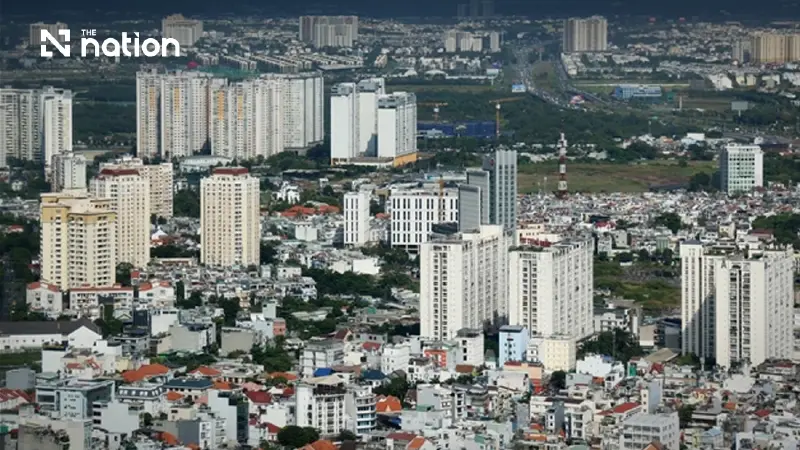


Lawyer Nguyen Van Dinh proposes house ownership without land-use rights in Vietnam, while Danny Vo urges protection for foreigners with valid ownership certificates.
- A proposed revision to Vietnam's Law on Housing would remove landed houses from the types of property that foreigners are eligible to own.
- Under the draft, eligible foreign individuals and organisations would still be permitted to purchase and own apartments, subject to certain restrictions like a 30% cap per building.
- The change is intended to align housing regulations with a national land policy resolution that prevents foreigners from receiving transfers of land-use rights, which are tied to landed houses.
- The proposal specifies that foreigners who already hold legally valid ownership certificates for homes in Vietnam will retain full protection of their property rights.
Foreign home ownership would continue in Vietnam under a proposed revision of the Law on Housing released on September 13.
The general rules would allow eligible foreign individuals and organisations to own apartments, while removing the provisions for landed houses.
Foreigners already holding legally valid ownership certificates for homes in Vietnam should retain full protection for their property rights, Danny Vo, vice president of the Ho Chi Minh City Association for Liaison with Overseas Vietnamese, said.
He specified transfers, gifts, mortgages and inheritance.
The Ministry of Construction estimates that foreign individuals and organisations hold more than 6,000 homes in Vietnam, including acquisitions made before the 2023 Law on Housing took effect.
Its figures show 1,519 homes acquired nationwide since the law took effect.
Foreign ownership remains relatively small.
Nguyen Duy Thanh, vice chairman of the Ho Chi Minh City Apartment Building Operation and Management Association, cited the small number of landed houses owned by foreigners as the reason he expected only a limited effect on property prices and liquidity from Vietnam's proposed housing change.
Vietnam draft preserves rights for foreign spouses
The draft would preserve the same home ownership rights as Vietnamese citizens for foreigners married to Vietnamese citizens living in Vietnam.
For foreigners married to overseas Vietnamese, corresponding rights would apply provided the overseas Vietnamese spouse is permitted to enter Vietnam.
Equal home ownership rights for foreign spouses of Vietnamese citizens should attach only to housing jointly owned by the couple, Hanoi Bar Association lawyer Nguyen Van Dinh proposed.
He called for clearer rules, with separately owned property still subject to the restrictions for foreigners.
Foreign nationals, overseas Vietnamese, people of Vietnamese origin and dual nationals need clearer distinctions in the rules, Vo said.
To encourage overseas Vietnamese investment in Vietnam, he proposed simpler procedures for verifying Vietnamese origin and consistent procedures from one locality to another.
Vietnam draft keeps apartments open to eligible foreigners
For foreign organisations operating in Vietnam and foreign individuals permitted to enter the country, the draft would allow eligible apartments to be received as gifts or inherited.
Commercial apartments could also be bought or acquired through lease-purchase from project developers.
Eligible foreigners can currently own apartments and landed houses within housing development projects in Vietnam, subject to limits on numbers and locations.
The Ministry of Construction said existing restrictions already cover the number of units held by foreigners in each condominium building, project location and national defence and security.
Foreign apartment ownership in Vietnam would run from the date the ownership certificate is issued, with a maximum term of 50 years under the draft.
Any extension would depend on the building's remaining useful life and could be granted only once, for up to another 50 years.
In Vietnam's draft, foreign individuals and organisations could together hold no more than 30% of the apartments in any condominium building.
The same ceiling would apply separately to each building where a project contains several.
Project lists published by local authorities would identify where foreign home ownership is allowed.
Under the draft, Vietnam's government would define areas needing protection for national defence and security, and housing projects in those areas would be excluded from foreign ownership.
Vietnam links housing revision to land-use policy
The housing revision is intended to align with Resolution 21-NQ/TW, the Ministry of Construction said.
Adopted by the Communist Party of Vietnam's Central Committee on July 28, the resolution states that land cannot be privatised and foreigners cannot receive transfers of land-use rights.
Overseas Vietnamese are exempt from the transfer restriction.
Dinh pointed out that apartment owners in Vietnam already share land-use rights over their condominium project's site.
He argued that foreigners could be allowed to own landed houses without acquiring land-use rights, if ownership of the house were recognised separately from rights to the land beneath it.
Dinh said separating house ownership from land-use rights could satisfy Resolution 21-NQ/TW while encouraging foreign workers, specialists and businesspeople to live and work in Vietnam.
Vo proposed considering a long-term leasing framework for designated areas in Vietnam, allowing strategic investors, specialists and foreigners married to Vietnamese citizens to rent landed houses.
Careful management of land access is necessary for national defence and security in Vietnam's strategically important locations, including border, coastal and island areas, Thanh said.
He emphasised that land is a finite national resource with strategic importance.
Excluding landed houses would align Vietnam's foreign home ownership rules with land policy, the Ministry of Construction said.
Continuing to allow foreign apartment ownership under strict conditions would not affect national defence or security, it added.
Source: Vietnam News
