
Historic Tokyo building reopens to showcase 1930s architecture
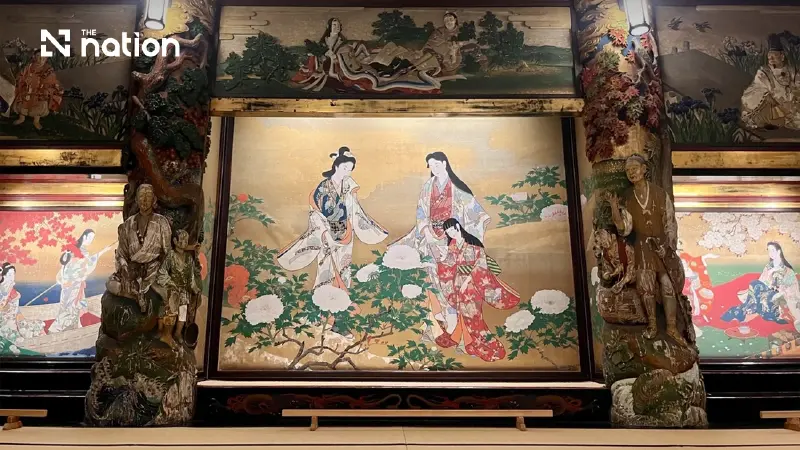


Visitors can explore seven ornate rooms linked by 99 wooden steps during a special viewing in Tokyo lasting until March 30, 2027.
- Tokyo's historic Hyakudan Kaidan building has reopened for a special viewing until March 2027, with fewer exhibits to better showcase its 1930s architecture.
- The focus is on original features from its 1935 completion, including ornate ceiling paintings, pillars, and seven traditional rooms decorated with good fortune motifs.
- A key item on display is a restored pre-WWII rotating table, believed to be the oldest in Japan, reflecting the building's original use as part of a traditional restaurant.
Tokyo’s Hyakudan Kaidan is welcoming visitors again with far fewer exhibits, giving them a clearer view of the historic building’s 1930s architecture and ornamentation.
Public access resumed on October 1 after a year-long closure.
Visitors have until March 30, 2027, to attend the special viewing at the Tokyo metropolitan government-designated tangible cultural property.
With only a few objects on display, ceiling paintings, pillars and architectural details are easier to appreciate than during previous events, when exhibits and showcases partly concealed them.
A rotating table restored from a piece dating from before the Second World War is among the objects on show.
Located in Jippo, the building’s first room, it is believed to be the oldest surviving rotating table in Japan.
Its mother-of-pearl decoration draws on a traditional technique used on lacquerware and other objects.
Shimmering, silvery-white sections of shell are cut out and fitted into the surface to create the inlay.
The table and the surrounding architecture provide a connection to Hyakudan Kaidan’s former use as a ryotei, or traditional Japanese restaurant, following its completion in 1935.
It belonged to the former Meguro Gajoen, a venue famous for lavish banquets and wedding receptions.
Hyakudan Kaidan retains much of its original appearance despite the redevelopment that transformed the wider complex.
Most of the buildings in the original 1935 complex were demolished in 1988.
“As the cityscape continues to transform, the survival of Hyakudan Kaidan, nearly unchanged since the early Showa period, holds profound significance, allowing the area's history and memories to remain present within the modern landscape,” its public relations office said.
Good fortune is a recurring theme in the interiors: about 100 associated motifs appear in paintings and architectural decorations on ceilings, walls and alcove pillars.
These can be found throughout seven traditional Japanese-style rooms linked by a wooden staircase of 99 steps.
Growing prosperity, good fortune and future success are conveyed by numerous folding fan designs, known as sensu.
Their shape expresses the concept of suehirogari, meaning widening towards the end, as a folding fan does when opened.
The public relations office described the purpose of the viewing: “We aim to have visitors experience the architecture firsthand and directly feel its charm.”


[Copyright The Jiji Press, Ltd.]
