
Trump-Putin diesel deal opens way for 36m barrels as US eases sanctions
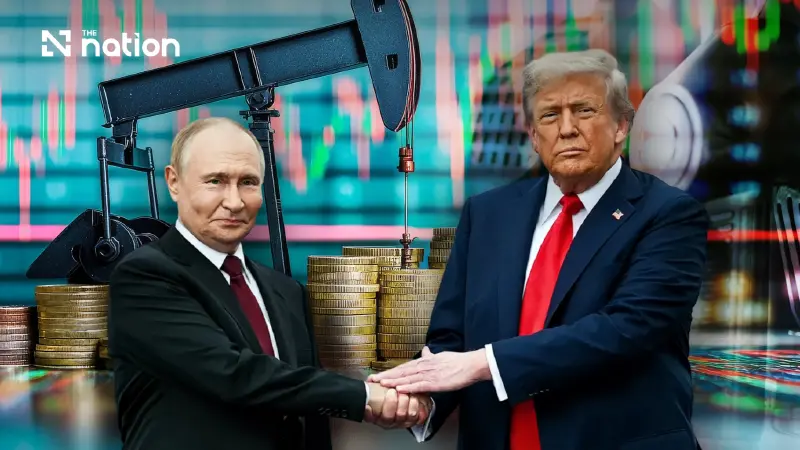


Donald Trump says Russia will supply about 36 million barrels of diesel to US and global markets as Washington temporarily eases sanctions until April 2027.
US President Donald Trump has announced a deal with Russian President Vladimir Putin for Moscow to supply millions of tonnes of diesel to the United States and global markets, as Washington temporarily relaxes sanctions on Russian diesel in an effort to ease soaring fuel prices.
Trump said Russia had agreed to release more than 300,000 metric tonnes immediately, followed by 500,000 tonnes in November, another 1 million tonnes shortly afterwards, and a further 3 million tonnes within a relatively short period, depending on the condition of Russian refineries.
The total announced volume of about 4.8 million tonnes is equivalent to roughly 36 million barrels of diesel.
The agreement comes as global diesel supplies remain severely constrained by the conflicts in the Middle East and Ukraine, while Ukrainian attacks have also reduced Russian refining capacity.
US diesel prices averaged US$6.28 a gallon on October 9, compared with US$3.68 a year earlier, according to AAA data.
The International Energy Agency has highlighted a severe squeeze in diesel markets, with combined net diesel and gasoil exports from Gulf producers and Russia in August running about 1.6 million barrels per day below February levels.
Treasury opens temporary sanctions window
Following Trump’s announcement, the US Treasury Department’s Office of Foreign Assets Control (OFAC) issued General License 135, authorising transactions involving the sale, delivery, offloading and importation of Russian-origin diesel.
The licence explicitly permits imports into the United States and remains in force until 12.01am Eastern Daylight Time on April 7, 2027.
The measure does not lift all sanctions on Russia. Instead, it creates a temporary exemption for qualifying diesel transactions under specific Russia-related sanctions programmes.
The move marks a notable shift in Washington’s approach only weeks after Trump signed legislation granting the US president broad authority to impose tariffs on major importers of Russian oil and gas.
Zelenskyy warns deal could help fund Russia’s war
Ukrainian President Volodymyr Zelenskyy criticised the easing of restrictions, warning that allowing Russia to increase petroleum exports would provide Moscow with additional financial resources for its war against Ukraine.
Zelenskyy described the decision as effectively an “investment in war” and argued that stronger economic pressure on Russia was still needed.
Questions remain over Russia’s ability to deliver
Analysts have questioned whether Russia can supply the full amount announced by Trump.
Russian refineries have been repeatedly targeted by Ukrainian drone attacks, reducing refining capacity, while Moscow has also imposed restrictions on diesel exports to protect domestic supply.
Andy Lipow, president of Lipow Oil Associates, has raised doubts about how much genuinely additional diesel Russia can bring to the global market.
Clayton Seigle, senior associate in the Energy Security and Climate Change Program at the Center for Strategic and International Studies (CSIS), estimated that the arrangement could allow Russia to increase diesel exports by more than 100,000 barrels per day.
Even if the announced supplies arrive in full, analysts caution that the volume may not be large enough to significantly ease a global market already facing major refinery and transport disruptions.
The deal nevertheless provides Russia with a temporary route back into the global diesel market while giving the Trump administration another tool in its effort to bring down domestic fuel costs.
