
WTI rises 0.8% on Oct 30 amid fears of US strikes on Iran
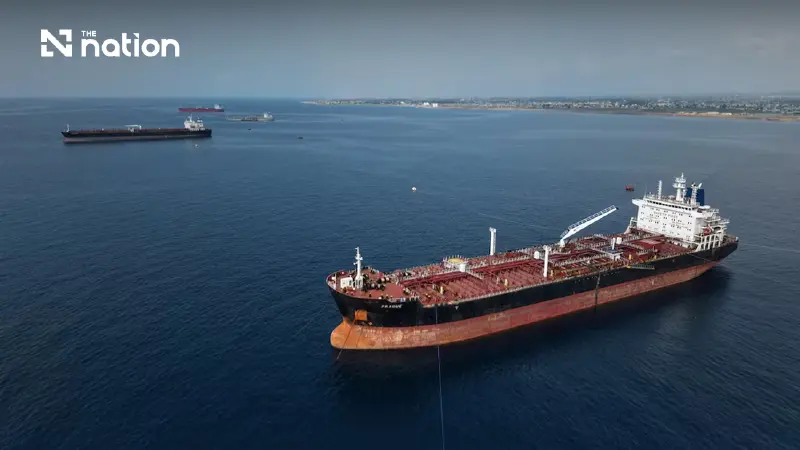


US crude rose to US$102.81 a barrel in early Asian trading on October 30, after Brent’s December contract closed at US$114.88 on October 29.
- US West Texas Intermediate (WTI) crude oil rose by 0.8% to US$102.81 a barrel in early Asian trading on October 30.
- The price increase was primarily driven by fears of renewed US military strikes on Iran, which revived concerns about the stability of Middle Eastern energy supplies.
- These fears were fueled by reports that a senior US military officer briefed President Trump on military options concerning Iran, with speculation that strikes could resume after the US midterm elections.
US West Texas Intermediate (WTI) crude rose 0.8% in early Asian trading on October 30, 2026, as fears of renewed US strikes on Iran revived concerns about Middle Eastern energy supplies.
The latest WTI quote and October 29 Brent settlements were:
- December WTI rose 0.8% to US$102.81 a barrel at 7.04am Singapore time, or 6.04am in Thailand, on October 30.
- December Brent, which expires on October 30, settled 44 US cents, or 0.38%, lower at US$114.88 a barrel on October 29.
- January Brent, the more actively traded contract, closed 0.8% lower at US$110.80 a barrel on October 29.
- WTI had settled at US$102 a barrel on October 29, down 78 US cents, or 0.76%, after swinging through a range of more than US$3. Renewed diplomatic efforts had helped ease some supply concerns during that session.
Brent and WTI both fell by more than US$2 a barrel earlier on October 29, reversing part of their respective gains of 1.3% and 3% on October 28.
US military options revive fears of strikes on Iran
A senior US military officer overseeing the Middle East briefed President Donald Trump at the White House on October 29 on military options concerning Iran, the Wall Street Journal reported, citing US officials and other people with direct knowledge of the meeting.
Trump has repeatedly signalled that US air strikes on Iran could resume after the November 3 midterm elections, according to Bloomberg reporting carried by Bangkok Biznews. The prospect of renewed military action has competed with efforts to restart peace negotiations.
US Vice President JD Vance sent a letter to Mohsen Rezaei, head of Iran’s Supreme National Security Council, to revive negotiations, the Wall Street Journal reported on October 28, citing US officials and people familiar with the matter.
Qatari mediators presented Iran with a new draft agreement to end the war, an official briefed on the negotiations disclosed. A senior Iranian official rejected that description, calling the proposals unacceptable ideas that did not constitute an offer.
Iran’s foreign minister maintained on October 28 that Tehran was giving diplomacy a chance and suggested that Iran’s proposed seven-day plan could be completed in less than a week if adopted.
UBS analyst Giovanni Staunovo described the pressure on prices during the October 29 session: “Oil prices are under pressure today amid renewed diplomatic efforts to de-escalate the conflict in the Middle East.”
Houthi attack claims limit October 29 oil losses
Reports of fresh Houthi attacks helped oil recover some of its October 29 intraday losses, according to John Kilduff, a partner at Again Capital.
Yemen’s Iran-aligned Houthis claimed on October 29 that they had attacked Saudi Arabia’s Ras Tanura and Rabigh oil refineries, an Aramco facility in Abqaiq and airports in the kingdom. Saudi Arabia provided no immediate confirmation.
The Saudi-led coalition fighting the Houthis reported destroying a ballistic missile fired towards the kingdom’s eastern region early on October 29, as hostilities continued.
“The Saudi-led coalition’s interception of another Houthi missile early Thursday shows that threats to regional infrastructure remain active despite the renewed push for negotiations,” Gelber & Associates analysts wrote in an October 29 note.
Yemeni government forces reported a Houthi attack on Aden airport on October 28. The Houthis also claimed that day to have hit Saudi Arabia’s largest oil refinery with a missile, escalating attacks on the world’s second-largest crude producer after the US.
UK Maritime Trade Operations reported that a tanker was struck by an unidentified object while leaving the Strait of Hormuz on October 29.
Iran’s Revolutionary Guards said on October 29 that three tankers had struck sea mines, exploded and caught fire during the preceding 24 hours while trying to use an unauthorised route south of the strait.
ExxonMobil and Chevron cancelled executives’ planned trips to the Abu Dhabi International Petroleum Exhibition and Conference in early November because of security concerns, according to two sources familiar with the arrangements cited by Reuters.
Shell links sustained high oil prices to low stocks
Shell chief executive Wael Sawan said on October 29 that current oil prices no longer appeared temporary because global inventories were very low, according to Bloomberg report.
Brent had gained 11% during October and reached a six-month high, Bloomberg’s account noted. The advance came despite recovering Middle Eastern shipments, with producers continuing to export through the Strait of Hormuz while shipping risks remained high.
ExxonMobil and Chevron were scheduled to report earnings later on October 30.
Russian refinery recovery tempers supply concerns
Expectations of increased Russian crude and diesel production also helped restrain prices during the October 29 session.
JPMorgan analysts wrote late on October 28 that no further attacks on Russian refining infrastructure had been confirmed since the October 15 strike on the Ryazan refinery. “The silence has allowed Russian refinery runs to rebound by 350,000 barrels a day last week, to 4 million barrels a day,” the analysts noted.
Again Capital’s Kilduff nevertheless pointed to uncertainty over Russia’s diesel commitments to Washington: “There are mixed signals coming from Russia about what they are going to do about fulfilling their diesel promise to the US, that is helping keep prices aloft.”
The US Energy Information Administration (EIA) reported on October 28 that stronger demand had reduced crude and distillate inventories in the week ended October 23, while petrol stocks rose. Analysts at ship-tracking firm Kpler noted that the EIA’s export figures exceeded the volumes indicated by their own tracking systems.
