
US FORTRESS plan orders military bases to stockpile 90 days of supplies
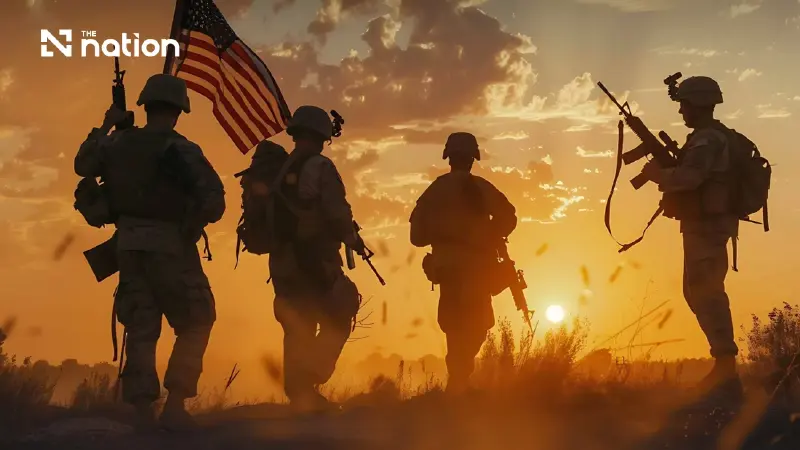


The Pentagon requires key bases to operate without external civilian support, using independent power, emergency reserves and alternative supply routes.
- The US military has launched the "FORTRESS" plan, which orders major bases to stockpile enough supplies and equipment to operate independently for at least 90 days.
- This initiative requires bases to maintain reserves of ammunition, fuel, and medical supplies, and to develop independent energy systems like microgrids and portable nuclear reactors.
- The plan is a response to modern threats, including major wars, cyberattacks, and natural disasters that could disrupt critical civilian infrastructure within the United States.
- FORTRESS also aims to strengthen supply chains by diversifying procurement routes and preparing civilian factories to switch to defense production during a national crisis.
Stockpiling supplies under a “Civil Resilience” strategy does not appear excessive in the face of modern threats, including geopolitical and war risks, cyberattacks, natural disasters and extreme weather.
Announcements by airlines from 25 countries suspending flights to the Middle East reinforce that assessment.
The United States (US) military has announced preparations for a major war, launching the “FORTRESS” plan and ordering major bases across the country to stockpile enough supplies and military equipment to last 90 days without external support.
The US Department of Defense, or Pentagon, is accelerating work on FORTRESS, short for Federal Operations for Resilience, Troop Resources, Energy, Supply, and Survivability.
The strategic initiative aims to strengthen the readiness and resilience of major military bases and essential military agencies nationwide, enabling them to operate continuously for at least 90 days (three months) without relying on external civilian infrastructure or support systems.
FORTRESS is designed to address contemporary security vulnerabilities.
Senior officials and military planners recognise that a future global conflict or severe crisis could extend beyond overseas theatres of operations to industrial networks and public utilities within the United States.
Details of the FORTRESS plan
Require bases to maintain readily available emergency reserves of ammunition, weapons and military equipment, fuel, electronic equipment, critical minerals, medical supplies, maintenance spare parts and communications systems.
Stockpile sizes will be calculated according to projected consumption rates and replenishment times during a crisis.
Develop independent energy systems using small portable nuclear reactors, large-scale battery storage and microgrids capable of disconnecting from the civilian electricity grid.
Diversify supply routes or backup sources of production.
Enable bases to operate their utilities independently for at least three months.
A directive has been issued to establish the FORTRESS America programme office under the supervision of the Under Secretary of War for Acquisition and Sustainment.
FOX News, which first reported the plan, highlighted the risk that a major war could bring down power grids, disrupt supply chains and threaten critical infrastructure on American soil.
It reported that the Pentagon was laying the groundwork for civilian factories to switch to defence production during a crisis, while preparing alternative supply chains and strategic reserves to maintain the flow of weapons, fuel and other essential materials.
The requirement reflects a broader shift in how the US Department of Defense prepares for threats to the American homeland, including the possibility that a major conflict could affect infrastructure supporting military operations within the country.
For the military’s most critical national defence missions, the initiative requires at least two qualified procurement or production pathways.
This would reduce the risk of military operations being disrupted by the loss of a single factory, supplier or industrial capability.
Another key element is preparing American civilian manufacturing to support wartime mobilisation.
The Pentagon plans to identify commercial factories capable of switching to defence production during a crisis through the Civil Reserve Manufacturing Network, an existing programme incorporated into FORTRESS.
The programme also calls for continuing industrial stress tests and mobilisation exercises to assess whether manufacturers can maintain production through prolonged disruption.
Conflict has now expanded beyond “conventional warfare” into “hybrid warfare” and “cyber warfare”.
The threats extend beyond projectiles crossing borders to attacks on infrastructure and power systems, as Russia has experienced, or hacking incidents with global repercussions, such as the one Binance recently suffered.
