
AZEC leaders agree on regional task force to coordinate oil reserves
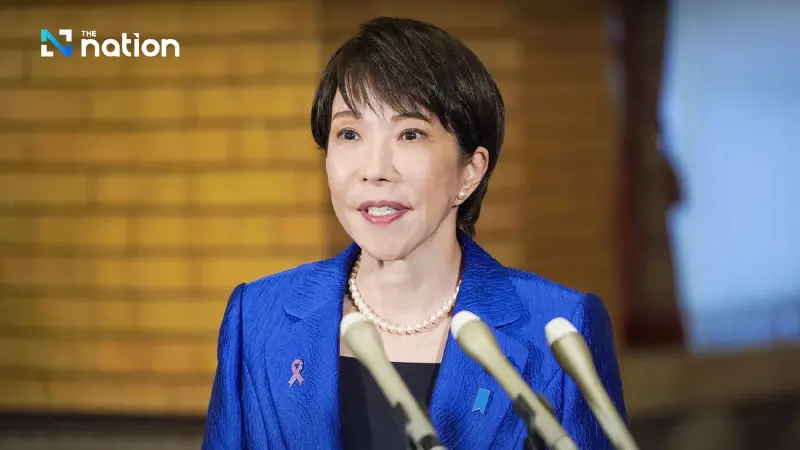


Japan proposes paid access to oil stored in unused refinery tanks to help Southeast Asian countries reduce the time and cost of building storage.
- Leaders of the Asia Zero Emission Community (AZEC) have agreed to create a regional "Asia Oil Security Task Force."
- Proposed by Japan, the task force will coordinate oil stockpiling and emergency releases, acting as an Asian counterpart to the International Energy Agency (IEA).
- The plan allows Southeast Asian countries to pay fees to use idle Japanese refinery tanks for oil storage, saving them the cost of building their own facilities.
- This initiative aims to improve energy security for Southeast Asian nations, which are not IEA members, following recent global supply disruptions.
A Japanese proposal for a regional body to coordinate oil stockpiling and emergency releases secured agreement from Asia Zero Emission Community (AZEC) leaders in Manila on Tuesday (November 17).
AZEC is a framework for cooperation towards carbon neutrality.
Its leaders adopted a joint statement providing for the creation of an Asia Oil Security Task Force, an Asian counterpart to the International Energy Agency (IEA).
Access to oil in an emergency would be available to Southeast Asian countries in return for fees under a storage arrangement proposed by Japan.
By using idle tanks at Japanese refineries, the countries could reduce the time and cost involved in building storage facilities themselves.
Southeast Asian countries are considering a shared oil reserve system following supply disruptions caused by the effective closure of the Strait of Hormuz, a major Middle Eastern route for oil shipments.
None of these countries belongs to the IEA.
The biggest coordinated release of reserves in the IEA’s history began in March in response to turmoil in the Middle East, with Japan, the United States and European member countries taking part.
The agency was established in 1974 following the 1973 oil crisis and has a 90-day oil reserve requirement for its members.
For the proposed Asian body, the next task will be to develop rules governing how reserves are released and shared during crises.
Secretariat duties will fall to the Economic Research Institute for ASEAN and East Asia (ERIA), whose research includes regional energy security.
Japanese Prime Minister Sanae Takaichi put forward the proposal for the body at the fourth AZEC leaders’ meeting.
The gathering took place alongside summits related to the Association of Southeast Asian Nations (ASEAN) in the Philippine capital.
Economic resilience also featured in the agreement.
Leaders agreed to promote “AZEC 2.0”, an initiative intended to strengthen that resilience through decarbonisation and improved energy security.
“Balancing measures to address climate change and economic growth is fully possible,” Takaichi said.
Artificial intelligence and quantum technology are among the advanced fields envisaged for joint development under “BRIDGE Asia”, a project whose launch was also called for in the statement.
Japan initiated AZEC, which brings together 11 countries, including Japan, Australia and most ASEAN members.
The statement also expressed a positive stance towards East Timor’s new involvement in the framework.

[Copyright The Jiji Press, Ltd.]
