
Technology lacks the anticipation factor


All the excitement this week in the media was about Amazon's "Fire" announcement, as well as the soon-to-be-launched iPhone 5.
This all occurred during a visit to my childhood home, a trip that underlines how, over the past few decades, technology has changed the way we live and how we socialise.
I could see back in time to a common scene in my closely-knit community on the Thon Buri side of Bangkok: during a prime-time soap or game show programme, a group of people sitting in front of a TV in a coffee shop. From small children to senior citizens, they were from different families, different backgrounds, but they enjoyed the same show and could discuss and exchange ideas during and afterwards. Before the arrival of remote control, there was no “zap”, and even TV commercials were part of the daily entertainment.
Amazing, isn’t it? One TV set could serve a whole group of viewers in a community; not that they couldn’t each afford a TV set. Many at the coffee shop owned a TV set but they enjoyed it more watching as a group. When any soap opera or Hong Kong Chinese series became a hit, streets would empty and you could guess where the crowd was watching together.
Such a scene is rarely seen nowadays except in nostalgic movies. It may even seem far-fetched for today’s viewers, who are empowered with new technology and abundant content. Then it was one TV set for over 10 people; now one person alone has 10 devices.
A TV set has become the norm in every household in the same way that a house must have at least one restroom. Yes, there are houses that can afford more than one. And it is not a shock to know anyone who has a TV set in each room.
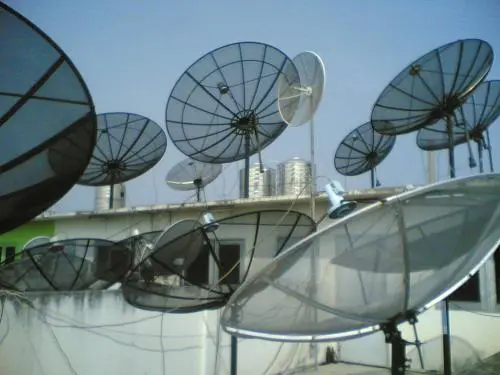
Thailand’s TV penetration rate is high in the regions as well, and comparable to other countries now that satellite dishes and subscription TV come into play. Viewers are overwhelmed with both technology and content. Even more overwhelming is that the PC screen is another source of watching favourite programmes, live or replayed, not to mention YouTube and other shared video channels.
Outside the house, when we are on the go, mobile technology plays a great role. With a smart phone or tablet PC in hand, you can watch programmes like you were travelling with that TV set with you. Over a decade ago, the term “TV on demand” was coined, but not until now are we the masters of our own programming.
So, mostly gone are those days when one TV set or programme would serve a group of people. In one family, parents may be in the living room watching news programmes while kids may be browsing through YouTube in the bedroom. With the expansion of TV content, digital networks and broadband, hundreds of TV programmes are broadcast at any time of day. Certainly, this huge amount of content should satisfy all individual interests. Therefore it is less unlikely that any group will watch the same programme at the same time.
Moreover, they no longer have to watch the programme live, as they can always watch any time later on applications or YouTube. Ironically, with the immense number of choices, today’s TV viewers end up watching a limited number of channels and ignore the others. The 100-plus channels provided by cable TV and satellite TV has driven viewers to make choices that are more personalised.
And personalised programming goes beyond the TV screen, spreading to tablets and mobile phones. If you miss a favourite soap opera, you can find it on YouTube. If you are stuck in traffic, watching news or free TV programmes is also possible on the right application.
And if TV is now said to be a tool to promote commercial, social and political agendas, it used to be easier in the old days when a viewing group had to watch a similar set of values and content through the same outlet. A massive marketing campaign could be carried with a clever TV commercial, you could even propagate war against the communists, and you could eaily monitor who was watching TV in those days. But today’s interests and preferences are so diverse and more complicated, and TV programmes too are as diverse as the viewers.
At a glance, all this may look lucrative for the industry, but any insider in the broadcast industry knows full well that there are still tough times ahead with the arrival of new gadgets and the increasing needs of individual. What I miss is the anticipation of when I waited for my favourite show. That, no one is able to offer me now.
