
Slowdown in China will hurt SE Asian economies
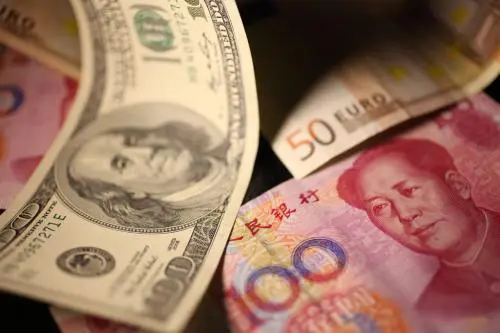


Everyone is talking and fretting about the sovereign debt crisis in the eurozone and the ongoing economic doldrums in the US.
However, markets now seem to be stabilising amid positive news from European leaders on expanding the size and scope of bail-out funds – the so-called European Financial Stability Facility.
However, in the coming months, investors may have to be concerned not just on the dim prospects of the advanced economies, but on potentially devastating news right here in Asia. Indeed, there are now clearer signs that the powerhouse Chinese economy is slowing down after decades of rapid expansion. The most recent HSBC Purchasing Managers Index (PMI) in September showed a two-month low of 49.4. That followed an August reading of 49.9. Anything under 50 indicates that activity is contracting. On the real estate front, housing prices in 100 major cities in China slipped slightly in September after years of persistent growth. On the external front, things are not looking good either for China as its trade surplus narrowed in September for a second month in a row as growth of exports and imports both fell below forecasts. Chinese exports in September expanded at 17.1 per cent, well below market expectation at 20.7 per cent.
Is this the tipping point for an economic slowdown in China? Although it is still too early to cry wolf, we should closely follow the Chinese economy in the coming months. What is clear is that panicky global investors may sell their equities further as more bad news comes out of China.
So who else gets hammered if a Chinese slowdown becomes a reality? How would China, the world’s second largest economy, affect the world economic outlook? Before we get to that, it is important to understand that while property sales are off in Chinese cities and some measures show property price declines, a catastrophic meltdown is not the likely scenario yet. Growth in China’s gross domestic product this year is still expected to be 9.5 per cent based on the IMF’s latest forecast. But if things do turn bad in the coming months, who gets hurt outside China?
The first set of economies affected will be big commodity producers that sell to China or rely on China’s demand indirectly. Top of that list would include Australia (coal, iron ore, natural gas), South Africa and Brazil (industrial metals) and Chile (copper). Southeast Asian countries like Thailand would be affected as well, given that China is presently Thailand’s number one trading partner. We export to China mostly electronics and rubber products, which may be among the first industries to take the hit.
Another impact of a Chinese economic slowdown would be oversupplies in China of steel, machinery and other basic material items. During its brief economic slowdown after the 1997 Asian financial crisis, China reduced a glut by exporting those items at very low prices, triggering a global drop in steel prices and political standoffs with the US and Europe. Thus, certain heavy industries in which Thailand competes directly with China would also be adversely affected.
Inevitably, the reckoning day will come when the world economy will not be able to sustain growth levels achieved in the past few decades. What are the implications for Thailand? Looking ahead, Thailand cannot solely depend on its existing “big-four” trading partners, namely China, the US, Europe and Japan. It must also rely on its domestic economy and competitiveness vis-a-vis regional peers. The situation in Thailand is not just about bringing the economy to the potential level of 6 per cent GDP growth per year, but rather about how to increase this potential level of output, which has to be done by improving productivity.
Increasing productivity in Thailand is a much-discussed topic, but to achieve such a goal adequate investment in both physical and human capital are necessary. I think there are several challenges facing the new government (in addition to the flood crisis).
First, government policy should aim at rebalancing domestic versus external demand. Economic growth in the past has arisen from vibrant export-oriented industries (i.e. electronics and automobiles) which benefit only selective segments in Thailand. The government must aim to achieve broad-based and inclusive growth in which more people can actually benefit from economic progress. Recent policies such as increasing the minimum wage should serve to boost domestic demand in the short term, but it is not a long term solution to “sustain” domestic demand.
Only through better education and skills can we hope to achieve long-lasting higher incomes and economic wellbeing.
Second, the government must find the right balance between public consumption and investment while gearing towards medium-term fiscal consolidation. Over the last decade, government consumption has been gaining its share of the budget, while public investment growth was somewhat moderated. This does not bode well for productivity. Thailand’s infrastructure continuously needs improvement in several areas, particularly logistics, irrigation and quality of education.
These public investments will also influence private investment through the “crowding in effect” as public and private investment complement each other. Therefore, government policies should be prioritised, gradual and have a specific spending target. Priority should be given to productivity and spending should be targeted to certain areas to ensure policy effectiveness. At the same time, appropriate sequencing and a gradualist approach for policy implementation is necessary to minimise inflationary pressure and allow time for the private sector to adjust. Medium-term fiscal consolidation is needed to ensure fiscal discipline and sustainability.
In a time of normal trend growth, there is a lesser need for fiscal stimulus. Rising public debt, together with increasing contingent liabilities, may endanger fiscal sustainability in the long run. Reforms of tax collection and tax structure should be implemented along with rising expenditure to ensure a healthy balance sheet in the fiscal sector.
Third, political stability is a vital condition for the private sector to maintain an investment-friendly environment.
These three challenges, if they can be met, will put Thailand into a competitive frontier in the midst of a possible global slowdown coming simultaneously from Thailand’s major trading partners.
The private-sector contribution is equally important. One immediate challenge businesses face is the problem of labour shortages. Under a stronger baht environment, this is a great opportunity to import and invest in machinery and equipment that will upgrade Thailand as a more capital-intensive country. The private sector can also help to improve labour quality through appropriate education and training, which is one way to help spread the benefits to workers as their productivity improves. As a long-term prospect, shifting the input factor of production towards capital is superior to using immigrant labour for three reasons. First, other than training, capital investment will improve productivity, which will benefit Thai labour in the form of increases in real wages. Second, migrant labour will likely worsen income inequality as wages for low-skilled worker will be suppressed. Third, cutting-edge technology as well as modern machinery and equipment will help facilitate R&D activities. Therefore, relying on immigrant labour is not a long-term solution for Thailand.
Promoting R&D investment is another key challenge as current R&D spending is extremely low compared to our peers, accounting for only about 0.2 per cent of GDP. The public and private sectors must work together to promote R&D investment, which then leads to value creation for the economy. In addition, businesses can speed up the R&D process by seeking regional alliance opportunities with strategic partners who can provide complementary advantages.
A Buddhist proverb says “Don’t rely on others, help yourself first”. Thus Thailand must do its utmost to deal with the likely prospect of a global economic slowdown. If China’s slowdown turns into reality, the double-dip scenario for the world economy is a forgone conclusion.
Chodechai Suwanaporn is executive vice president of economics & energy policy at PTT PLC.
