
Stability in North Korea is now of primary concern


Play
It is vital that the outside world provides emergency winter aid and engages with the hermit kingdom as its leadership undergoes change
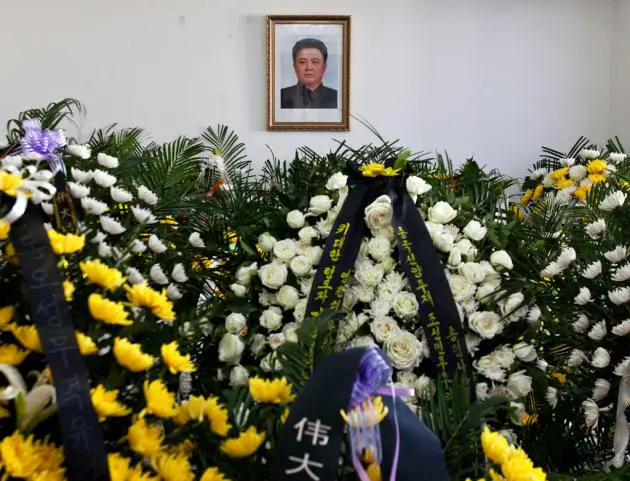
Although North Korea’s supreme leader Kim Jong-il had been ill for quite some time, nobody had expected his sudden death while travelling by train to visit factories and workplaces on Saturday. His death has generated a lot of anxiety on the volatile Korean peninsula and neighbouring countries, particularly Japan. This is not to mention the other nations concerned with North Korea’s nuclear weapons programme and stability in northeast Asia.
For the past 17 years, the world has tolerated Kim’s idiosyncrasies and obstinacy in negotiating with the major powers, especially regarding the effort to denuclearise the country. Kim has managed to get away with much provocation, perhaps due to his diplomatic acumen.
Now the “dear leader’s” son, Kim Jong-un, has been named as the “great successor” in the hermit kingdom, the world’s only dynastic communist state. Little is known about the son and heir, but it’s safe to say at this stage that nothing much can be expected from the 28 year-old. The only thing worth remarking at this point is that his face resembles his grandfather’s, the “great leader” Kim Il-song.
The young Kim will have to consolidate his power base before he can initiate any reforms or have a firm say as leader. Before his death, the older Kim paved the way for his son to rise up the ranks to four-star general, much to the chagrin of the older generals. Over the past two years, he has travelled to Moscow and Beijing to learn about the economic reforms in Russia and China that have brought progress and increased prosperity. However, it is not clear if the economic reforms that he has witnessed during his foreign trips will serve as a template for the young Kim to take up possible, and much-needed, changes in his own country.
It is still the case that neighbouring countries, especially South Korea and China, will need to provide economic and humanitarian assistance to North Korea. For them, there are no other options. Food aid and other essential relief supplies must be forthcoming at this moment while the nation is in mourning, as the country is facing its usual severe food shortages as the winter sets in.
Good diplomatic gestures at this point in time would create a better atmosphere conducive for further talks among all concerned parties, especially the much-needed resumption of the stalled six-party talks on denuclearisation. These talks involve North and South Korea, China, Russia, the United States and Japan.
South Korea is on a high level of alert and remains suspicious of the young Kim because Seoul believes that he was behind the recent attacks by the North on Yeonpyeong Island, which killed two South Koreans. However, Seoul needs to investigate further whether there are ways to work with the heir apparent to bring an official and permanent peace to the peninsula.
China has done well in keeping North Korea intact. Any violent regime change or total economic collapse now would be disastrous for China, as it would cause a huge number of North Korean refugees to flee over the border – something China does not want to see happen. Even now, there are thousands of North Korean refugees who have risked their lives to cross the border, seeking an escape from the hardship of life in the North. Each year, several thousand make their way southward, trekking over mountains and along roads undercover to Chiang Saeng in the northern part of Thailand.
Like it or not, it is important to engage with the young Kim and North Korea, no matter how difficult this process may become. A North Korea that is malfunctioning but still in possession of nuclear weapons would be a most volatile situation. It is vital that the regime in Pyongyang remains stable and open for negotiations, even though there is a lot of unpredictability at this point.
