
Putin must commit fully to the rule of law


Play
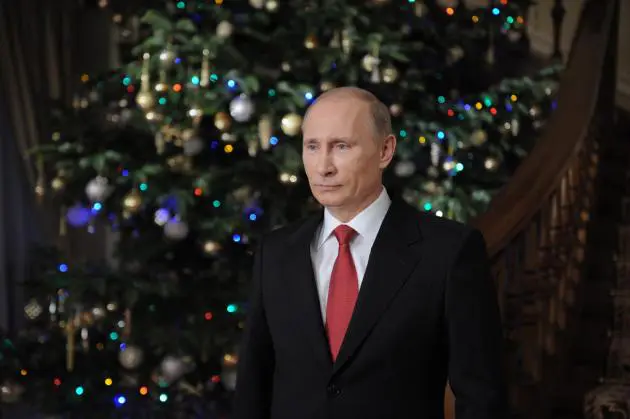
Mass rallies to protest the high-handed political tactics of Russian Prime Minister Vladimir Putin illustrate public discontent with his long-standing grip on power.
It can be said that the contradictions plaguing Russia have come to the fore 20 years after the collapse of the former Soviet Union.
Demonstrations began immediately after an election for the State Duma in December, as protesters claimed there had been vote-rigging and called for the election to be held again. About 30,000 people gathered in Moscow alone late last month. It was the biggest anti-government rally of Putin’s tenure, surpassing the one held on December 10. In addition to decrying the alleged election irregularities, the protesters openly called for an end to Putin’s rule, shouting, “Russia without Putin”.
During the 12 years of his grip on power as president and prime minister, Russian politics became relatively stable and its economy grew remarkably thanks to high crude oil prices.
The rallies, however, indicate mounting dissatisfaction with Putin, who is aiming to prolong his rule by running in the presidential election in March. Many in the anti-Putin protests are middle-class and intellectual people whose situations improved due to economic growth. They may be prompted by their anger toward the little progress made in modernising Russian politics. Their indignation is targeted at the rampant corruption in the bureaucratic machine, which has collusive ties with the ruling party.
Putin has refused demands to hold a new election. He is trying to get out of his present difficulties by pledging to take measures to prevent irregularities in the presidential election.
As no powerful candidate has emerged from the opposition camp, Putin’s strategy for returning to the Kremlin remains unshaken. But he needs to face seriously the problems raised by the of rallies and commit himself completely to the rule of law.
Putin faces challenges on the diplomatic front, too. He has put forth the idea of creating a “Eurasian Union” aimed at the economic integration of former Soviet republics. But these states have been deepening their relations with European countries and the US, and remain wary of Russia’s leadership.
After 18 years of negotiations, Russia will become an official member of the World Trade Organisation this year. If it is to seek capital investment from the West, Moscow will be urged to follow WTO rules and international business practices.
