
Charter changes: By politicians, for politicians?


Play
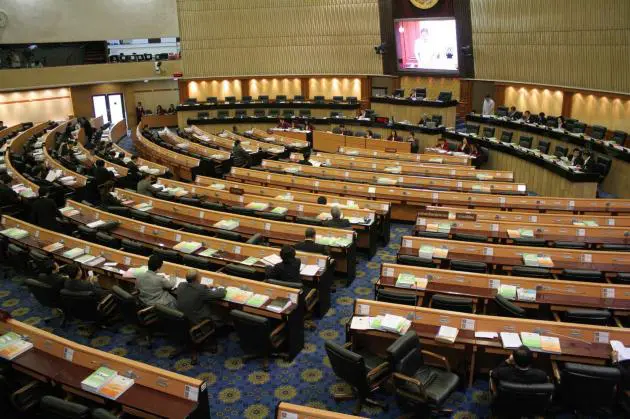
Will there be a new Constitution Drafting Assembly (CDA)? At first, that idea seemed to have been wrapped up by the majority of the ruling Pheu Thai Party. But now, things seemed to have changed without any clear direction.
The party appears to have been split into factions over this issue. One group proposed the setting up of the CDA to pursue a “transparent” approach. Another, however, is lobbying to abandon the original plan to amend Section 291 of the current charter to set up a CDA – the reason being that things should be speeded up.
This group of Pheu Thai MPs wants the CDA process to be dropped so that the constitutional rewrite can be done through Parliament – to save time and money. The real motive may be much more political: Pushing charter changes through parliament, with Pheu Thai’s solid majority, could be achieved much easier than by going through with the CDA proposal.
There is also the question of whether a referendum should be held – and if so, whether it should be conducted before the whole process begins, or after the draft is completed. But then, some Pheu Thai MPs have shot down the idea, arguing that with 15 million votes for the party in the general election, the ruling party has already been bestowed with the necessary “mandate” to rewrite the charter as it sees fit.
In the end, though, the crux of the controversy will be this: Is Pheu Thai proposing the changes to certain clauses in the charter just to benefit former premier Thaksin Shinawatra?
When a group of Pheu Thai MPs first proposed to delete Article 309 from the current charter to declare null and void all that the 2006 coup-makers had put into place, critics immediately said that it was a clear attempt to clear Thaksin of all charges still pending against him.
Bulldozing charter changes through Parliament that are seen to serve “just one person” – no matter how tempting it may be for the ruling party – simply won’t see the light of the day.
The original concept discussed among the party’s whips was to hold elections throughout the country to pick one representative each from the 77 provinces to form the bulk of the Constitution Drafting Assembly, with about 22 academics named to the panel to help guide the rewriting of the charter.
This marks a different approach from the first CDA, installed in 1996, whereby Parliament screened a shortlist of representatives voted in by the local people.
The apparent divergence of views within the government party underlines the fact that the MPs don’t seem to remember what Premier Yingluck declared in the section on “Urgent Agenda for the First Year” in her policy statement delivered to Parliament on the day she assumed the premiership.
That particular clause states unequivocally:
“1.16 (The government will) accelerate and push for political reform to incorporate wide-ranging participation by the people by setting up an independent Constitution Drafting Assembly to draw up a new charter to lay down mechanisms in the exercise of sovereignty based on the rule of law and organisations that exercise state power responsible to the people and [are] ready to accept scrutiny. The constitution draft will be subject to a public referendum before being enforced…”
There, in black and white, is the commitment from this government from Day One. How they try to wriggle out of the promised process of “political reform” will be one of the highlights in Thailand’s political landscape for 2012.
Make sure you stay alert throughout the year – and don’t blink!
