
Better to know or not know?


Play
When it comes to terrorism, all rules and principles go out the window.
There is no political correctness, nor the right etiquette. We have heard about “following the protocols” when a case transcends one nation or a government, but certainly one of those protocols must state that any one of them can be sidestepped if necessary. If a stranger comes into our house in the middle of the night, we react by instinct. We don’t Google “How to cope with nocturnal intrusions by hooded people” before deciding what to do.
Yet, after last week, one rule should be written in stone. Chalerm Yoobamrung must not play any role in terrorism-related mass communications. He has to be kept exclusively busy with charter reform, no matter how weird it sounds for someone like him to be tasked with spearheading the reshaping of national values.
To be fair to Chalerm, however, he’s not responsible for the whole mess. When we put together Prime Minister Yingluck Shinawatra (who has the power but is probably clueless about terrorism), Deputy Prime Minister Kowit Wattana (who probably is not that clueless but doesn’t have the power), Foreign Minister Surapong Towichukchaikul (who is fast on Thaksin Shinawatra and slow on everything else), it makes for a very suspicious political cast. The last thing they need is the issue of Middle-Eastern terror suspects, almost half a tonne of explosive materials and an impatient American diplomatic corps. Not to mention an Israeli sub-plot.
Defence Minister Yuthasak Sasiprapha’s role was not quite publicly clear. Over the weekend, he was seemingly doing some damage control. Like other government leaders, Yuthasak was not happy with the US Embassy. Who would be? If a respected neighbour in your soi put a sign in front of your house that screamed “Haunted”, how would you feel?
The embassy’s sign was backed by nearly 400 kilogrammes of bomb materials found, though. The discovery, which we believe must have been made some time before the poorly-acted “raid” or “search” early this week, redeemed the embassy for the blatant warning on its website last Friday. The Thai government can say all it wants about the fertilisers and chemicals being meant for “export” and all, but the bottom line is that a “bomb” was found “here”.
Are we supposed to be excited, or even afraid? The government appears to say “no”, but America appears to say “yes”. The latter’s notification that it was putting up a serious warning on its embassy’s website was believed to have reached the Thai Foreign Ministry a day before the action was taken. Nothing came about on the Surapong front, hence the apparently unilateral act by the embassy on Friday.
Thailand’s silence and then sloppy reaction to the embassy’s warning could be attributed to two major factors – the urge to protect the tourism industry no matter what, and, regardless of what is said officially, the reluctance to be seen as siding with either “Them” or “The Other Them”. While we love claiming credit for everything successful, where terrorism is concerned, we want to be no more than a witness standing on the unseen side of the interrogation room glass.
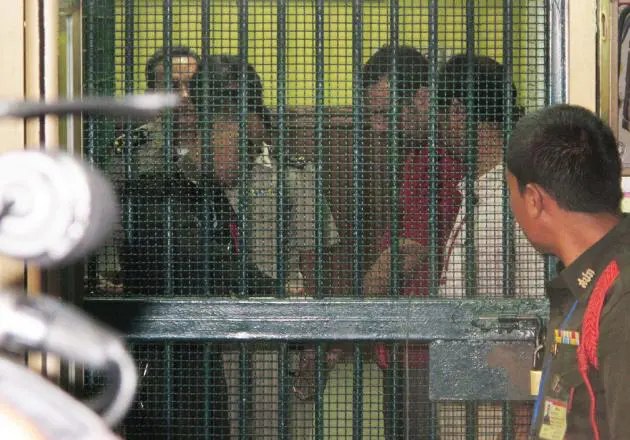
There are two types of terror suspect in custody – those you can be silent about and those you want to be silent about but you can’t. The current case falls into the latter category. Awkward handling of it has led to confusion. For example, one Lebanese was first identified as a terror suspect but has never been charged with terrorism and is being touted in the latest reports as a possibly innocent man unknowingly “hired” to guard explosive compounds.
To sum it up, there’s a stranger in our house and the United States has yelled “Watch out”. We, the homeowner, did not react totally instinctively for the obvious reasons. When the United States refused to lower its volume, we were in trouble. Especially if ushering the stranger out the back door quietly was our initial intention.
Were the Americans overreacting, or was the Thai government underestimating the situation? It could be both. As long as a bomb does not go off, the Thai side can stick to the “export” claim like the last straw. It’s interesting, however, to consider whether our government would have told us about the “suspect(s)” and the large amount of explosive material found if it had not been for the US Embassy’s chilly warning on its website. And if the government had kept quiet, should we have been thankful or disturbed by that? One thing about terrorism is that there probably may not be a correct answer to those kind of questions.
