
Ready, steady, go


Play
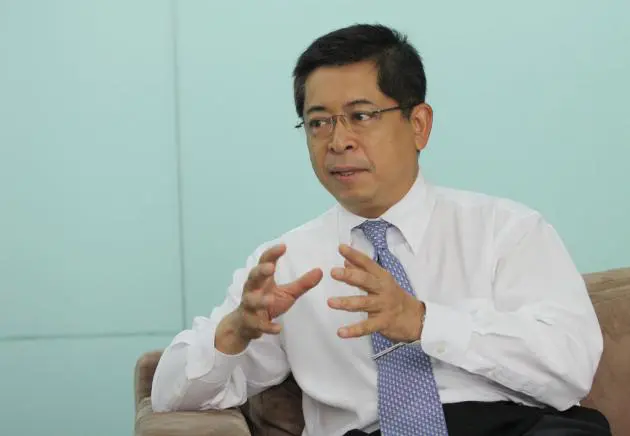
Chairman of the Thailand Management Association, Tewin Wongwanich, says it's time for Thai businesses to take seriously the advent of the Asean Economic Community
Tewin Wongwanich, chairman of the Thailand Management Association (TMA), wants to help Thai businesses, especially small and medium-sized enterprises (SMEs), get ready for the advent of the Asean Economic Community (AEC), which will become effective in 2015.
“In 2010, the TMA held an Asean Business Forum under the theme, ‘How to Boost Competitiveness’. This year, our focus is Asean Connectivity.
“Connectivity means we need to communicate and share experiences, information and other resources so as to better utilise the strengths of each of the member countries.
“Against the backdrop of the AEC, there will be freer flows of goods and services as well as capital and skilled labour.
“This means our market will be expanded from 60 million consumers in Thailand to around 600 million covering 10 member countries of the AEC.
“In terms of cross-border investment, it will be easier to invest and seek funding in other Asean countries via a common capital market.
“The freer flow of people will allow companies to choose professionals and other skilled workers from other Asean countries, to achieve maximum efficiency in manufacturing and services.
“In fact, there is already physical connectivity via road and other transport infrastructure and logistics services, as well as via information and communication technology.
“Cross-border marketing and Asean branding are also important, as is tourism, in which Asean is being promoted as a preferred destination for tourism and related activities such as wellness and medical services.
“For SMEs, Asean members will work together to promote these emerging businesses within the region.
“For Thailand, there are several areas of strength that should be utilised, namely, the food sector, in which we’re quite strong domestically and also in export markets.
“Next is the preferred destination idea, in which we can work with other Asean colleagues.
“Third is the logistics sector, but we have to improve our competitiveness, especially in terms of cost, as well as our roads, railways, ports and mass transit systems.
“We’re situated at the centre of mainland Indochina, so we are well-positioned to tap into opportunities in the logistics sector.
“Fourth is the green economy, which is a major trend globally, so we have to focus on making better use of our resources, especially agricultural products. For example, we have plenty of feedstock for green energy production.
“In terms of challenges, we are still lagging behind some of our neighbours in research and development. Another challenge lies in the area of business ethics and corporate governance, since this is a key factor in boosting foreign-investor confidence in Thailand.
“Last but not least is the development of human capital. Our people must be ready to work outside Thailand when we open up the regional markets. They will have to understand the cultures and languages of other Asean countries,” says Tewin, who is also chief financial officer of PTT Plc, the country’s largest firm in terms of stock-market capitalisation.
In his opinion, all big companies in Thailand such as PTT, Siam Cement Group or Charoen Pokphand Group, are ready for market liberalisation and integration, but he is not sure whether SMEs are well-prepared.
To help the smaller firms tap into the opportunities and cope with the threats, the TMA has been tasked with providing insight for these SMEs.
The TMA is also working with the National Economic and Social Development Board to prepare them for the AEC.
