
Into a new future


Play
Nearly one year after the triple earthquake, tsunami and nuclear disaster, I visited the Sendai region of Japan and saw the devastation the tsunami wreaked on the seaside city of Ishinomaki.
Hard-working Japanese have tidied up but there are still mounds of debris and ships that are grounded, swept in from the harbour, miles inland.
Entire neighbourhoods have been reduced to bare earth and many houses are mere shells on weakened columns. Although businesses have restarted, many residents still have yet to secure a permanent home.
Elsewhere in big cities like Tokyo and Nagoya, life seems normal. But beneath the surface, there are scars.
Manufacturing has only recently returned to full capacity after the disruption of industrial supply chains. Following the Fukushima nuclear disaster, most nuclear power stations remain off-line, and energy saving is critical. The Japanese economy has shrunk and faces new issues, especially as manufacturing competitiveness is squeezed by the yen’s strength against the US dollar.
The triple tragedy, moreover, came after decades of no growth, with revolving-door governments, a Mount Fuji of public debt, and an ageing population. So when Japan slipped behind China in economic size, many took this to be inevitable, and some have written off the country. Troubled corporate giants like Olympus seem a symbol of the problems.
Yet pathways forward have also emerged in this past year for Japan.
First, in response to the crisis, the strength of the Japanese people has been re-emphasised. Belief in government may be at a low point – whether the incumbent Democrat Party or the long-entrenched LDP – but many Japanese show steely conviction in volunteering to help those in the tsunami-struck areas, including the young and many local groups. If communities can develop from the ground up, Japan can move beyond its current paralysed politics.
Second, in the outpouring of international sympathy and help, Japan was reminded of its links to Asia, and vice-versa – as I wrote in my comment in Today immediately after the disaster. While the American alliance remains a cornerstone, and incidents over the Senkaku Islands have roiled relations with China, links to the near abroad have increased.
Japan is seriously looking at free trade agreements with China and South Korea. While there will be difficult negotiations, the underlying economic interdependencies are strong and can be an alternative to the American-led Trans-Pacific Partnership, which is also under consideration.
Even more interesting are Sino-Japanese discussions about currency cooperation, even if these are at a preliminary stage for now. As the two largest holders of US Treasury bills, if they begin to use currencies other than US dollars, what they agree upon will be globally significant. Other Asians must take heed, as Japan and China are key investors and traders, and also form the main pillars in the region’s financial surveillance and stabilisation mechanisms.
Asean member countries and India will have noted the increased Japanese attention in this past year. Reacting to the supply chain dislocation, many Japanese companies are looking to limit future disruptions by building alternative sources abroad. The high value of the yen and the difficulties with energy supply are other factors.
A new outward push can be anticipated, bringing higher value-added manufacturing and managerial functions. This is opportune given Asean’s own moves towards a more integrated economic community by 2015, with closer economic links and greater connectivity.
A triple tragedy of earthquake, tsunami and nuclear problems would have killed off many other countries. While affected and still recovering, Japan has more than survived. Efforts at rebuilding can spur a short-term rebound for the national economy, with relatively positive signs emerging in early 2012. An impetus to address key issues is also emerging at the corporate level, and leading Japanese companies are fundamentally re-strategising.
Many challenges remain, however, as they did before the triple tragedy. It remains to be seen whether this year will be judged as just being the first anniversary of that tragedy, or whether it will mark a first and more promising step into a new future.
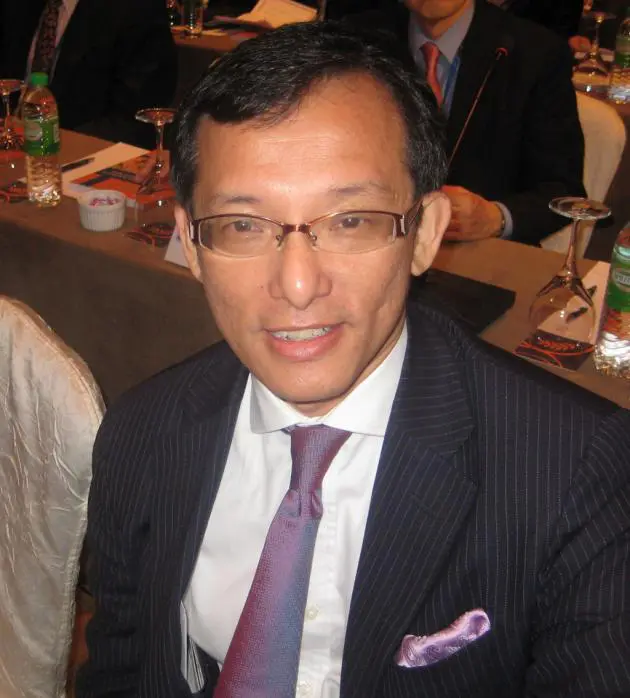
Simon Tay is chairman of the Singapore Institute of International Affairs and teaches at the Law Faculty of the National University of Singapore. He was in Japan as a member of the Toyota Global Advisory Board.
