
Asean urged to forge stronger links with EU


Play
Asean member countries need to work closely with the European Union (EU) to protect their economies as the region is still vulnerable to problems in more advanced economies, says the bloc's secretary general.
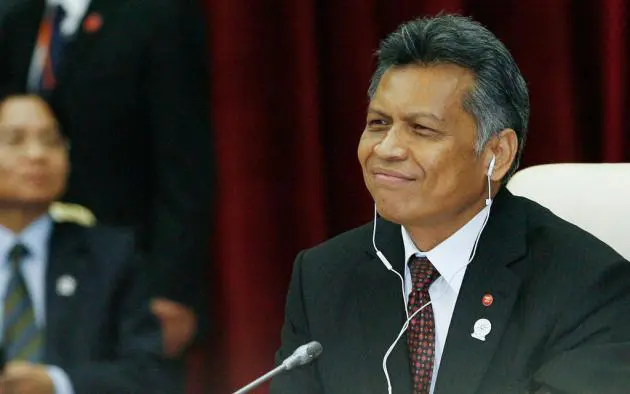
Speaking to delegates at the Asean-EU Business Summit which concluded on Sunday, Asean secretary general Surin Pitsuwan said it was difficult to avoid spill-over effects from other parts of the globe in an increasingly globalised world.
“In 1997, Europe told us to put our house in order,” he said. “This time we appeal to Europe to put your house in order,” said Surin, comparing the recent global slump, which has hit a number of European countries hard, with the Asian crisis of 1997.
To enhance Asean-EU trade ties further, Pitsuwan spelled out the following recommendations.
The first recommendation was to have Asean continue implementing international standards, and encourage the EU to have better understanding of Asean laws and regulations, while providing capacity-building programmes for Asean companies trying to cope with the EU standards and regulations.
“Our response is the Asean-EU Trade and Investment Work Programme, and it was adopted by the ministers at the 10th Asean Economic Ministers Trade Commissioners Consultations last year,” said Surin. He added that the work programme included sectoral dialogues sharing best practices, experience and expertise on mutually-agreed priority areas including standards and green technologies.
Surin said the Asean-EU Free Trade Agreement (FTA) Negotiation Capacity programme also brought awareness among officials and the private sector on EU policies on trade and investment, such as new trade issues; intellectual property rights; competition policy; investment; environment; trade facilitation; trade barriers; barriers to trade on agriculture and “rules of origin”. “We are pursuing all those issues that we have raised together with the support of the EU,” said the secretary general.
The third recommendation involves the harmonisation of the market integration that Asean will continue to pursue by the year 2015, and for the EU to continue providing trade relations assistance to future Asean integration programmes.
“The fourth recommendation was the Asean-EU partnership framework, and we should promote bilateral partnership and framework to enhance it,” he said. He added that the framework has to be “innovative and flexible” by prioritising measurable capacity building elements.
Promotional activities of small and medium-sized enterprises was one of the recommendations from last year’s summit. Surin said that with the help of the Economic Institute for Asean and East Asia, the Asean SME policy is currently being put together as a comprehensive and monitoring tool for building competitive, innovative, strong and dynamic SMEs, while ensuring that policy programmes at both regional and national levels are there for SME development. “We know that our SMEs are contributing to more than 80 per cent of our GDP and over 90 per cent of jobs in our countries are provided by SMEs,” he said.
“Sixth was the supporting of the European Asean Business Council [EABC], and we are doing just that, where the policy has been made at the highest level and this is the second time,” said Surin, expressing hope that this exercise will be fruitful in aiding the private sector and policymakers.
