
The humanitarian cost of the Arab divide and turmoil


Play
The Arab Spring has caused a divide in the Arab world, as seen in the recently concluded Arab League summit in Baghdad, which was attended by only 10 of the 22 members of the League.
The presence of new leaders from Tunisia, Libya and Yemen represented the new crop of Arab leaders. The new leaders support the Syrian opposition, hoping for an Arab Spring change in Syria. Mustafa Abdul Jalil, the Libyan leader remarked, “What disturbs the breeze of our Arab Spring and fills our hearts with sadness are the scenes of slaughter and torture committed by the Syrian regime against our brothers and sisters in Syria.”
Apart from the divide between the old and new political orders, there is a clear sectarian divide. The Sunni states of Saudi Arabia, Qatar, Egypt and the Gulf countries were absent from Iraq – which is now the first Arab Shia-dominated state which is pro-US, pro-Iran and also supports the Assad regime in Syria, and has called for an end to the arming of the Syrian opposition, which is supported by Saudi Arabia and Qatar. Saudi Arabia holds the Iraqi Maliki regime responsible for the massacre of Iraqi Sunnis during the 2005-2006 civil war.
Meanwhile, the fugitive Iraqi Sunni vice-president Tareq al-Hashemi, who now supports the independence of three Iraqi Sunni provinces, went to Qatar and from there elsewhere. Qatar refused to extradite him to Iraq.
The double sidedness of the power and sectarian struggle in the Middle East is evident from a remark by Saad Almuttalibi, an MP and member of the State of Law Alliance: “There is an American plan to surround Iran. Unfortunately, Saudi Arabia took that call, but the mistake they make is to call for a sectarian divide, unlike the Americans, who are talking about political differences.”
The Middle East is not a monolith in terms of economic conditions, religious sectarianism, availability of political freedom, or state of political affairs. Politically, leadership in the current Middle East is divided into four types: the old kings and presidents; the military authorities; politico-religious sectarian leadership; and the new democrats. All of whom are engaged in a power struggle against each other.
The economic and democracy deficits in the Middle East are the major factors that will shape its future face, as different political groups are competing for control. In the meantime, the Middle-Eastern youth, the middle classes and the subalterns can only hope against hope for a better future. The Middle East is in for a long political drag.
The suppression of Arab revolutions without political transformation in countries where sectarian and tribal tensions loom large will result in unrest, insecurity and violence, ending up like post-American occupation Iraq, which is now virtually partitioned along sectarian and ethnic lines.
The contemporary Middle East is in turmoil; it faces the challenge of calls for transition to democracy, the stopping of human rights abuses, and an end to economic hardship – none of which can be achieved in the old-fashioned ways. There is a demand for the adoption of new approaches and methods. For example, it has been seen in the past that implementation of the Islamic economy and banking model benefitted only the rich capitalist class, as it entangled itself with the global capital market economy. The gains from the Islamic finance projects didn’t trickle down to the poor. The nature of the root causes behind the rise of the masses against Ben Ali, Abdullah Saleh, Hosni Mubarak, Assad and others are economic and political, not religious or sectarian. Not addressing them will only prolong and worsen the crisis.
Economists have estimated that the current rate of unemployment in the Arab world is 25 per cent of its population of 350 million people, and that 100 million jobs need to be created by 2025. This challenge cannot be met by suppressing the uprisings in the name of religion and sectarianism; it requires that the haves start sharing their wealth with the have-nots. Moderate Islamists or those of the extremist types cannot resolve this situation alone; it requires cooperation between cross-national alliances, which is the modus operandi of contemporary politics. The era of single-party control of power has become outdated.
At the same time, powerful external actors, too, should realise that the demand of Arab youth and the masses for economic and political transformation, if ever achieved, will be of great benefit to the region and the world at large. It is time to move away from the Cold War rhetoric and alliances, for these only prolong the crises and turmoil.
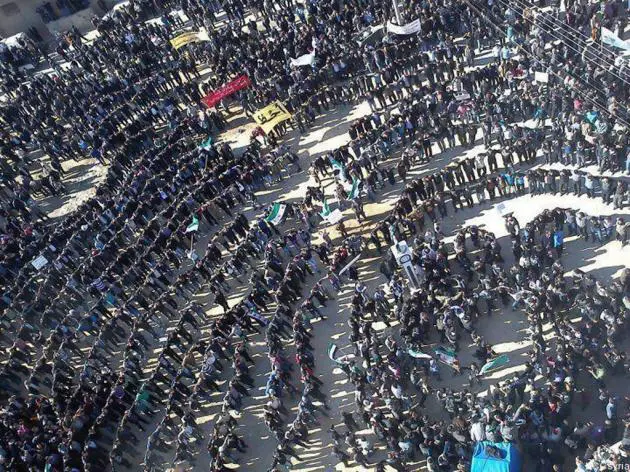
From the beginning of 2011 until now, the Arab world has seen the following numbers of dead: Syria, 10,108; Libya, 50,000; Tunisia, 300; Egypt, 950; Yemen, 2,000; Bahrain, 88. A total of 63,446 deaths (including Sunni, Shia and others) for the sake of economic and political change, not Islam. This number does not include the thousands of injured, tortured and maimed.
Weighing the value of these thousands of dead in favour of keeping the ruthless autocrats in power for the sake of the economic interests of the few rich and their international beneficiaries is inhuman and too heavy a price to pay.
Dr Imtiyaz Yusuf is professor of Islamics and religion at the Graduate School of Philosophy and Religion, Assumption University, Bangkok.
