
Ramadhan: Celebrating pluralism
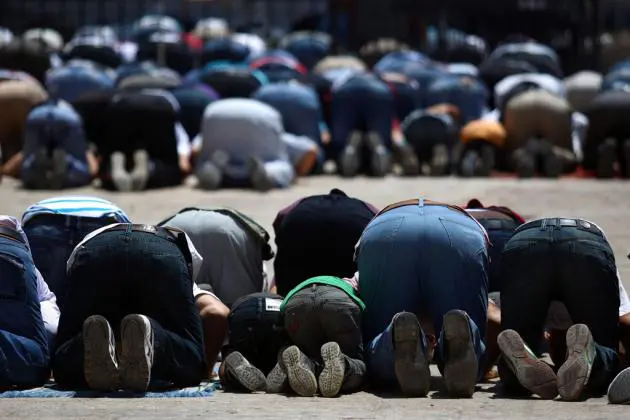


Play
There is no better theme to celebrate during this year's Ramadhan than pluralism.
The fact that Muslims in Indonesia are widely divided about when the holy fasting month begins is both a symbol and a reminder of the pluralism that exists among the millions of adherents to Islam in this country.
We seem to have this debate every year: either about the start of Ramadhan or about when it ends. In many instances, Muhammadiyah and Nahdlatul Ulama (NU), the country’s two largest Muslim organisations, are at opposite ends of the spectrum. The government is inevitably caught between them. Although the Religious Affairs Ministry hosts annual meetings to determine when Ramadhan begins and ends by consensus, it has to respect the differences that often emerge, including between NU and Muhammadiyah.
Many Muslims are bewildered by the annual debate. Some ask why these two Muslim organisations can’t agree on something as “inconsequential” as the start or end of Ramadhan.
Many understandably decide to follow the government. Others trust their respective organisations, be they NU, Muhammadiyah or other smaller groups and sects. Once Ramadhan begins, however, the debate stops and everyone goes about his or her own business. Everyone respects other groups’ decisions, until the next disagreement.
That’s precisely the beauty of pluralism, which is very much alive within Islam, and most likely in all other religions that exist in this country.
“There shall be no coercion in matters of faith,” Muslims are repeatedly told in the Koran. Believe what you want to believe. Another popular verse says, “Unto you your faith; unto me, mine”, which is another way of saying that you should respect my belief as I yours. There can be no clearer illustrations than these verses that pluralism defines Islam.
No other country in the world with a predominantly Muslim population goes through heated debates about the beginning and end of Ramadhan. Most of these countries, such as Bangladesh, Malaysia and Pakistan, are Islamic states by definition or by constitution. In these countries, the state defines religion. It makes religious rulings, which everyone is expected to follow. No one, or very few, would argue with the government about when Ramadhan starts.
Indonesia may be the country with the world’s largest Muslim population, but it is not an Islamic state. The state has no final say in matters of faith. And with NU, Muhammadiyah, and other organisations and sects, people have a choice about which one they want to follow.
The debate about the start and end of Ramadhan is a reflection of the plurality of Islam in Indonesia, while the respect that people extend to the choices of others underpins the freedom that religious adherents in this country enjoy, as they rightly should.
Celebrating pluralism this Ramadhan would be particularly timely since there have been signs of late of rising intolerance among people of different religions.
This year’s Ramadhan would therefore be a good time for Muslims, who make up about 88 per cent of the Indonesian population, to reflect on the events of the past year. Religious intolerance does not define Islam, and every decent Muslim must fight this.
With Ramadhan beginning, everyone – Muslims and non-Muslims alike – need to recommit themselves to the values of pluralism, for it defines Indonesia and it defines Islam.
