
The hidden (and sometimes scary) charms of Asean


Play
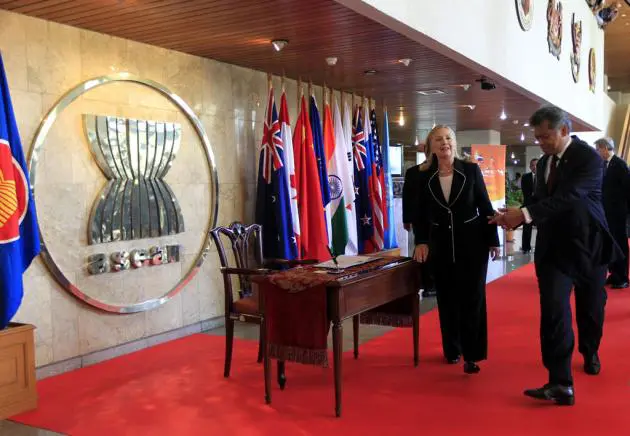
With the 10-nation Asean set to become a single market in 2015, "Asean Economic Community" and "AEC" have become oft-repeated terms in the media. Government agencies are busy preparing Thailand, while private companies are gearing up for greater compe
But not everyone is seeing the positive side.
During a taxi ride recently, I was flabbergasted by my cabbies’ opinion. He started by saying that in the next two years he would quit driving the cab and head home to the Northeast. The reason: Bangkok would be a scary place to live. With the door to the country opened wide, foreigners would flood into the capital. Some would be bad people, which would cause crime rates to spike. Job vacancies for someone like him, with just a secondary-school education, would be scarce. He also advised me to be extremely cautious about taking a cab, as so many drivers would be foreigners. Yes, he was talking about what would happen after the AEC kicked off.
On the one hand, I was delighted that an ordinary Thai showed such awareness of the single-market scheme. I was reminded of a taxi-ride quiz on TV in which a Singaporean correctly spelt out what Asean stands for. At the time I thought that someone educated in Thailand would have difficulty doing the same.
On the other hand, it seems the authorities need to do more to instil a positive attitude to the AEC among Thais. Like a coin, every new thing in our lives has two sides. The AEC might not bring benefits to all Thais, but that doesn’t mean the only thing that awaits us is risk.
One benefit is that many Thais now feel the urge to step out of the country and learn more about their neighbours. Many are also keen to open Thailand’s doors so that more foreigners can appreciate our culture’s unique charms.
Many of my colleagues are eager to set foot in Myanmar now that our neighbour has flung open its doors, ending five decades of isolation. And it’s not just journalists. Last week I met a Thai businessman in Hongsa, Laos, who questioned me eagerly about how the Myanmarese live and how friendly they were. He was just curious, having no financial interest in the country.
Travel is a big part of my professional life, and I have been to nine of the 10 Asean nations. When I first visited Jakarta 15 years ago, my first impression was that Thailand was blessed to have such a gleaming and efficient international airport. I got same the impression touching down in Manila – and in those days Suvarnabhumi Airport was still on the drawing board.
But my heart sank on my first trips to Singapore and Kuala Lumpur. Their airports were breathtakingly big, modern and properly connected with the city centre via trains and an orderly taxi system. In Myanmar, I admired the fact that Nay Pyi Taw’s modern airport could compete with others in the region even when the country was so poor. SEA Games athletes will be able to see that with their own eyes when the city holds the event next year.
Airports are the first thing encountered by most visitors to a country.
You learn more about a place when you get acquainted with the locals. Most Thais picture Laos as a poor, religiously conservative country where places like nightclubs don’t exist. In fact, there are nightclubs. I discovered Vientiane has one hidden inside a luxury hotel. Around 9pm, local girls in expensive clothes appear, ready to chat with other night-birds over a glass of whisky. The following morning you can experience a stark contrast in Luang Prabang, the old capital in the north, where locals line up to offer alms to monks before paying a visit to the temple.
In Laos, I also got a cautionary lesson in dealing with foreign customs. After joining the locals in a game of petanque, I was handed a half-full glass of beer. I took it and sipped away happily, only to learn that five other players had drunk before me from the same glass, which I passed on to more drinkers. To the locals, this custom was a bonding exercise. Little did they know that foreigners can bring new diseases that they would have little resistance to. Hopefully, the alcohol in the beer minimised the chance of transmission.
Over in Indonesia, don’t panic if local friends order you a whole chicken or duck. The birds are usually young, small and delicious.
On the subject of food, I guess most foreigners would also be shocked to see Northeastern people slurping up dishes swimming in blood. And our wet markets, though lively to us, may be a little too visceral for others.
Tourists polled for a recent survey rated Bangkok highly because there were plenty of foreigners to show them the ropes. In other words, they felt no need to panic at being in a foreign city where few people spoke their language.
Learning more about our neighbours – and ourselves in the process – can be both fun and scary. Anyone who has meditated knows this truth from the “inside”. The challenge is to embrace both the good and the evil inside of us. Only those able to find the middle path of compromise will achieve peace of mind.
