
Who is really benefitting from rice subsidies?


Play
The taxpaying public deserves answers on the massive sums being spent on the rice subsidy scheme amid new allegations of corruption
After three days of the censure debate, the House is scheduled to vote on whether to support Prime Minister Yingluck Shinawatra today. Regardless of the questions raised during the debate, the majority of House members will support the prime minister and her government.
Cabinet members will expect no surprises in the voting. The Pheu Thai Party and its coalition partners command the majority, and MPs of the coalition parties are almost certain to vote in accordance with the instructions of the party whips.
Nonetheless, the public still expects more from politicians. Yingluck may survive the debate but she still has to clear doubts over alleged money laundering by a dummy company involved in the government’s rice price subsidy policy.
The government’s rice scheme was the focus of the censure debate. The opposition Democrat Party again pointed out the flaws in the scheme, which they say signals the inefficiency of the prime minister, who is responsible for the government’s policy.
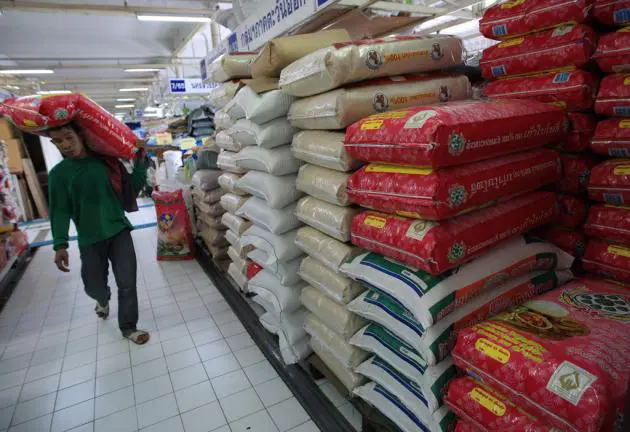
The Rice Committee, chaired by Yingluck, has spent more than Bt560 billion so far on the rice price subsidy. If the government continues to spend money at this rate, Thailand may see its public debt reaching the worrisome level of 60 per cent of the country’s GDP. The loss of more than Bt200 billion annually will wreck the government’s fiscal stance.
The government is also hurting the competitiveness of Thai rice by discouraging farmers from improving quality. Moreover, the government distorts the market system by controlling rice trading; it has already stockpiled a massive amount of rice in warehouses.
These criticisms have been pointed out numerous times. But the government has yet to respond adequately. It is not only opposition MPs who are critical of this scheme; many economists have also criticised the government for blindly proceeding with this wasteful populist policy simply because it was what the Pheu Thai Party promised its supporters during the general election.
The debate, however, reveals another serious flaw in the rice scheme: it has created the opportunity for massive corruption. It seems the majority of money spent has gone into the pockets of people with political connections.
The opposition raised the question of why only a small number of farmers have actually benefited from the scheme. According to a government statement, the Cabinet approved a budget of around Bt400 billion to buy 26 million tonnes of rice from 4 million farming households. As it turns out, the programme has so far covered only 1.7 million farming households, opposition party MPs note, with Bt560 billion spent so far. There is thus suspicion about Bt160 billion going unaccounted for.
This is not mention the fresh allegation over a dummy company involved in government-to-government contract sales of rice, which has yet to be answered.
Although the censure debate may be over, the government still has to address serious public concerns over the rice scheme, in particular the charges that the scheme is not benefitting the majority of farmers, and it is failing to improve their wellbeing, as was promised in the election campaign.
The government will be able to survive the censure debate without answering these questions in the House, but that does not mean the taxpaying public will be content with the official rhetoric. This is a lot of public money –taxpayers’ money – and the people demand nothing less than a clear explanation from those in power.
