
Falling for a fake


Play
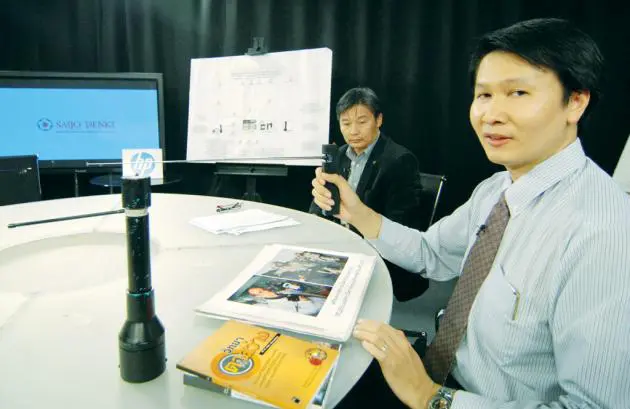
Asst Prof Jessada Denduangboripart, the scientist who proved that the GT200 explosives detector was a fake, looks back on the reasons why Thailand fell for the scam
When leading Thai scientist Asst Prof Jessada Denduangboripart was asked to look into the controversial GT200 explosives detector, which has been ruled fraudulent by a foreign court, he discarded his extensive scientific knowledge in favour of his instincts.
He chose to rely on his scepticism in proving that the expensive device was not scientifically viable for military work, thus preventing further loss of life and a swathe of wrongful prosecutions.
Back in 2009, he met with military units, most of them still convinced that the GT200 was a reliable device that could detect explosives planted in insurgency-infested areas in the deep South, and patiently explained that they would keep dying. The GT200 was a fake, he told them, and innocent people were being subjected to arrest and prosecution because the device had picked up superficial explosive-related stains on their clothes or bodies.
“Back then I wasn’t thinking about corruption, or about the military units that bought and used them earning [illicit] profits [from the high unit price]. My only mission was to produce a reliable scientific test that showed GT200 was, as others have put it, am empty plastic case. The military units really believed that the device worked for them, arguing somewhat illogically that having the GT200 was better than not having them, or having nothing at all,” says the lecturer at Chulalongkorn University’s science faculty who holds a PhD in his field.
A member of community website Pantip.com’s Wahko discussion group, where high-tech fans and science buffs debate various subjects, Jessada says that several other people, among them fellow scientists, figured out that the GT200 was a scam early on. That, he stressed, was before the BBC’s investigation in 2010, which revealed that the ADE 651 bomb detector used by the Iraqi army and police, among others, was a fake.
“That led to a discussion about the GT200 used by the Thai military, especially in the deep South. The probe started with a basic online research, jointly done by many Wahko group members,” he says, adding that several online articles revealed significant irregularities in statements made by the GT200 manufacturer.
“I think the makers of the GT200 would have won a Nobel prize if the device had worked in the way they promised.”.
Another motive for Jessada and his fellow academics in leading an official investigation was the lack of interest shown by Thai scientists in producing proof that the device did not work. They could easily have done so, he points out, especially in the wake of the BBC’s report that a test conducted in Thailand had clearly revealed the GT200 was a scam.
“The GT200 has been decommissioned in many countries, and investigations into those recommending the purchases are now underway. In Thailand, however, even after the GT200 test was conducted, nothing was done, though the agencies did discontinue its use.”
Earlier this month, a British court found wealthy businessman Jim McCormick guilty on three counts of multimillion-pound fraud in relation to the three types of fake bomb detectors he sold to state security agencies across the world – including Thailand. The GT200 were purchased for between Bt800,000 and Bt1 million plus per unit by several government agencies tasked with internal security and narcotics suppression, the UK-based manufacturer Global Technical having also claimed that the device could detect drugs.
“Thailand has learned a major lesson from the GT200 issue, especially as it relates to the purchasing regulations of government agencies. It’s vital that the specifications of very expensive devices be verified scientifically, through tests conducted by outside agencies, and not just be approved for purchase on verbal recommendations by the top people in the relevant agencies,” Jetsada says.
“To me, the biggest question is why purchases were authorised and made without any tests being conducted. The brochure says the GT200 can detect explosives laid or planted in a radius covering several kilometres and we simply believed the advertising.”
“In reality, nothing that can detect explosives better than sniffer dogs though their deployment to Thailand's south is shunned because of perceived Muslim sensitivities. But even Islamic countries like Saudi Arabia or Kuwait deploy dogs for bombs detecting,” he says.
The GT200 made a lot of money for its manufacturer and for McCormick, he notes, because they simply offered “what the buyers wanted.
“In Thailand, which is not renowned for its strength in science and where irrationality is widespread, a ploy like this works. We were open to exploitation because the GT200 answered our dreams.”
