
Rice scheme demonstrates populism's dark side


Play
Anyone can spend himself into trouble. It's one kind of trouble if it's your own money, but it's another if it's the taxpayers'. And it's bigger trouble still if all logic cries out for you to stop throwing tax cash all over the place, but you have
The government is being squeezed, trapped between its own ambitious election promise and its stubbornness to see it through. Just about every single person outside the ruling party’s circle warned that buying a virtually unlimited amount of rice from farmers at Bt15,000 a tonne was a surefire way to commit budgetary suicide, but the government paid no attention. When something was purportedly being done for the poor, critics couldn’t do much except pray.
Even pro-government economists foresaw a disaster. They couldn’t look too scared, however, because not only was the prime minister nonchalant, but her big brother was firing on all cylinders in defence of the scheme. Thaksin Shinawatra told the world last September that the rice programme was so noble and economically beneficial that it should go on for several more years. The rest is history.
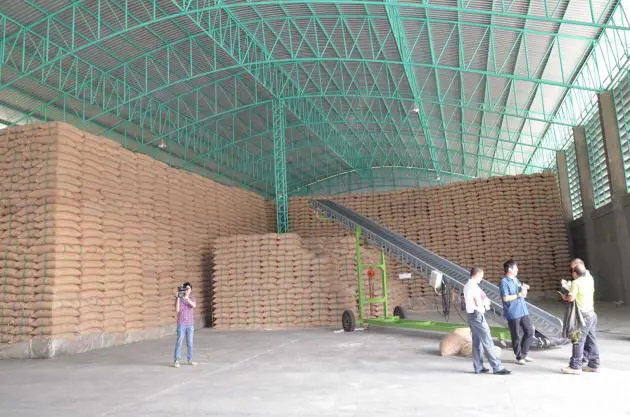
According to Thaksin, the rice scheme was providing economic gains three times its cost. No matter where his statistics came from, they have been overshadowed by the opposition’s more direct numbers. Money spent on buying overpriced rice from farmers, and processing and storing the produce, has dwarfed the income the programme has generated or will ever generate. Corruption is rampant. Huge amounts of rice have either disappeared or been left to rot, and Thailand has slipped behind Vietnam and India as the world’s biggest rice exporters.
To realise how desperate and clueless the government has become, one only had to watch a recent press conference chaired by Deputy Commerce Minister Nuttawut Saikua, a video clip of which has been circulating on the social media with a must-see tag. He was supposed to address key questions about the project, but answered none. “What have you been doing these past few days,” a reporter asked him and senior officials – who passed simple questions to one another like they were hot potatoes.
After months of trying to stand its ground, the government caved in a few days ago, cutting the guaranteed price per tonne to Bt12,000, and aid to each farmer’s family to Bt500,000. If that sounds reasonable, a vast number of Thai farmers do not think so.
Protests have taken place and are being planned, both by those opposed to the rice scheme and those benefiting or standing to benefit from it. “Courageous!” die-hard government supporters say. “Cowards!” scream farmers who have made financial arrangements with Bt15,000 per tonne in mind. “Told you so,” the initial critics of the scheme shrug.
It’s one thing to make a political U-turn when a project starts to go wrong, but it’s another to backpedal when all previous warnings that went absolutely unheeded are coming to a head. The “courageous” compliment also flies in the face of real legal dangers that the government is facing. The enormous cost of the rice scheme threatens to jeopardise the government’s budgetary mandate and complicate investment in other essential plans.
The government apparently feels that it has backtracked enough, while others believe that the rice scheme is only halfway down the slippery slope. The situation, therefore, is very tricky. Opponents think the government’s attempts to control the damage are far from sufficient, while affected farmers think the government has done too much. The government’s preferred choice is to stay precariously sandwiched, at least for the moment.
This is the problem with populism. Once it’s let loose, it can barely be reined in. Populism-oriented governments collapse not just because of financial strain of their own making, but also because of the resentment of those who have been made irreversibly dependent on the state and who can’t accept an about-face. Welfare is easy to give, but very difficult to take back.
What should the government do? A lot. For starters, it must accept that “You produce, we buy unconditionally” is a ludicrous economic concept. It’s as ridiculous as the tenacious refusal to let banks fail in the United States. Only there, they won’t allow the rich to fold, but here the poor are perceived as being the source of political power. Yes, politics is the art of doing the right thing for the wrong reason, and making the wrong reason seem right, but even in politics there are limits to how far you should go.
Unfortunately for the Yingluck administration, while there is a lot it should do, there isn’t much in the “can do” department. Losing face is arguably the least of its worries, though. The rice scheme and its failure have become intertwined with the political divide. Politicians give because they want to take, and in this case the prospective takers may have too much at stake to just drop it.
