
Tony Blair was right to say that politics needs help


Play
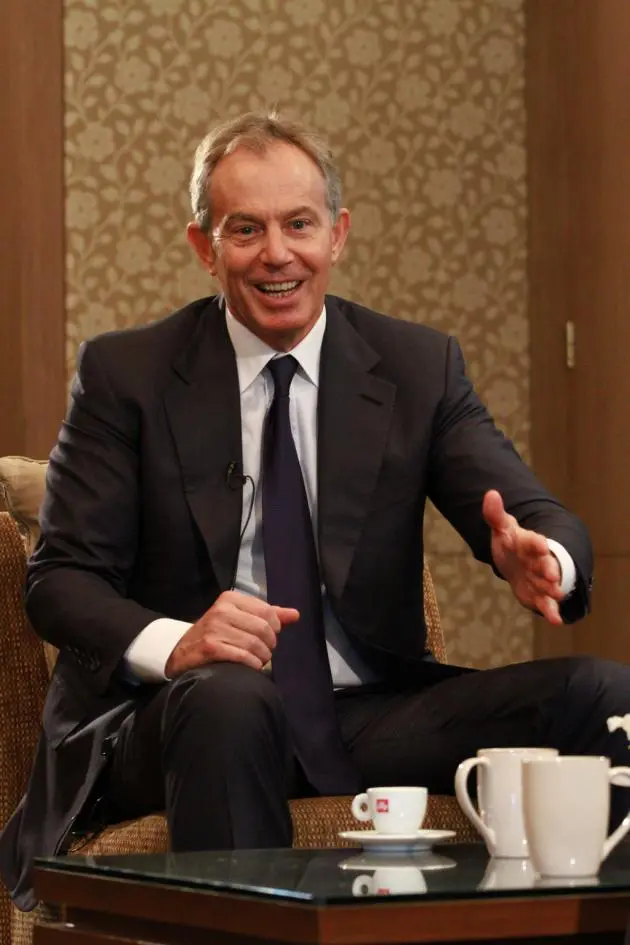
Former British prime minister Tony Blair still turns on the charm, even though he doesn't hold any political position. One day, when he was supposed to show up as a panellist on the World Economic Forum on East Asia 2013 in Myanmar, he was late. Yet, nobo
As the representative of the “Middle East Quartet” – the body set up in 2012 by the United Nations, European Union, United States and Russia to help mediate Middle East peace talks, Blair recalled the days when he served as the most influential man in the UK.
His first days in Downing Street were full of promise, he admitted. He was full of ideas, only to realise that “the system is really good at stopping things happening”.
When other panellists proposed big ideas for the world and looked to him on how politicians can help, he said, “Politicians need help.”
He admitted that politicians do not know everything. As such, they need advice from businessmen and researchers, who form part of the intellectual community. Governments as a whole need a willingness to listen to ideas from outside the government, and multiply them. This is governed by the concept of how governments can ensure social health, assemble ideas and execute them. “The gap in people’s expectations and what can be delivered is large. The idea is how we can help governments do that?”
His words remind me of what has happened over the past few decades in Thailand. It is no secret why the term “Baan Phitsanulok” was created, following the meetings of economic advisors at the old residence where big economic ideas were shaped.
During the era of the late prime minister General Chatichai Choonhavan, it was his advisors who proposed the Eastern Seaboard concept. When that materialised, it gave Thailand a new economic direction. From a nation that relied heavily on agricultural products, today Thailand’s manufacturing sector generates nearly half of the gross domestic product.
But not all governments followed the same path. When Chavalit Yongchaiyudh came to power, there was no thinktank team. Surrounding him were just ministers; some were non-politicians. Still, they were under political pressure.
Years ago, I met a retired government official who was one of over 30 advisors to a prime minister. He said that for months after that prime minister came to power, he never called a meeting with his counselling team.
The concept of being surrounded by outside advisors was fully exercised again during former prime minister Thaksin Shinawatra’s era. He had many advisors like Surapong Suebwonglee, Prommin Lertsuridej and Phumtham Wechayachai. Like the men around Chatichai, they proposed totally new ideas for Thailand’s economic direction. Their ideas were big, but the mission was undermined by poor action. So many policies were directed to win short-term political popularity.
Prime Minister Yingluck Shinawatra has no such team. All the advisors that we know she listens to are appointed to Cabinet posts. Needless to say, they have to play a role politically and their ideas are under influence. We can spare one person – Virabongsa Ramangkura. The former deputy prime minister was not a minister and he is outspoken enough to comment harshly on the government’s rice price-pledging scheme. He may not have been around when Yingluck plotted the election campaign. It was too late to comment on that, after the pledging scheme was launched.
What if Yingluck set up an advisory team consisting of people from outside the political arena? Perhaps they would have told her that she could not make shortcuts with projects like the Bt350 billion water-management scheme. Heralded as a project to boost the economy, the scheme – delayed by a court injunction – may now pull down GDP this year. That dents sentiment, given the poorer global economic prospects.
In Myanmar, Blair said one thing worth thinking about: the quality of governments depends on the rule of law. If the laws are clear, all government agencies can proceed within their power without having to wait for the government’s endorsement for everything. Without good governance, it is hard for democratic governments to take a root, he said.
It would also help if governments invited foreign experts to help on things that are new to their countries. That was what the young Singaporean government did. Blair did not say that Western governments are role models for emerging governments. “There are good and bad governments. You can learn from us.”
Blair is optimistic that today’s governments are in a better position, with technological advancements and a more connected world. “Good things are out there in the world today…. Politics needs help. You should go and get involved and help the situation, to eventually move the country the way you want.”
He did not say whether frequent protests would hinder or help those changes.
