
Whistleblowers are raising the alarm around the world


Play
The era of whistle-blowing has arrived. In the United States, there are two notable whistleblowers of late - Edward Snowden and Andrew Huszar.
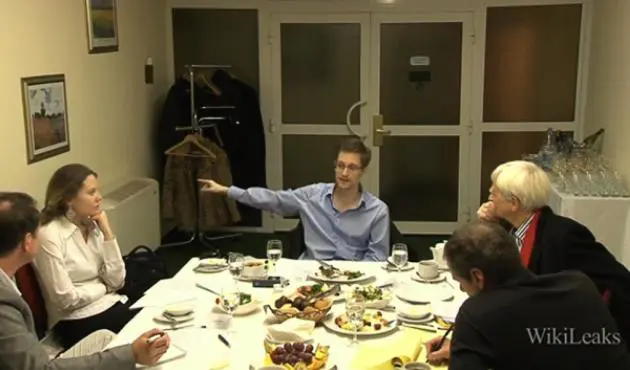
Snowden, hero or villain depending on your perspective, has revealed earth-shaking information on the US National Security Agency’s extensive clandestine operation to spy on Americans and the countries around the world. Allies are angry with the US because the spying should be directed against the enemy countries – not against friendly countries like the European Union nations. The French and the Germans, in particular, have vented anger at Washington. Indonesia has also protested against a joint US-Australian operation to spy on a summit held in Indonesia. Since the spying has been conducted against “friendly nations”, in the broadest definition, it means that US intelligence officials have been attempting to seek crucial information on economics or financial matters for possibly financial gain and other purposes. From the information provided by Snowden, who is now living in asylum in Russia, we have learned that the US has also been using its embassy in Bangkok and consulate in Chiang Mai for spying purposes.
Another whistleblower is Huszar, a former US Federal Reserve official who has admitted that the money-printing programme known as quantitative easing (QE) has not helped the US economy at all. Instead, QE is a tool to bail out the Wall Street banks. Huszar worked on QE1 in 2009 and 2010, during which time he spearheaded the Fed’s purchasing of mortgage-backed securities worth US$1.2 trillion from Wall Street banks. He thought it was a dream job at the time. But after QE1 was completed, it did nothing to improve the US economy or employment situation. After some months, the stock market fell 14 per cent and the banking sector was wobbling again. Then came the launch of QE2. That was when Huszar realised the Fed’s operation was not independent of the interests of the Wall Street banks. He wrote in his “confession”, published in the Wall Street Journal this week, that after expanding its balance sheet by $4 trillion over the past five years, the Fed succeeded in propping up economic growth by a negligible rate of 0.25 per cent, or $40 trillion. But the Fed has insisted on continuing the asset-purchase programme because it needs to bail out the Wall Street banks.
Huszar’s revelation should lead to a rethinking of the whole US monetary policy, or QE. Likewise, Snowden’s tell-all exposé should lead the US to revamp its spying operation.
In the Bangkok streets, whistle-blowing is all the rage, used by the opposition Democrats and other protest groups as an act of social sanction against the government. On Silom Road, Sukhumvit and along Rajdamnoen Avenue leading to the Democracy Monument in the heart of Old Bangkok, you can hear the protesters whistling their disapproval of the government. The phenomenon has grown out of public indignation at the administration’s attempt to pass an amnesty bill to whitewash corrupt politicians. But there are also other political issues hanging in the balance. The World Court’s ruling in favour of Cambodia in the Phreah Vihear Temple case will ignite further political turmoil here. This is not to mention the government’s dubious attempt to amend Article 190 of the Constitution so that it can sign international agreements – such as oil deals in the Gulf of Thailand – without having to seek approval from Parliament.
These are interesting times, when whistleblowers are fast-emerging to reveal irregularities and wrongdoing in their organisations. But for Thailand, the whistle-blowing serves a different purpose – it is an act of social sanction against corrupt politicians.
