
A vote that could unlock our democratic future


Play
Without banking on advice from self-serving politicians who are anyway responsible for the current mess, Thais must do their duty by voting in the referendum on the charter draft
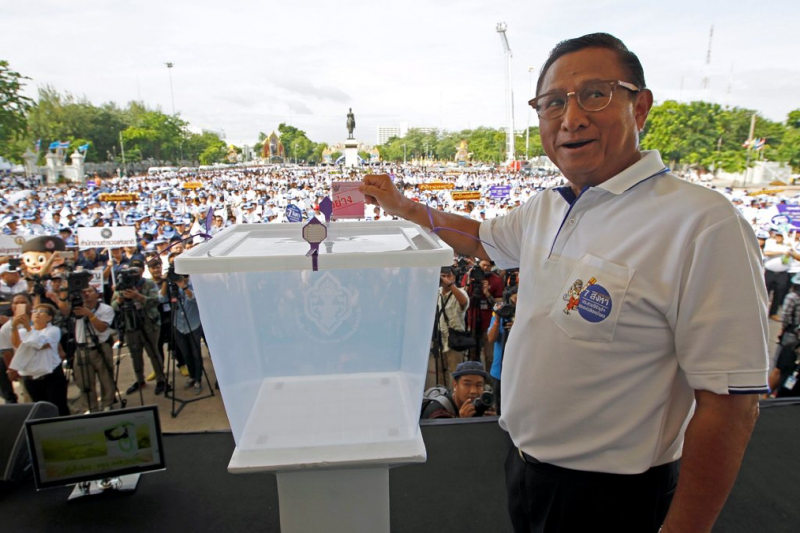
Tomorrow the people of Thailand will have another opportunity to decide their political future. Under normal circumstances, this should have been a cause for celebrations.
But the problem is we are not living in normal times. And the choice we have before us does not say much about the country’s future.
Even a few days before the referendum, many people were still wondering how they would be voting. When they enter the referendum booths, they are supposed to decide on whether they accept or reject the draft constitution.
But what constitution are we talking about anyway? It’s safe to say that very few people can answer this critical question with some certainty. And even fewer can anticipate the consequences of their votes.
Prime Minister Prayut Chan-o-cha may think that he was giving the people a clear choice when he said on Tuesday that the referendum was a chance for them to choose between “a future that may not be that clear and the failure of the past”. But that somehow does not offer much comfort to those who want to make sure that their vote will help prevent a repeat of the political mess of the past and pave the way for greater political stability and certainty.
It should not be surprising that on referendum day many people would still be asking themselves or people around them how they should cast their votes. It’s not their fault that they might not have studied (or even read) the draft constitution. In fact, the question is how many people have actually gone through the entire 270-article document?
While most of the content of the draft constitution may remain a mystery to many people, there is a consensus among both its proponents and opponents that its very essence is the prolonging of the military influence after the next elections. The question then is whether such a prospect is acceptable or not.
It’s most likely that how most people will vote tomorrow will be influenced more by the political context the country is in at the moment than by what is in or what is not in the draft constitution. There will be people endorsing the draft charter simply because they want the country to return to normalcy through a democratic election as soon as possible. And there will be those who do so for a totally different reason, believing that it offers an assurance that the military will still be calling the shots, and thus keeping corrupt politicians in check.
And of course, there are those who will oppose the draft charter at all cost out of democratic principles. There will also be those who will give their thumbs down not because they are against it but because they want the National Council for Peace and Order to hold on to power a little longer.
For many, it will come down to choosing between sticking with the military or risking a return to the political mess of the past. This sentiment more than anything else could be the deciding factor for many.
Even those in the country’s two major political parties, Pheu Thai and the Democrat, seem to have different motives in rejecting the draft constitution. Democrat leader Abhisit Vejjajiva has turned it down because of his objection to some of its key contents but he still wants General Prayut, the junta leader, to preside over the writing of a new and more acceptable charter. As the leader of a party that prides itself on its history of fighting against military dictatorships, Abhisit apparently knows he cannot be seen as endorsing a military-dictated constitution. But it’s also obvious that at the same time he doesn’t want to alienate his party’s constituents that support the current military rule.
On paper, Pheu Thai claimed to reject the draft as a matter of principle and because of what it claims to be its undemocratic content. But its real motive is to put pressure on Prayut and the junta. Pheu Thai insiders admitted that the party is hoping for more international pressure to be piled on the military in the event the charter doesn’t pass the referendum.
It was only 11 months ago that that first draft constitution was rejected by the now-defunct military-appointed National Reform Council. A second rejection would undoubtedly be a big slap on the face of the NCPO and make its legitimacy even more questionable. But what Pheu Thai did not admit is that the party will be the biggest loser if the draft charter were to be adopted.
It was no surprise that SuthepThaugsuban, who led a movement against the Yingluck government that eventually paved the way for the 2014 military coup, has come out in support of the draft charter. And even less surprising is former prime minister Thaksin Shinawatra’s rejection of the draft. Both have a political axe to grind and are equally guilty of helping create the mess the country is in now.
So taking a cue from politicians from either side of the divide is probably the last thing that sensible voters would want to do. And asking for opinions from friends on what to do tomorrow would be of little help as they could be as much in a bind as you are.
There is no denying that tomorrow’s referendum is an extension of years of political conflicts that have threatened to tear the country apart. And in no way does it offer a way out of the mess. The consequence of voting either “Yes” or “No” is something that nobody can foresee.
Do Thai people ever wonder why they have allowed themselves to be dragged into this political quandary? The root cause of what we are facing today essentially goes back to the heydays of democracy when elected politicians engaged in rampant abuse of power while the people watched passively. Demagoguery and political divisiveness were allowed to flourish and many fell victims to them.
Back then when the country was facing its darkest hours with opposing political forces at each other’s throats, the question being asked was “How will this end?” And it was the military that provided the answer with a coup in May 2014.
And now Thais are back to asking themselves again as to what they should do with their political future. Maybe, it’s time that they should try to find an answer themselves and deal with its consequence – whatever it is.
