
After the election, what’s next for US-Asia ties?
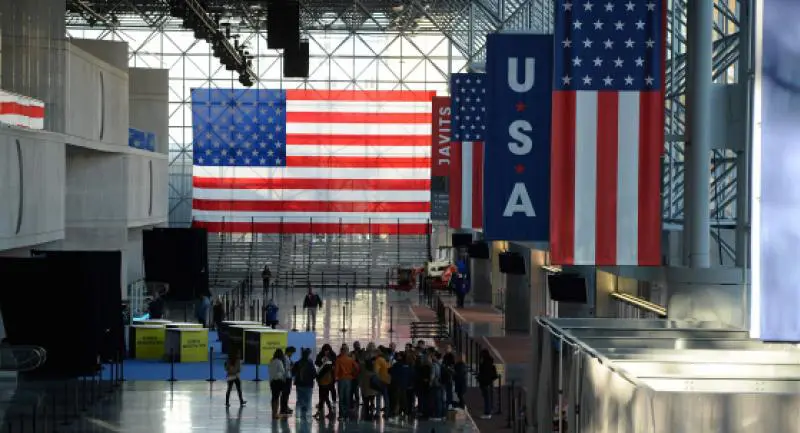


Four experts gauge what change in the White House will mean for our region
US-China: No radical shift
Managing the United States’ relationship with China must be at the top of the new administration’s foreign policy agenda because the relationship is crucial for the region, the world and American interests.
Alarmist predictions about China’s rise and America’s decline mischaracterise and overstate tensions in the relationship.
There is little likelihood that the next US administration will depart from the “hedged engagement” policies pursued by the last eight US administrations.
America’s domestic problems cannot be solved by blaming China or any other country. Indeed, they can best be addressed through policies that have contributed to peace, stability and prosperity.
Strains in US-China relations require attention, not radical shifts in policy. China is not an enemy and the United States does not wish to make it one.
Nor will or should the next administration resist changes to the status quo if change can better the rules-based international order that has served both countries well.
Washington’s objective will be to improve the liberal international system, not to contain or constrain China’s role in that system.
The United States and China have too much at stake to allow relations to become dangerously adversarial, although that is unlikely to happen.
But this is not a reason to be sanguine. In the years ahead, managing the relationship will be difficult because key pillars of the relationship are changing.
For decades, the strongest source of support for stability in US-China relations has been the US business community, but Chinese actions have alienated this key group and it is now more likely to press for changes than for stability.
A second change is occurring in China. As growth slows, Chinese citizens are pressing their government to make additional reforms and to respond to perceived challenges to China’s sovereignty.
The next US administration is more likely to continue and adapt current policies towards China, and Asia more broadly, than to pursue a significantly different approach.
Those hoping for or fearing radical changes in US policy will be disappointed.
Thomas Fingar, distinguished fellow and former chairman of the US National Intelligence Council, Stanford University’s Asia-Pacific Research Centre (SUARC).
US-Japan FTA on the cards?
US-Japan relations have enjoyed a remarkable period of strengthened ties in the last few years. The passage of new Japanese security legislation has opened the door to closer defence cooperation, including beyond Japan’s borders.
The Japan-Korea comfort women agreement, negotiated with American backing, has led to growing levels of tripartite cooperation between the US and its two principal Northeast Asian allies.
The big challenge, however, will be guiding the troubled trans Pacific Partnership trade deal (TPP) through Congress. Washington insiders doubt the deal can be rescued.
One idea now circulating quietly in policy circles is to “save” the TPP by separating off a bilateral Japan-US free trade agreement. Tokyo is said to be opposed to this but Washington may put pressure on for this option, leaving the door open to a full TPP down the road.
Daniel Sneider, associate director
for research and a former foreign
correspondent, SUARC.
North Korea: Unfinished business
North Korea under Kim Jong-un has accelerated its campaign to establish itself as a nuclear weapons state. Two nuclear tests and multiple missile firings have occurred this year. More tests, or other provocations, may well be attempted before or shortly after the new American president is inaugurated in January. The risk of conflict, whether through miscalculation or misunderstanding, is serious. The outgoing and incoming administrations must coordinate on policy and messaging about North Korea with each other and with Asian allies and partners.
The first months in the new US president’s term may create a small window to explore potential new openings. The new president should demonstrate at the outset that North Korea is high on the new administration’s priority list, with early substantive exchanges with allies and key partners like China to affirm US commitment to the defence of its allies, a denuclearised Korean Peninsula and the vision agreed to at the Six-Party Talks in the September 2005 Joint Statement of Principles.
Kathleen Stephens, William J Perry, distinguished fellow and former US ambassador to South Korea, SUARC.
