
Smart Innovation ‘iWASAM’ Advances Intelligent Irrigation Water Management in Thailand
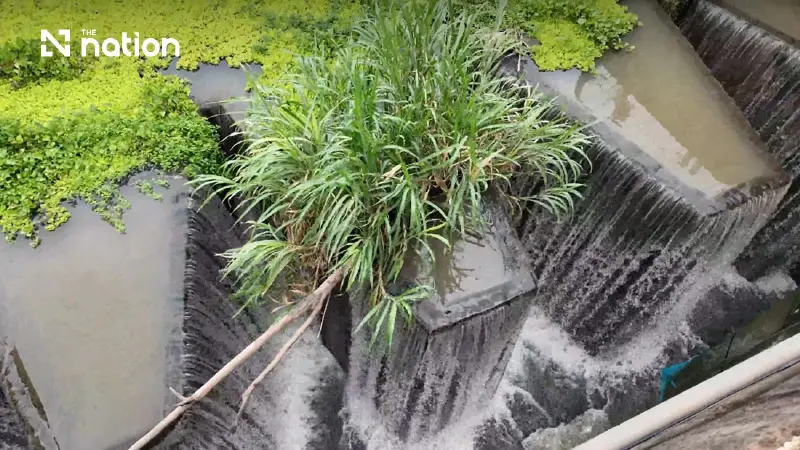


The iWASAM system utilizes satellite data and IoT to estimate irrigation water requirements and monitor water delivery, with further development and expansion through the iWASAM Ecosystem, integrating iWASAM, iFarm and iTambon.
- iWASAM is an intelligent upgrade to Thailand's water management system, replacing the older manual WASAM by utilizing satellite imagery and Internet of Things (IoT) technology.
- The system automates water management by eliminating the need for manual field surveys, forecasting water demand seven days in advance, and monitoring water levels and usage in real-time.
- Its adoption has successfully reduced overall water consumption while simultaneously boosting agricultural crop yields through precise and timely water delivery.
- The innovation is being expanded under a '3i' framework to provide tailored applications for irrigation officers (iWASAM), farmers (iFarm), and communities (iTambon), which includes early flood warnings.
For more than four decades, the Water Allocation Scheduling and Monitoring system (WASAM) has been developed and applied as a tool for irrigation water allocation and monitoring in Thailand. However, constrained by the substantial amount of field data and manual data collection required, its practical application faced limitations. The emergence of ‘iWASAM’ (intelligent Water Allocation Scheduling and Monitoring)—integrating remote sensing and Internet of Things (IoT) technology—marks an important step in modernising irrigation water management.
The Evolution from Early Computer-Based WASAM to Windows-Based Systems
Dr Varawoot Vudhivanich of the Department of Irrigation Engineering, Kasetsart University (Kamphaeng Saen Campus), explained that WASAM was first introduced for the Greater Mae Klong Irrigation Project around 1984–1985 (B.E. 2527–2528), during the early period of computer-based irrigation management in Thailand.
The Royal Irrigation Department (RID), through the Greater Mae Klong Irrigation Project, worked with the consulting firm Ilaco/Empire M&T in developing the original WASAM system. The system was designed to support water allocation scheduling and monitoring across the project’s extensive canal network. However, the early computer platform and data-intensive operating procedures limited its ease of use and wider application

Over the following decade, WASAM underwent several stages of development, including versions designed for more user-friendly computer environments and Windows-based operation. Despite these upgrades, a fundamental bottleneck remained: substantial field data still had to be collected and entered by personnel, including cultivation, field-water and canal-flow information. This data burden limited the system’s routine operational use.
Upgrading to iWASAM: Integrating Remote Sensing and IoT
The development of iWASAM advanced around 2021 (B.E. 2564), when researchers integrated remote sensing and IoT technologies with the WASAM concept to develop “iWASAM” (intelligent Water Allocation Scheduling and Monitoring) for application in the Khlong Suan Mak River Basin in Kamphaeng Phet province

iWASAM addresses several data and operational limitations of its predecessor across multiple dimensions:
- Reduces Manual Surveys: The system reduces reliance on physical field surveys by using crop-growth and crop-coefficient (Kc) information derived through Australia’s IrriSAT platform, which uses satellite-based vegetation information.
- Water-Demand Estimation and Forecast Support: By combining IrriSAT crop information with automated local weather stations and weather forecasts from the Thai Meteorological Department’s (TMD) API, iWASAM estimates irrigation water requirements and supports advance water-delivery planning.
- Near-real-time Monitoring: IoT-based stations measure weather conditions and water flow, while the expanded platform also includes water-level and water-quality monitoring. These data allow iWASAM to compare measured water delivery with irrigation water requirements and evaluate irrigation efficiency and water-management performance.
Improving Water-Use Efficiency and Agricultural Productivity
The adoption of iWASAM provides a data-driven basis for improving water-delivery performance by matching irrigation water delivery more closely with estimated crop water requirements. The system also enables irrigation efficiency and water productivity to be evaluated as indicators for improving future water-management practices.
Dr Krotsuwan Phosuwan, Director of the Irrigation Research, Technology, and Innovation Division at the RID’s Irrigation Development Institute, highlighted that further technological enhancements are underway, including the integration of Artificial Intelligence (AI), Remote Sensing, radar and IoT-based monitoring within the broader iWASAM Ecosystem. These technologies are intended to strengthen water-condition analysis, forecasting and decision support beyond reliance on standalone sensor readings.
Furthermore, related smart-irrigation technologies are being developed to support remote operation of field-level water-control structures via mobile devices. By linking operational data with water-delivery efficiency and water productivity—including the economic value generated per unit volume of water—the broader iWASAM Ecosystem is intended to provide more comprehensive decision support for intelligent water management.
The iWASAM Ecosystem: Linking Irrigation, Farms and Communities
To extend the benefits of intelligent water management from irrigation operations to farms and local communities, the innovation is being expanded into a broader iWASAM Ecosystem comprising three interconnected systems:
- iWASAM (Smart Irrigation Operations): Designed to support irrigation officers and water managers, this tool estimates daily irrigation water requirements and target water delivery for selected irrigation areas, using crop, weather and monitoring data to support water-allocation decisions.
- iFarm (Smart Agriculture for Farmers): A precision-agriculture system that helps farmers determine crop irrigation requirements and supports automated irrigation control. Integrated with on-farm IoT devices, it can monitor actual water and energy use and reduce the need for farmers to manually operate irrigation equipment in the field.
- iTambon (Community Water Information & Participation): A subdistrict-level information platform designed to enable communities, local authorities, farmers and relevant agencies to participate in water management using shared data. Within the broader ecosystem, water information, forecasting and warning functions can also support local preparedness for floods and other water-related risks.
By translating complex technical data into practical decision-support applications, the iWASAM Ecosystem aims to improve water-use efficiency and agricultural productivity while strengthening the capacity of farmers, irrigation managers and communities to respond to water-related risks. Its expansion to additional areas could further extend these benefits beyond the current pilot and development areas
