
TOA unites industry to build greener Thai construction ecosystem
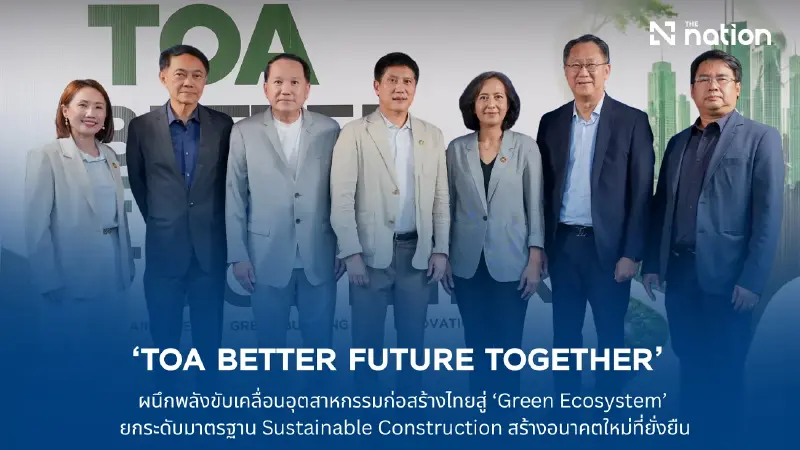


TOA is uniting construction and property partners to advance green building, low-carbon materials and nature-positive development in Thailand.
TOA Paint (Thailand) Public Company Limited is bringing together partners across the construction and property value chain to advance sustainable construction, raise green-building standards and establish a stronger Green Ecosystem for the Thai industry.
As environmental challenges become an increasingly important issue for businesses, creating buildings that are “good for the planet” requires more than choosing environmentally friendly materials. It must begin with credible information that allows developers, owners and other stakeholders to assess environmental effects and make informed decisions.
Through collaboration across the industry, TOA aims to promote responsible construction and develop standards that support sustainable growth over the long term.

Sustainability requires industry-wide cooperation
The TOA BETTER FUTURE TOGETHER event brought together representatives from the property sector, building-project owners, hospitals, shopping centres and condominium management organisations to exchange views and help shape the future of building development.
Discussions focused on buildings that meet business needs while creating benefits for society and the environment. The event also promoted the selection of construction materials supported by transparent and verifiable environmental-impact data.
TOA said the initiative reflected its belief that sustainability could not be achieved by any one organisation. It required cooperation among construction-material manufacturers, property developers, architects, engineers, contractors and consumers, with consideration given to environmental impacts throughout a building’s life cycle.
Participants included Prasert Taedullayasatit, honorary president and adviser to the Thai Condominium Association; Somnuek Tantathodtham, vice-president of the Housing Business Association; Annit Utsaha, president of the association representing engineering executives in hotels and commercial buildings; and Dr Chet Tangsongjitakul, president of the Property Management Association of Thailand.

Jatuphat Tangkaravakoon, chief executive officer of TOA Paint (Thailand), said a good building in the modern world should not be judged solely by its appearance, structural strength or functional efficiency. Its environmental effects must also be considered throughout the process, from design and material selection to construction and the building’s entire operational life.
“For TOA, we have made our sustainability commitment one of our core organisational strategies and are moving forward under our GREEN MISSION policy,” Jatuphat said.
“This covers the development of environmentally friendly products, reducing the carbon footprint of our manufacturing processes, using energy efficiently, managing resources and working with suppliers and partners throughout the value chain. Our long-term objective is to achieve net zero by 2050.”
He said TOA wanted to go beyond its role as a manufacturer of paints and construction materials and become a partner that helps businesses and other stakeholders develop more efficient and environmentally responsible projects.
“TOA BETTER FUTURE TOGETHER is an important first step in inviting partners from every sector to help create a better future for the construction and property industries,” he said.
“We hope the event will lead to cooperation, an exchange of views and, most importantly, the practical application of sustainability in individual projects. Meaningful change can occur only when everyone across the value chain moves forward together.”
From green to net zero and nature positive
A key feature of the event was a special presentation entitled “Future Trends in Sustainable Construction and Better Living” by Dr Benjamas Chotthong, director of the Project Development and Planning Programme and a member and assistant secretary of the executive board at the Thailand Environment Institute, or TEI.

Benjamas discussed the global environmental situation and the major trends for which businesses, property developers and the construction industry must prepare.
She highlighted the nearly 30-year environmental partnership between TEI and TOA, which began in 1997 when TOA first received Green Label certification from the institute.
TEI develops environmental standards and provides certifications including the Green Label and Environmental Product Declarations, or EPDs. It also assesses carbon footprints, helping businesses obtain credible environmental information for decision-making.
Benjamas said businesses faced three major global crises: climate change, biodiversity loss and pollution.
These challenges have direct implications for business operations and urban development. Construction and property companies must consider environmental effects from the design stage and the selection of materials to energy consumption and the ability of buildings to withstand changing climatic conditions, including heatwaves, heavy rain and flooding.
At the same time, sustainability concepts are evolving beyond Zero Waste and Net Zero towards Nature Positive development.
Nature Positive business practices do more than reduce environmental damage. They should also create beneficial effects and help restore the value of nature.
Benjamas said organisations should make systemic changes by first seeking to avoid, reduce and transform their use of resources at source before turning to recycling or end-of-process solutions.
For the construction industry, sustainable development must go beyond structural stability, safety and energy efficiency.
It should address the entire life cycle of a building, including design, material selection, resource and energy use, reductions in greenhouse-gas emissions, resilience to climate impacts and the creation of safe living conditions with a good quality of life.
Benjamas said TOA and its business partners had the potential to help drive the transition towards buildings, homes and other structures that support the environment, human wellbeing and the long-term sustainability of society.
TEI also acts as an environmental think tank, conducting policy studies and assessments, developing criteria and supporting Green Label and other environmental certifications. It provides advice and conducts carbon-footprint assessments for products and organisations, enabling businesses to incorporate environmental information into decisions more systematically.
From green products to a green partner
TOA also presented its strategy under the theme “TOA: Leading the Way Towards a Greener Future”.
Noppakhun Panyasermsuk, head of marketing at TOA Paint (Thailand), outlined the company’s product and innovation strategy, which is designed to support environmental, social and governance principles and the United Nations Sustainable Development Goals.

The approach involves using resources more efficiently, reducing carbon footprints and expanding the choice of construction materials compatible with green-building standards and the requirements of the modern market.
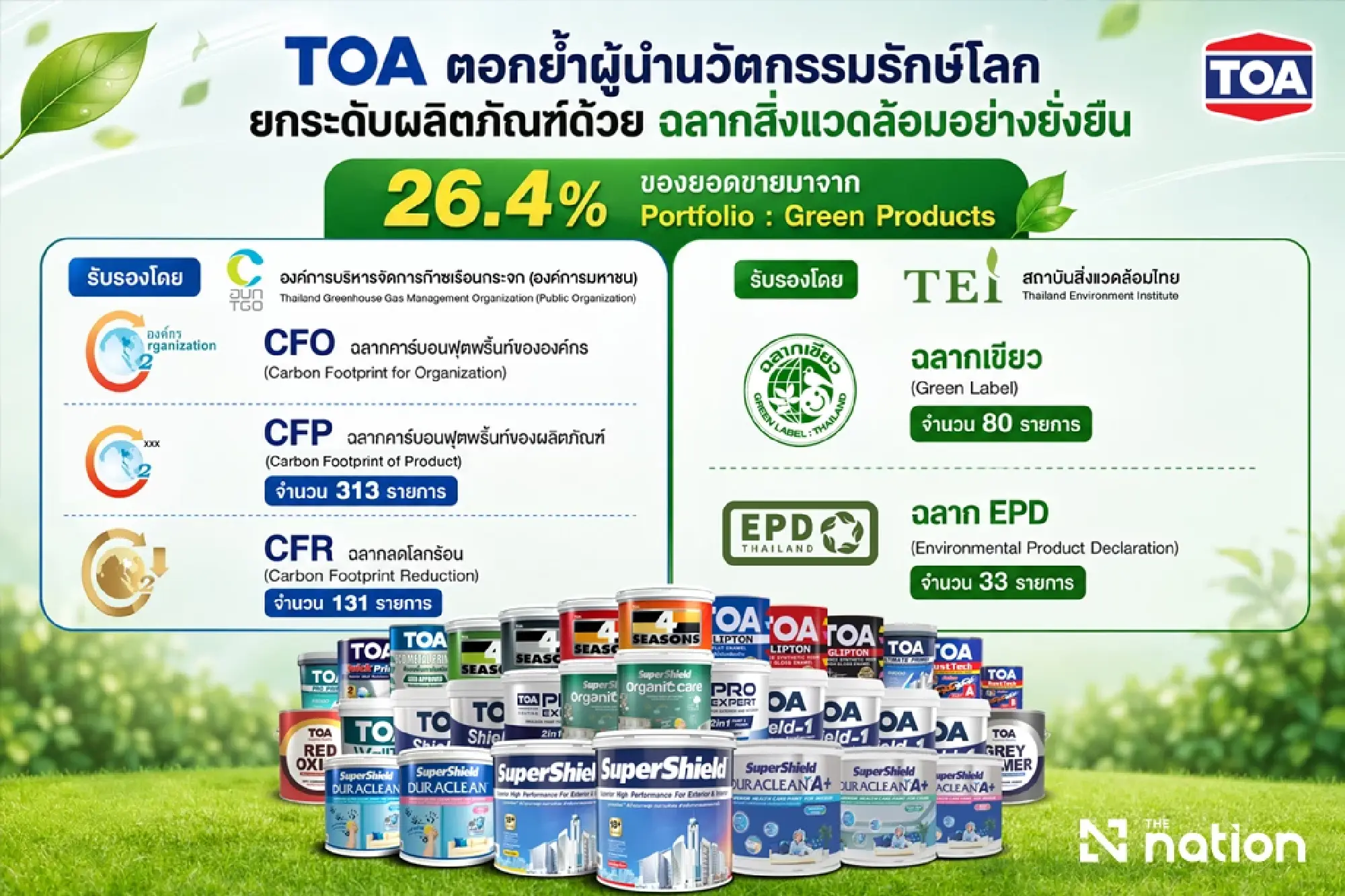
One development highlighted at the event was TOA’s range of 33 EPD-certified products.
The certification covers products across the paint system, including architectural paints, metal coatings and ceiling paints, as well as every packaging size covered by the certifications.
TOA said this gave its paint-system products wider EPD coverage than other brands in the market, both in their range of uses and available pack sizes. The variety is also intended to give building projects greater flexibility when selecting materials for their specific requirements.
An Environmental Product Declaration discloses information about a product’s environmental performance based on a Life Cycle Assessment, or LCA.
It allows developers, designers, purchasers and other parties involved in a project to access environmental information and use it effectively when selecting materials.
Transparent and verifiable environmental data are playing an increasingly important role in the property and construction sectors as developers and owners face greater expectations from consumers and investors, as well as more demanding environmental and sustainability standards.
TOA said an EPD was therefore more than a product label. It was an important instrument for moving material selection beyond considerations of performance and price towards decisions based on environmental data.
Such information can support green procurement and help translate green-building ambitions into practical development.
TOA has also maintained Green Label certification for more than 25 years and received certifications from the Thailand Greenhouse Gas Management Organization covering its Carbon Footprint for Organisation, or CFO.
The company has 313 products certified under the Carbon Footprint of Product programme and 131 products carrying the Carbon Footprint Reduction, or global-warming reduction, label.
TOA said the certifications reflected its continuing effort to raise product standards and reduce environmental effects in a systematic manner.
Building a Green Ecosystem across the value chain
The central aim of TOA BETTER FUTURE TOGETHER is not simply to present environmentally responsible products and standards, but to create a Green Ecosystem connecting stakeholders throughout the value chain.
These include owners, developers, architects, designers, purchasing teams, contractors, property-project owners, building-management companies, manufacturers and suppliers.
Every decision — from the original design and material specifications to procurement, material selection and the appointment of suppliers — contributes to the final environmental footprint of a project.
The strategy reflects TOA’s transition from developing Green Products to acting as a Green Partner, working with other organisations to incorporate sustainability from the beginning of a project and extend it into long-term building management and people’s everyday lives.
TOA said the buildings of the future should not merely provide places in which people live or conduct business. They should also support Better Living, reduce environmental effects and contribute to cities and societies capable of balanced growth.
The event is intended to bring together TOA’s products, innovations, environmental standards and partner network to help Thailand’s property and construction industries move towards green buildings and a low-carbon future.
Its objective is to turn sustainability commitments into practical action throughout the value chain.
“A better future cannot be created by one organisation alone,” TOA said. “It becomes possible when every sector works together and moves forward together.”
#TOA #GreenPartner #TOABETTERFUTURETOGETHER #SustainableConstruction #GreenBuilding
