
Thailand LAB trio connects science, health and industry across ASEAN
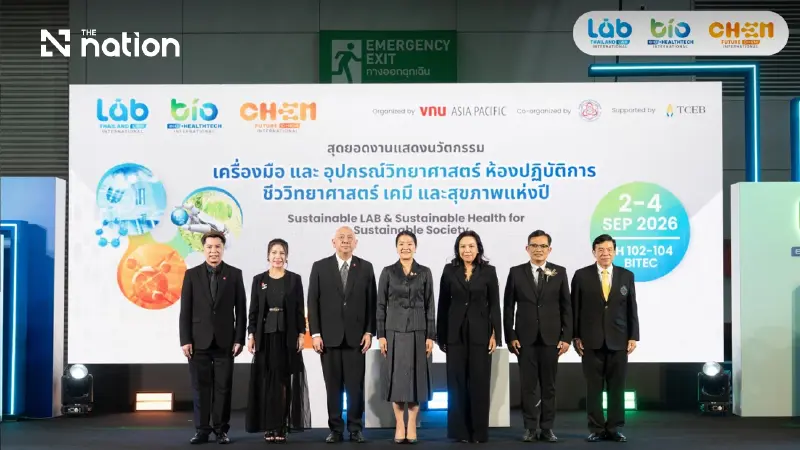


Thailand LAB INTERNATIONAL 2026 joins Bio+ HealthTech and FutureCHEM at BITEC, connecting more than 300 exhibitors with buyers, researchers and investors across ASEAN.
- Three co-located exhibitions in Bangkok – Thailand LAB, Bio+ HealthTech, and FutureCHEM INTERNATIONAL – are uniting the laboratory, health, and chemical industries.
- The event aims to create an "ASEAN Scientific Innovation Ecosystem" by connecting researchers, industry professionals, technology providers, and business leaders.
- Featuring over 300 exhibitors and expecting 13,000 visitors, the programme is designed to foster knowledge exchange, business matching, and cross-industry cooperation.
- A primary objective is to strengthen Thailand's position as a regional hub for science and technology by encouraging investment and turning research into commercial applications.
Thailand LAB INTERNATIONAL 2026, alongside Bio+ HealthTech INTERNATIONAL 2026 and FutureCHEM INTERNATIONAL 2026, brings the laboratory, biotechnology, health technology and chemical industries together under the theme “ASEAN Scientific Innovation Ecosystem”.
Running at the Bangkok International Trade & Exhibition Centre (BITEC) from 2 to 4 September, the event marks the 16th edition of Thailand LAB INTERNATIONAL. More than 300 exhibitors from 15 countries are presenting over 500 brands and technologies across approximately 15,000 square metres of exhibition space, with more than 13,000 visitors expected over the three-day event.

Science, technology and business under one roof
The three co-located exhibitions feature dedicated pavilions from China, India and Taiwan, alongside academic conferences, workshops and technical forums involving more than 125 experts from 10 countries.
The programme covers laboratory technology, biotechnology, health technology, food safety, pharmaceuticals, chemicals, sustainability and future industries.
It is designed to connect researchers, industry professionals, technology providers, buyers and business leaders while supporting knowledge exchange, technology discovery, business matching and cross-industry cooperation.

Highlights include Immersive LAB, an interactive simulated laboratory where visitors can experience advanced laboratory technologies, as well as the Hosted Buyer Campaign and Online Business Matching platform linking technology providers with prospective buyers.
Other activities include the Bio Investment Panel, business partnership sessions and the Future Food Innovation Junior Competition, together with seminars covering lifestyle medicine, healthcare in the metaverse, biotechnology, health technology, chemical innovation and sustainability.

VNU targets stronger regional science links
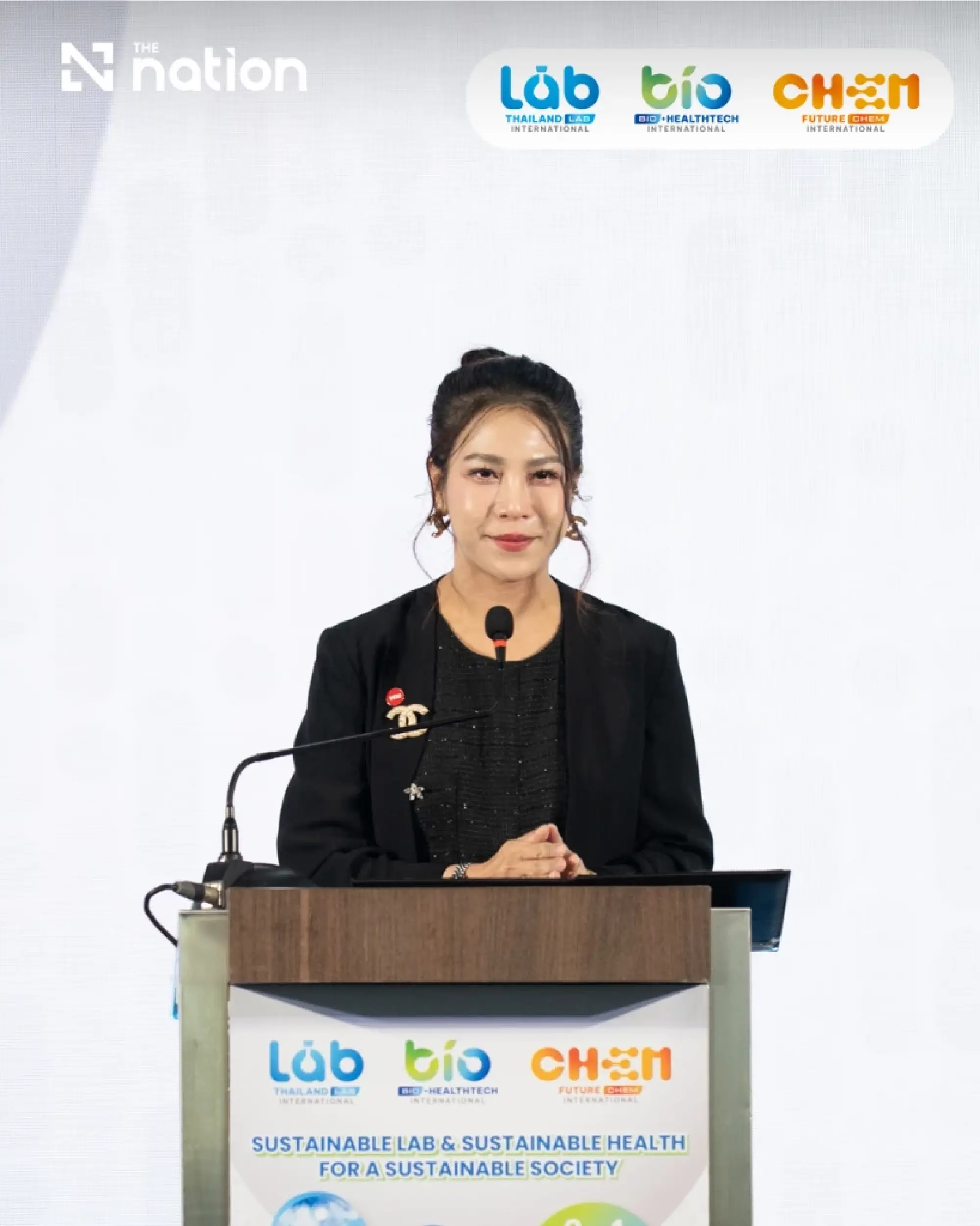
Panadda Kongma, Vice President – Business at VNU Asia Pacific, described the 16th edition as another step in the exhibition’s evolution from a laboratory technology trade show into an international platform linking science, biotechnology, health and chemicals.
She expressed confidence that the event could encourage investment in Thailand and strengthen the country’s potential to become a regional centre for science and technology.
This year’s Hosted Buyer programme has screened prospective buyers from industrial estates, factories, research institutes, hospitals and universities, as well as scientific equipment networks.
An online business-matching platform has been added to help develop commercial partnerships, particularly involving start-ups, while Immersive LAB has been introduced for the first time to allow visitors and buyers to experience advanced technologies in a simulated laboratory environment.
“Over the past 16 years, Thailand LAB INTERNATIONAL has developed from a laboratory technology exhibition into an international platform connecting science, biotechnology, health and chemicals,” Kongma noted.
She added that the objective went beyond displaying technology, with the event intended to connect manufacturers, buyers, researchers and industry representatives and generate knowledge exchange, business matching and partnerships with practical commercial potential.
“We believe this will serve as another important mechanism for strengthening Thailand’s potential as a regional hub for science and technology,” she added.

Laboratory market points to further growth
Wattana Phasook, President of the Science and Technology Trade Association (STTA), described Thailand LAB INTERNATIONAL as one of Thailand’s most significant laboratory technology exhibitions and an increasingly important industry platform in Asia.
He viewed the decision to hold Thailand LAB INTERNATIONAL alongside Bio+ HealthTech INTERNATIONAL and FutureCHEM INTERNATIONAL as reflecting the growing integration of knowledge and innovation across industries.
Demand for scientific and laboratory equipment is being supported by expanding research activity, biotechnology investment and developments in pharmaceuticals, medicine and food, along with higher testing standards across industries.
Wattana cited estimates valuing Thailand’s laboratory equipment market at about US$456 million in 2024, with average annual growth projected at 6.7% until 2028.
He stressed that strengthening Thailand’s science industries would require cooperation between government agencies, businesses, educational institutions and the research sector.
“The exhibitions could help bring these groups together for technology transfer and knowledge exchange while creating new opportunities for investment, commercial partnerships and innovation,” he added.

TCEB highlights role of international collaboration
Kanokporn Damrongkul, Director of the Exhibitions Department at the Thailand Convention and Exhibition Bureau (TCEB), highlighted the scale of changes affecting technology, medicine, food security and sustainability.
“No single organisation or sector could address those challenges alone,” she argued, making collaboration among government, the private sector, academic institutions and researchers increasingly important.
Kanokporn described Thailand LAB INTERNATIONAL, Bio+ HealthTech INTERNATIONAL and FutureCHEM INTERNATIONAL as platforms for connecting people, technologies and knowledge rather than conventional trade exhibitions alone.
She also highlighted the wider role of the meetings, incentives, conventions and exhibitions (MICE) industry in generating economic opportunities, transferring knowledge and supporting international cooperation.
The exhibitions, she noted, can connect entrepreneurs, researchers, investors and specialists from around the world, helping to strengthen Thai industries and supporting Thailand’s ambition to become an ASEAN centre for science, health technology and innovation.

Turning research into economic value
Dr Theerarat Samrejvanich, Assistant Minister to the Prime Minister’s Office, highlighted knowledge, technology and innovation as increasingly important sources of competitiveness in the global economy.
Artificial intelligence, biotechnology, precision medicine, clean energy and advanced manufacturing all depend heavily on science and research, she noted.
Thailand therefore needs to accelerate the development of an ecosystem that supports research, technological development and the practical application of research findings, particularly those capable of generating tangible economic and social benefits.
Theerarat stressed that valuable research should not remain unused but should be developed into practical applications, products and solutions that contribute to the country’s development.
“Thailand LAB INTERNATIONAL, Bio+ HealthTech INTERNATIONAL and FutureCHEM INTERNATIONAL provide an important platform connecting researchers, technology developers, industry, investors and international networks to promote technology transfer, collaboration and the development of innovations that can create economic value while strengthening Thailand’s competitiveness,” she noted.
The Ministry of Higher Education, Science, Research and Innovation, she added, is also ready to support cooperation among the public and private sectors, academic institutions and international networks to help bring Thai research and innovation into practical use, create greater value for industry and improve quality of life.

Three-day platform for regional partnerships
Throughout the three-day programme, Thailand LAB INTERNATIONAL 2026, Bio+ HealthTech INTERNATIONAL 2026 and FutureCHEM INTERNATIONAL 2026 aim to connect businesses, researchers, specialists and other industry stakeholders while promoting knowledge exchange, technology transfer and new commercial opportunities.
Visitors can explore new technologies, meet industry specialists and potential business partners, and develop partnerships at BITEC through September 4, reinforcing the exhibitions’ broader goal of connecting science, technology, health and innovation within ASEAN.

