
Bangkok Teenage Student Builds Confidence Through Sound Healing and Prepares to Reconnect with Gen Z


“How can we help young people develop the resilience to navigate life’s challenges?”
The answer cannot be found in textbooks alone. Academic knowledge may prepare students for examinations and future careers, but navigating life also requires a different set of abilities: self-awareness, emotional balance, adaptability, and the courage to recover from setbacks.
Resilience does not mean avoiding stress or remaining unaffected by environment difficulties. Rather, it is the capacity to recognize what one is feeling, respond to challenges constructively, and gradually regain a sense of balance. For young people growing up in an increasingly demanding and fast-changing world, these inner abilities can be just as important as academic achievement.
Yet relatively few spaces or initiatives are intentionally designed to nurture such qualities. Young people are often encouraged to perform, compete, and succeed, but they may have fewer opportunities to pause, reflect, and understand their emotional needs. Recognizing this gap, a group of young people stepped forward to create their own “cycle of self-development”—a supportive space where participants can explore ways of strengthening both their physical and emotional resilience through shared experiences.


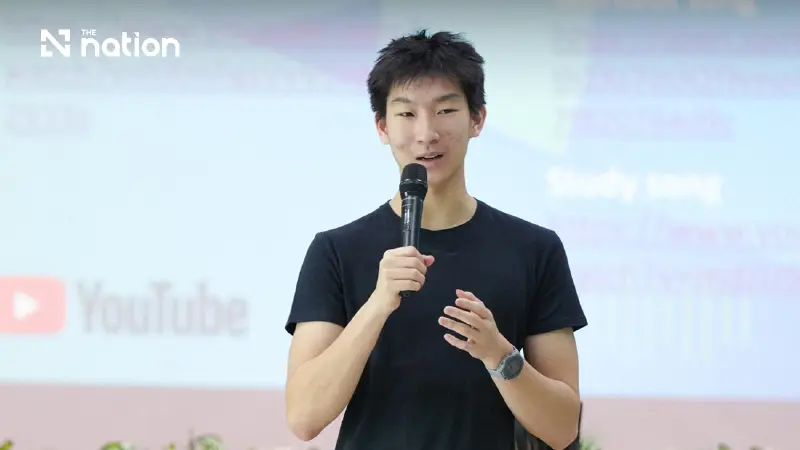
The initiative was led by Paro Phornprapha, a 17-year-old Year 12 student at Bangkok Patana School (BPS). Interested in practices that support emotional well-being and cultivate positive energy, Paro began exploring sound-based activities, mindfulness, and personal reflection as accessible tools for young people.
The idea emerged after he observed many of his peers struggling with academic pressure, intense competition, and rapidly changing expectations. Students are expected to perform well in school while also preparing for university, maintaining friendships, participating in extracurricular activities, and presenting a positive image of themselves. Over time, these pressures can affect how young people view themselves and may weaken their sense of self-belief.
When stress becomes overwhelming, many young people turn to social media for quick relief. Scrolling through videos, following trends, or chatting online can provide moments of entertainment and distraction. However, these activities may offer only temporary relief without helping users understand the source of their stress or develop healthy ways of responding to it.

Paro saw the need for an approach that would encourage young people to slow down and reconnect with themselves. Rather than presenting personal development as another task to complete or goal to achieve, the initiative introduces simple practices that can be incorporated into daily life. Paro and his colleague, KK Anuras conducted a workshop for over 50 students and teachers at Rittinarongron School Bangkok. 'When we first approached the teachers and students, our shared vision became clear,' Paro said. 'We intend to create positive energy and human connection through the power of sound waves and music.
The initiative also demonstrates practical daily applications. For instance, students are encouraged to curate personalized music playlists for studying, work-out, or pursuing hobbies. These playlists act as a digital 'first-aid kit' for the mind, easily accessible whenever need to recharge. Also, creates a safe space for youth to shatter their fears and self-doubt by instilling a 'Try, Fall, Recover' mindset through indoor rock-climbing activities through middle-school students The goal is to help them learn that every fall is an opportunity to grow. Ultimately, teaching youth to face physical pain and failure head-on helps develop their confidence through relentless persistence.

The vision not only reflects future leadership but has also garnered recognition from top-tier medical professionals, Dr. Shuzo Kobayashi, President & CEO, Shonan Kamakura General Hospital / General Incorporated Association Tokushukai, Vice Chairman of the Board emphasized that this is a scientifically grounded innovation and a preventive practice that can tangibly address students' mental health challenges.

By creating an initiative designed by young people for young people, Paro and his peers are offering more than a temporary escape from stress. They are encouraging their generation to cultivate self-awareness, emotional resilience, and inner strength—qualities that can support them not only during their school years, but throughout their lives.
The initiative ultimately carries a simple yet meaningful message: resilience is not something a person either possesses or lacks. It is a capacity that can be nurtured, practiced, and strengthened, one thoughtful moment at a time.
